
Attahiyat Full Dua (Tashahhud): Arabic, English Transliteration and Meaning

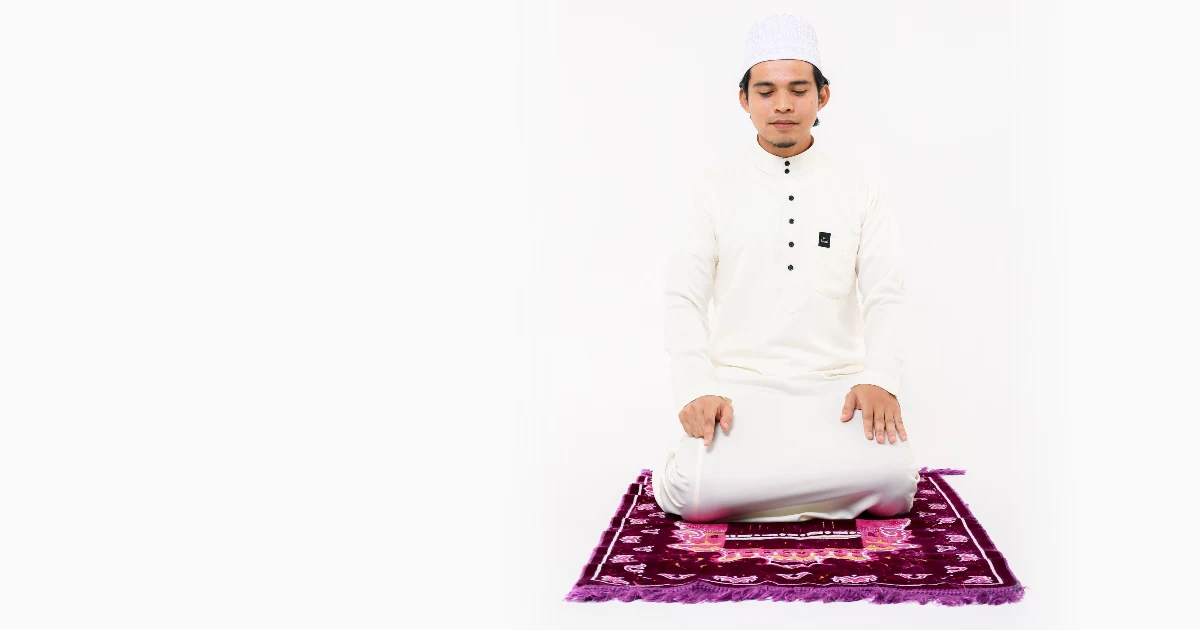
A man sitting for the tashahhud on a prayer mat

This is a complete guide to Attahiyat (the tashahhud): the full dua for the first and final tashahhud in Arabic, English transliteration and meaning, with audio, the correct sitting and finger position, the dua before salam, and the related rulings according to the Shafi‘i school.

Attahiyat is recited in the sitting after the second rak‘ah and in the last rak‘ah of every prayer. The final tashahhud and its sitting are pillars of the prayer, while the first tashahhud and its sitting are sunnah ab‘ad, a highly emphasised sunnah.1,2 Even though it is recited in every prayer, many people are still unsure about the basics: where the first tashahhud stops, when the index finger is raised, and how the two sittings differ.

Where to Start?

Baca Sepenuhnya

Tahajjud Prayer & Tahajjud Dua (The Definitive Guide)

Tahajjud prayer guide

This is a complete guide to Tahajjud prayer, from the intention and the opening takbir to the final salam. It includes the Tahajjud dua in Arabic, with transliteration, audio and English meaning, so you can follow along even if you cannot read Arabic yet.

This guide follows the Shafi‘i school. Where the Hanafi school differs in a way that matters for Tahajjud, a short note is given in the FAQ.

Tahajjud at a Glance

Tahajjud is a voluntary prayer performed at night after you have slept.1

  • Ruling: sunnah, not obligatory.1
  • Time: after sleeping, until Fajr. The middle third of the night is best, then the last third.2
  • Rak‘ahs: at least two, with no fixed maximum. Give salam after every two rak‘ahs.2
  • Tahajjud dua: recited when you get up for Tahajjud, before you start.3
  • Close with Witr, unless you already prayed Witr before sleeping.

Baca Sepenuhnya

Istikhara Dua in Arabic and English: How to Pray Istikhara

Istikhara prayer and Istikhara dua guide

This is a complete guide to the Istikhara prayer: the intention, how to pray the two rak‘ahs step by step, and the Istikhara dua in Arabic, transliteration and meaning, according to the Shafi‘i school.

The Istikhara prayer is a two-rak‘ah voluntary prayer to ask Allah to choose what is best for you when you have to make a decision about a permissible matter, such as marriage, work or studies. After salam, recite the Istikhara dua, mention your matter, then continue your efforts without waiting for a dream.

Every intention and recitation comes with the Arabic text, transliteration, meaning and audio.

The Istikhara Prayer in 6 Steps

  1. Define your matter: Make sure it is permissible and gather the important information first.
  2. Make wudu and the intention: Make the intention of the Istikhara prayer at the opening takbir.
  3. Pray two rak‘ahs: Pray them like any voluntary prayer, calmly and with tuma’ninah.
  4. Recite the surahs: After al-Fatihah, it is sunnah to recite al-Kafirun in the first rak‘ah and al-Ikhlas in the second, or any surah that is easy for you.
  5. Recite the Istikhara dua: After salam, recite the dua and mention the matter you are considering.
  6. Continue your efforts: Weigh the facts, seek advice and make the decision without waiting for a dream.

Time: Any time, except the times when voluntary prayer is prohibited.

Baca Sepenuhnya

Dua Qunoot: Arabic, Transliteration and Meaning (Full and Short)

A man raising both hands to recite dua qunoot in the i‘tidal of the Fajr prayer

This is a complete guide to Dua Qunoot for the Fajr (Subh) prayer: the full dua in Arabic, English transliteration and meaning, with audio, the wording for the imam, a short version for those who have not memorised it, and how to recite it step by step according to the Shafi‘i school.

Dua qunoot is recited in the i‘tidal of the second rak‘ah of Fajr, after rising from ruku‘ and before going down into sujud. In the Shafi‘i school it is a sunnah ab‘ad, a highly emphasised sunnah.1,2 Even though it is recited every morning, many people are still unsure about the basics: the correct wording, what the follower recites, and what to do if it is forgotten.

Where to Start?

Baca Sepenuhnya