

This is a complete guide to what to say in salah, from the takbiratul ihram to the salam. It will guide you through reciting every part of the prayer correctly, together with its meaning.
You will be guided in the order of the prayer, step by step until the end. Every recitation is given in Arabic script, transliteration and audio (if you find the Arabic script difficult to read), together with its meaning in English.
If you are just learning, memorise the five obligatory recitations first: the takbiratul ihram, al-Fatihah, the final tashahhud, the salawat upon the Prophet ﷺ and the first salam. The other recitations are sunnah and can be added little by little.1
Where to Start?
- Want every recitation in order? Go to the recitations from takbir to salam (Arabic, transliteration, meaning and audio).
- Just learning to pray, or a new Muslim? Start with the five obligatory recitations.
- Unsure which rak‘ahs are recited aloud? Check the recitations for the 5 daily prayers.
- Want to understand what you are saying? Read the meaning of the recitations in salah.
Contents
- Obligatory (Pillar) and Sunnah Recitations in Salah
- What to Say in Salah From Takbir to Salam
- Recitations for the 5 Daily Prayers: Rak‘ahs, Aloud and Quiet
- The Five Obligatory Recitations: For New Learners and New Muslims
- Salah Translation in English: The Meaning of Every Recitation
- Can You Make Dua in English During Salah?
- Common Misconceptions About the Recitations in Salah
- Frequently Asked Questions About What to Say in Salah
Obligatory (Pillar) and Sunnah Recitations in Salah
Five recitations decide whether the prayer is valid. The rest complete it.
Of the 13 pillars of salah, five are recitations that must be spoken. The scholars call them the verbal pillars (rukn qawli). Every recitation other than these five is sunnah. The prayer is still valid without them, but the reward of that sunnah is lost.1
| Recitation (in order) | Ruling |
|---|---|
| Takbiratul ihram | Pillar |
| Dua iftitah | Sunnah |
| Ta‘awwudh | Sunnah |
| Al-Fatihah (every rak‘ah) | Pillar |
| Āmīn | Sunnah |
| Surah | Sunnah |
| Takbir of movement | Sunnah |
| Tasbih in ruku‘ and sujud | Sunnah |
| Recitation in i‘tidal | Sunnah |
| Recitation while sitting between the two sujud | Sunnah |
| Qunut in Fajr | Sunnah ab‘ad |
| First tashahhud and its salawat | Sunnah ab‘ad |
| Final tashahhud | Pillar |
| Salawat in the final tashahhud | Pillar |
| Dua before salam | Sunnah |
| First salam | Pillar |
| Second salam | Sunnah |
All of these recitations, whether obligatory or sunnah, must be spoken with the tongue loudly enough for you to hear yourself. Reciting in the heart alone is not enough.2
What to Say in Salah From Takbir to Salam
Arabic, transliteration, meaning and audio for every recitation, in the order of the prayer.
Takbiratul Ihram
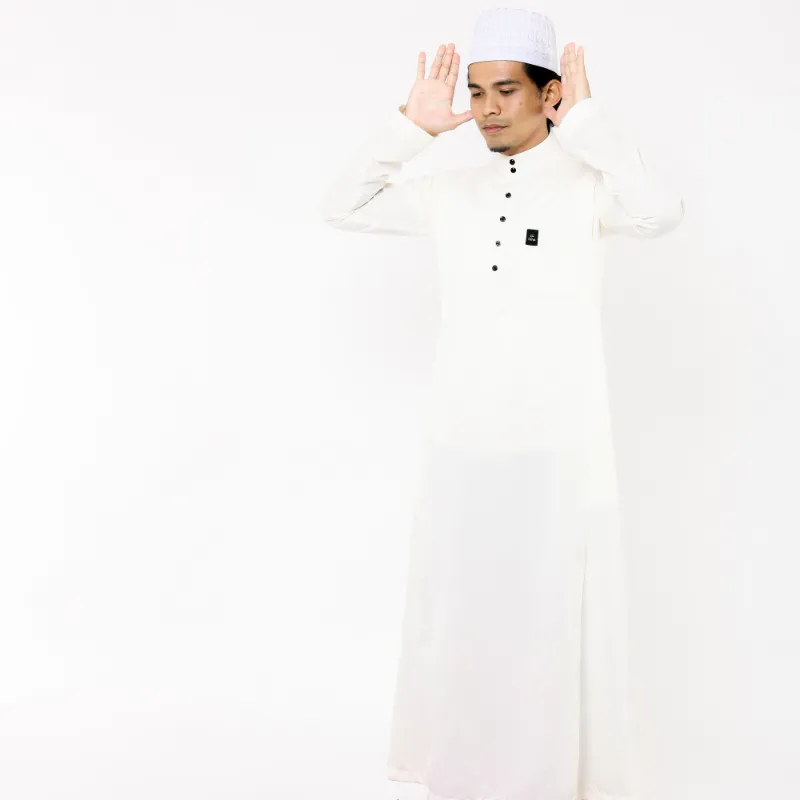
Ruling: Pillar (obligatory). The prayer begins with this takbir. The niyyah is brought to mind in the heart as you say it.3
اللَّهُ أَكْبَرُ
Allāhu akbar.
Meaning
Allah is the Greatest.
Say it briefly and clearly. Its wording cannot be replaced with other words.4 Avoid lengthening the “A” of “Allāh” so that it sounds like “Āllāh”, or saying “Akbār”. Both change the meaning and make the takbir invalid.5
The niyyah is made in the heart at this takbir. Saying it aloud before the takbir is sunnah.6

The words of the niyyah
The niyyah for Fajr, Zuhr, Asr, Maghrib, Isha and the sunnah prayers in Arabic, transliteration and meaning.
Dua Iftitah
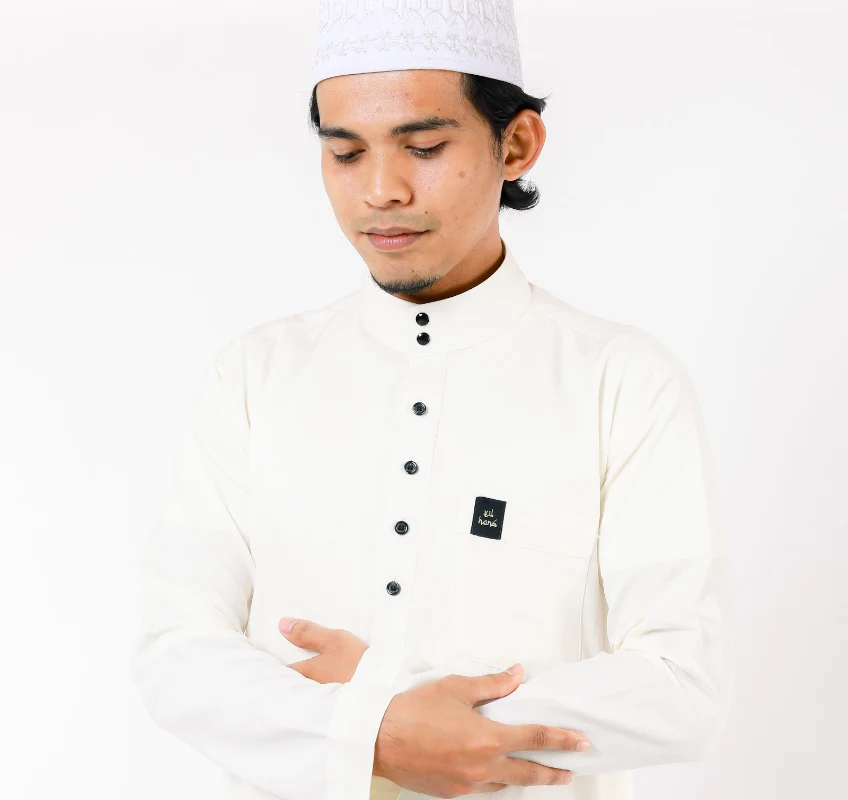
Ruling: Sunnah. Recited quietly after the takbiratul ihram, in the first rak‘ah.7
اللَّهُ أَكْبَرُ كَبِيرًا وَالْحَمْدُ لِلَّهِ كَثِيرًا وَسُبْحَانَ اللَّهِ بُكْرَةً وَأَصِيلًا وَجَّهْتُ وَجْهِيَ لِلَّذِي فَطَرَ السَّمَاوَاتِ وَالْأَرْضَ حَنِيفًا مُسْلِمًا وَمَا أَنَا مِنَ الْمُشْرِكِينَ إِنَّ صَلَاتِي وَنُسُكِي وَمَحْيَايَ وَمَمَاتِي لِلَّهِ رَبِّ الْعَالَمِينَ لَا شَرِيكَ لَهُ وَبِذَلِكَ أُمِرْتُ وَأَنَا مِنَ الْمُسْلِمِينَ
Allāhu akbaru kabīrā, wal-ḥamdu lillāhi kathīrā, wa subḥānallāhi bukrataw wa aṣīlā. Wajjahtu wajhiya lil-ladhī faṭaras-samāwāti wal-arḍa ḥanīfam muslimaw wa mā ana minal-mushrikīn. Inna ṣalātī wa nusukī wa maḥyāya wa mamātī lillāhi rabbil-‘ālamīn. Lā sharīka lahū wa bi dhālika umirtu wa ana minal-muslimīn.
Meaning
Allah is the Greatest, truly great. All praise is for Allah, abundant praise. Glory be to Allah, morning and evening. I have turned my face to the One who created the heavens and the earth, inclining to the truth and submitting, and I am not of those who associate partners with Allah. Indeed, my prayer, my worship, my life and my death are for Allah, Lord of all the worlds. He has no partner. With this I have been commanded, and I am of the Muslims.
Other versions of the dua iftitah, and when it is not recited, are in the guide to dua iftitah.
Ta‘awwudh
Ruling: Sunnah. Recited quietly before al-Fatihah in every rak‘ah.
أَعُوذُ بِاللَّهِ مِنَ الشَّيْطَانِ الرَّجِيمِ
A‘ūdhu billāhi minash-shaiṭānir-rajīm.
Meaning
I seek refuge in Allah from the accursed Shaitan.
Reciting Al-Fatihah
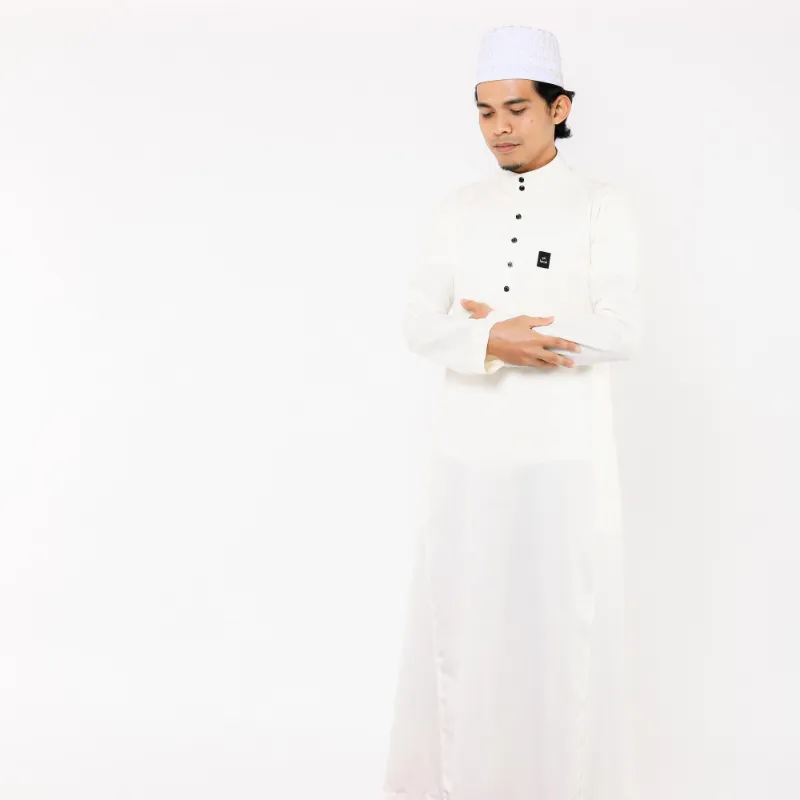
Ruling: Pillar (obligatory) in every rak‘ah. This includes the ma’mum, even when the imam recites aloud.8
بِسۡمِ ٱللَّهِ ٱلرَّحۡمَٰنِ ٱلرَّحِيمِ ١ ٱلۡحَمۡدُ لِلَّهِ رَبِّ ٱلۡعَٰلَمِينَ ٢ ٱلرَّحۡمَٰنِ ٱلرَّحِيمِ ٣ مَٰلِكِ يَوۡمِ ٱلدِّينِ ٤ إِيَّاكَ نَعۡبُدُ وَإِيَّاكَ نَسۡتَعِينُ ٥ ٱهۡدِنَا ٱلصِّرَٰطَ ٱلۡمُسۡتَقِيمَ ٦ صِرَٰطَ ٱلَّذِينَ أَنۡعَمۡتَ عَلَيۡهِمۡ غَيۡرِ ٱلۡمَغۡضُوبِ عَلَيۡهِمۡ وَلَا ٱلضَّآلِّينَ ٧
Bismillāhir-raḥmānir-raḥīm (1). Al-ḥamdu lillāhi rabbil-‘ālamīn (2). Ar-raḥmānir-raḥīm (3). Māliki yaumid-dīn (4). Iyyāka na‘budu wa iyyāka nasta‘īn (5). Ihdinaṣ-ṣirāṭal-mustaqīm (6). Ṣirāṭal-ladhīna an‘amta ‘alaihim ghairil-maghḍūbi ‘alaihim wa laḍ-ḍāllīn (7).
Meaning
In the name of Allah, the Most Gracious, the Most Merciful (1). All praise is for Allah, Lord of the worlds (2), the Most Gracious, the Most Merciful (3), Master of the Day of Judgement (4). You alone we worship, and You alone we ask for help (5). Guide us to the straight path (6), the path of those You have blessed, not of those who have earned Your anger, nor of those who have gone astray (7).
Three things to take care of
- The basmalah is the first verse. Do not leave out “Bismillāhir-raḥmānir-raḥīm”.9
- Fourteen shaddahs. Every shaddah must be sounded. For example “iyyāka”, not “iyāka”.10
- Letters that sound alike. Distinguish ḥ (ح) from h (ه) in “al-ḥamdu”, and pronounce ḍ (ض) correctly in “wa laḍ-ḍāllīn”. A mistake that changes the meaning must be repeated correctly.11
Āmīn After Al-Fatihah
Ruling: Sunnah. Pause briefly after “wa laḍ-ḍāllīn”, then say “Āmīn”. In a prayer recited aloud, the ma’mum says it together with the imam.12
آمِينَ
Āmīn.
Meaning
Answer (our prayer, O Allah).
Say it with a light mim. Avoid “Āmmīn” with a shaddah.
Reciting a Surah
Ruling: Sunnah in the first and second rak‘ahs. A ma’mum in Fajr, Maghrib and Isha only needs to listen to the imam’s recitation.13
Even one verse earns the reward of the sunnah, but a complete surah is better. For example, Surah al-Ikhlas:
قُلۡ هُوَ ٱللَّهُ أَحَدٌ ١ ٱللَّهُ ٱلصَّمَدُ ٢ لَمۡ يَلِدۡ وَلَمۡ يُولَدۡ ٣ وَلَمۡ يَكُن لَّهُۥ كُفُوًا أَحَدُۢ ٤
Qul huwallāhu aḥad (1). Allāhuṣ-ṣamad (2). Lam yalid wa lam yūlad (3). Wa lam yakul lahū kufuwan aḥad (4).
Meaning
Say, “He is Allah, the One (1). Allah, the Eternal Refuge (2). He neither begets nor is born (3), and there is none comparable to Him (4).”
Ruku‘
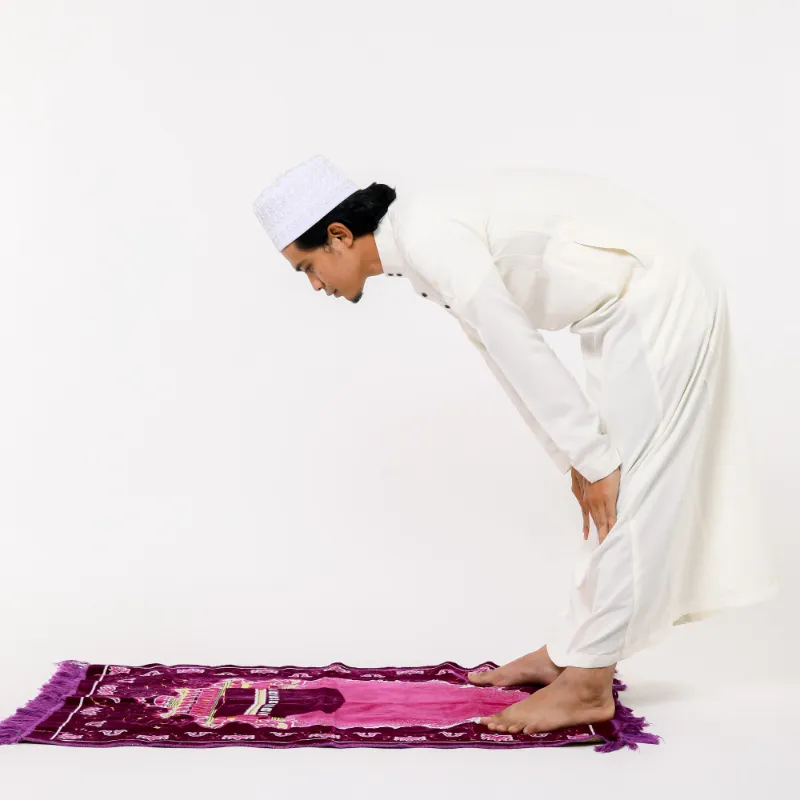
Takbir of movement: Sunnah. Say “Allāhu akbar” as you go down into ruku‘. The same takbir is said every time you move from one pillar to the next, except when rising from ruku‘.14
Tasbih in ruku‘: Sunnah. Recite it three times.15,16
سُبْحَانَ رَبِّيَ الْعَظِيمِ وَبِحَمْدِهِ
Subḥāna rabbiyal-‘aẓīmi wa biḥamdih. (3 kali)
Meaning
Glory be to my Lord, the Most Great, and praise be to Him.
The addition “wa biḥamdih” may be recited or left out.17 Someone praying alone may add this dua:18
اللَّهُمَّ لَكَ رَكَعْتُ وَبِكَ آمَنْتُ وَلَكَ أَسْلَمْتُ خَشَعَ لَكَ سَمْعِي وَبَصَرِي وَمُخِّي وَعَظْمِي وَعَصَبِي وَمَا اسْتَقَلَّتْ بِهِ قَدَمِي
Allāhumma laka raka‘tu wa bika āmantu wa laka aslamt, khasha‘a laka sam‘ī wa baṣarī wa mukhkhī wa ‘aẓmī wa ‘aṣabī wa mastaqallat bihī qadamī.
Meaning
O Allah, to You I have bowed, in You I have believed and to You I have submitted. My hearing, my sight, my brain, my bones, my sinews and what my feet carry are humbled before You.
I‘tidal
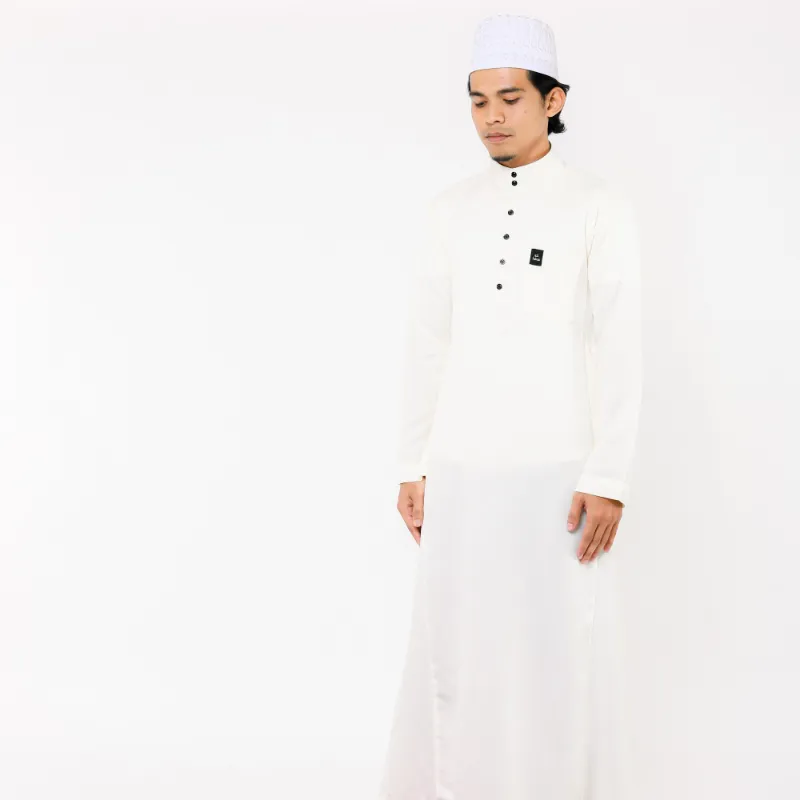
Ruling: Sunnah. When rising from ruku‘, say “Sami‘allāhu liman ḥamidah”. Once standing upright, say “Rabbanā lakal-ḥamd”. In the Shafi‘i school, the imam, the ma’mum and someone praying alone all say both.19
سَمِعَ اللَّهُ لِمَنْ حَمِدَهُ
Sami‘allāhu liman ḥamidah.
Meaning
Allah hears (accepts) the praise of the one who praises Him.
رَبَّنَا لَكَ الْحَمْدُ مِلْءَ السَّمَاوَاتِ وَمِلْءَ الْأَرْضِ وَمِلْءَ مَا شِئْتَ مِنْ شَيْءٍ بَعْدُ
Rabbanā lakal-ḥamdu mil’as-samāwāti wa mil’al-arḍi wa mil’a mā shi’ta min shai’in ba‘d.
Meaning
Our Lord, to You belongs all praise, filling the heavens, filling the earth, and filling whatever else You will.
The short form “Rabbanā lakal-ḥamd” is also enough.20 For the imam, the sunnah is to say “Sami‘allāhu liman ḥamidah” aloud, while “Rabbanā lakal-ḥamd” is said quietly.21
Sujud
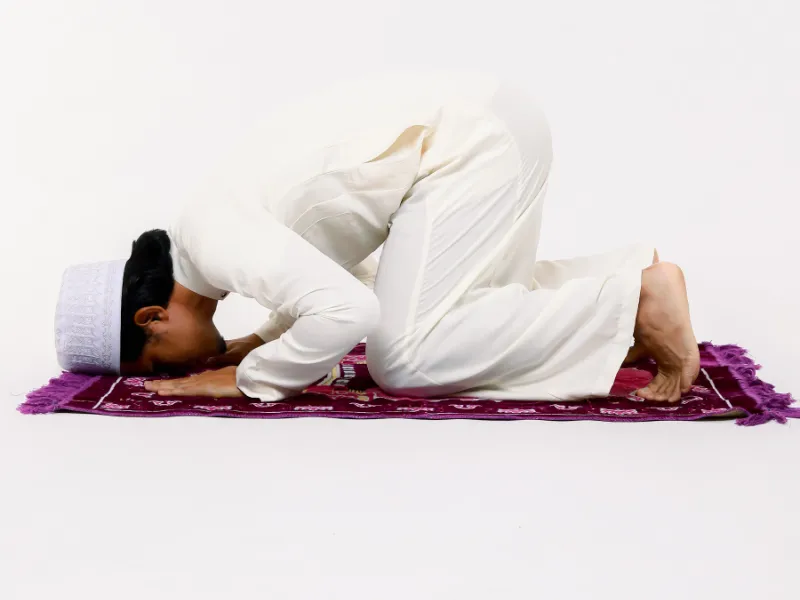
Tasbih in sujud: Sunnah. Go down into sujud with the takbir, then recite it three times.
سُبْحَانَ رَبِّيَ الْأَعْلَى وَبِحَمْدِهِ
Subḥāna rabbiyal-a‘lā wa biḥamdih. (3 kali)
Meaning
Glory be to my Lord, the Most High, and praise be to Him.
Someone praying alone may add this dua:18
اللَّهُمَّ لَكَ سَجَدْتُ وَبِكَ آمَنْتُ وَلَكَ أَسْلَمْتُ سَجَدَ وَجْهِيَ لِلَّذِي خَلَقَهُ وَصَوَّرَهُ وَشَقَّ سَمْعَهُ وَبَصَرَهُ تَبَارَكَ اللَّهُ أَحْسَنُ الْخَالِقِينَ
Allāhumma laka sajadtu wa bika āmantu wa laka aslamt, sajada wajhiya lil-ladhī khalaqahū wa ṣawwarahū wa shaqqa sam‘ahū wa baṣarah, tabārakallāhu aḥsanul-khāliqīn.
Meaning
O Allah, to You I have prostrated, in You I have believed and to You I have submitted. My face (my whole self) prostrates to the One who created it, shaped it, and opened its hearing and sight. Blessed is Allah, the best of creators.
Sujud is also a good place for dua. If you want to make dua in English, make it in your heart only. See the ruling on making dua in English. Do not recite verses of the Quran in ruku‘ and sujud, because it is makruh.22
Sitting Between the Two Sujud
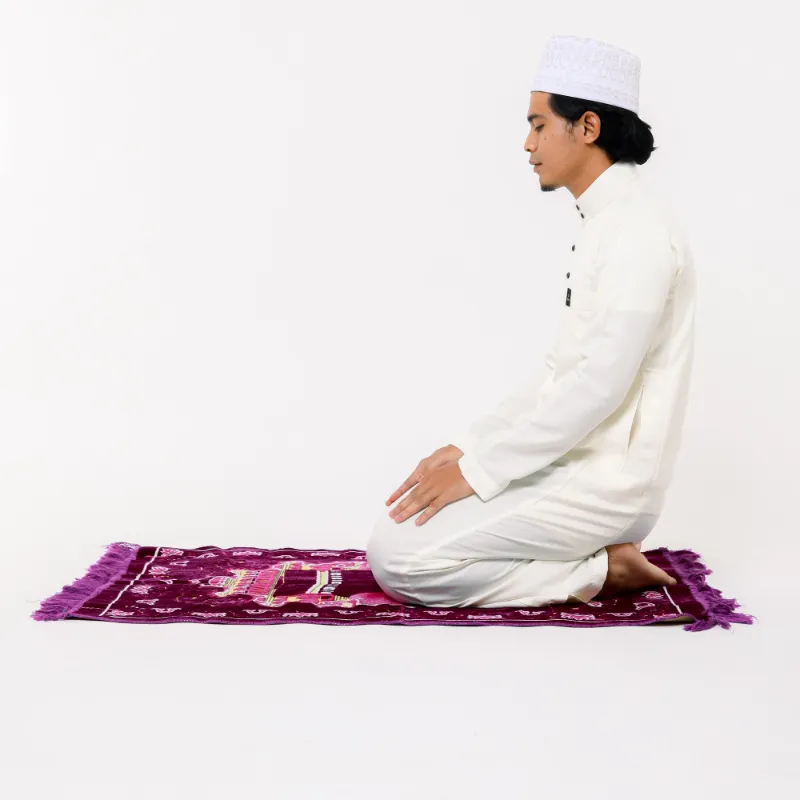
Ruling: Sunnah. Rise from sujud with the takbir, sit in iftirash, then recite:
رَبِّ اغْفِرْ لِي وَارْحَمْنِي وَاجْبُرْنِي وَارْفَعْنِي وَارْزُقْنِي وَاهْدِنِي وَعَافِنِي وَاعْفُ عَنِّي
Rabbighfir lī warḥamnī wajburnī warfa‘nī warzuqnī wahdinī wa ‘āfinī wa‘fu ‘annī.
Meaning
My Lord, forgive me, have mercy on me, make up for what I lack, raise my rank, provide for me, guide me, grant me well-being, and pardon me.
The first seven requests are gathered from several narrations of the hadith. The addition “wa‘fu ‘annī” at the end comes from Imam al-Ghazali. It is good to recite, but it is not the wording of the hadith.23 The shortest recitation is “Rabbighfir lī, rabbighfir lī”.24
Then make the second sujud with the same recitation, and rise to the next rak‘ah with the takbir.
Dua Qunut (Fajr Prayer)
Ruling: Sunnah ab‘ad. Recited in i‘tidal of the second rak‘ah of Fajr. If you forget it, sujud sahwi is sunnah.25
The full qunut in Arabic, transliteration and meaning is in the guide to dua qunut for Fajr.
First Tashahhud
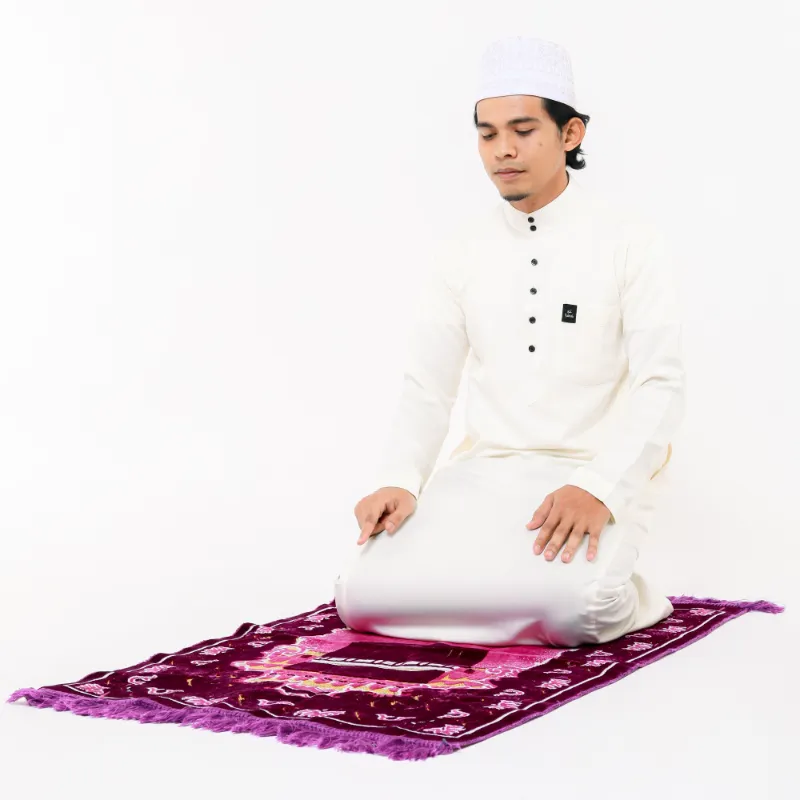
Ruling: Sunnah ab‘ad. Recited in the second rak‘ah of Zuhr, Asr, Maghrib and Isha. Its salawat only goes as far as “Allāhumma ṣalli ‘alā sayyidinā Muḥammad”.25,26
التَّحِيَّاتُ الْمُبَارَكَاتُ الصَّلَوَاتُ الطَّيِّبَاتُ لِلَّهِ السَّلَامُ عَلَيْكَ أَيُّهَا النَّبِيُّ وَرَحْمَةُ اللَّهِ وَبَرَكَاتُهُ السَّلَامُ عَلَيْنَا وَعَلَى عِبَادِ اللَّهِ الصَّالِحِينَ أَشْهَدُ أَنْ لَا إِلَهَ إِلَّا اللَّهُ وَأَشْهَدُ أَنَّ مُحَمَّدًا رَسُولُ اللَّهِ اللَّهُمَّ صَلِّ عَلَى سَيِّدِنَا مُحَمَّدٍ
At-taḥiyyātul-mubārakātuṣ-ṣalawātuṭ-ṭayyibātu lillāh. As-salāmu ‘alaika ayyuhan-nabiyyu wa raḥmatullāhi wa barakātuh. As-salāmu ‘alainā wa ‘alā ‘ibādillāhiṣ-ṣāliḥīn. Ashhadu allā ilāha illallāh, wa ashhadu anna Muḥammadar rasūlullāh. Allāhumma ṣalli ‘alā sayyidinā Muḥammad.
Meaning
All greetings, blessings, prayers and good things belong to Allah. Peace be upon you, O Prophet, and the mercy of Allah and His blessings. Peace be upon us and upon the righteous servants of Allah. I bear witness that there is no god but Allah, and I bear witness that Muhammad is the Messenger of Allah. O Allah, send Your blessings upon our master Muhammad.
Raise the right index finger when saying “illallāh”. Then rise to the third rak‘ah with the takbir.
Final Tashahhud and Salawat
Ruling: Pillar (obligatory). The wording of the tashahhud is the same as in the first tashahhud, then it continues with the Salawat Ibrahimiyyah (Durood e Ibrahim).26
التَّحِيَّاتُ الْمُبَارَكَاتُ الصَّلَوَاتُ الطَّيِّبَاتُ لِلَّهِ السَّلَامُ عَلَيْكَ أَيُّهَا النَّبِيُّ وَرَحْمَةُ اللَّهِ وَبَرَكَاتُهُ السَّلَامُ عَلَيْنَا وَعَلَى عِبَادِ اللَّهِ الصَّالِحِينَ أَشْهَدُ أَنْ لَا إِلَهَ إِلَّا اللَّهُ وَأَشْهَدُ أَنَّ مُحَمَّدًا رَسُولُ اللَّهِ اللَّهُمَّ صَلِّ عَلَى سَيِّدِنَا مُحَمَّدٍ وَعَلَى آلِ سَيِّدِنَا مُحَمَّدٍ كَمَا صَلَّيْتَ عَلَى سَيِّدِنَا إِبْرَاهِيمَ وَعَلَى آلِ سَيِّدِنَا إِبْرَاهِيمَ وَبَارِكْ عَلَى سَيِّدِنَا مُحَمَّدٍ وَعَلَى آلِ سَيِّدِنَا مُحَمَّدٍ كَمَا بَارَكْتَ عَلَى سَيِّدِنَا إِبْرَاهِيمَ وَعَلَى آلِ سَيِّدِنَا إِبْرَاهِيمَ فِي الْعَالَمِينَ إِنَّكَ حَمِيدٌ مَجِيدٌ
At-taḥiyyātul-mubārakātuṣ-ṣalawātuṭ-ṭayyibātu lillāh. As-salāmu ‘alaika ayyuhan-nabiyyu wa raḥmatullāhi wa barakātuh. As-salāmu ‘alainā wa ‘alā ‘ibādillāhiṣ-ṣāliḥīn. Ashhadu allā ilāha illallāh, wa ashhadu anna Muḥammadar rasūlullāh. Allāhumma ṣalli ‘alā sayyidinā Muḥammadin wa ‘alā āli sayyidinā Muḥammad, kamā ṣallaita ‘alā sayyidinā Ibrāhīma wa ‘alā āli sayyidinā Ibrāhīm, wa bārik ‘alā sayyidinā Muḥammadin wa ‘alā āli sayyidinā Muḥammad, kamā bārakta ‘alā sayyidinā Ibrāhīma wa ‘alā āli sayyidinā Ibrāhīm, fil-‘ālamīna innaka ḥamīdum majīd.
Meaning
All greetings, blessings, prayers and good things belong to Allah. Peace be upon you, O Prophet, and the mercy of Allah and His blessings. Peace be upon us and upon the righteous servants of Allah. I bear witness that there is no god but Allah, and I bear witness that Muhammad is the Messenger of Allah. O Allah, send Your blessings upon our master Muhammad and the family of our master Muhammad, as You sent blessings upon our master Ibrahim and the family of our master Ibrahim. And bless our master Muhammad and the family of our master Muhammad, as You blessed our master Ibrahim and the family of our master Ibrahim. In all the worlds, You are indeed Praiseworthy, Most Glorious.
The only obligatory parts are the minimum tashahhud and “Allāhumma ṣalli ‘alā Muḥammad”. See the five obligatory recitations.27 A fuller explanation, including how to sit and the finger position, is in the guide to the first and final tashahhud.
Dua Before Salam
Ruling: Sunnah. After the salawat, it is sunnah to make dua before giving salam. Among the most recommended duas:28
اللَّهُمَّ إِنِّي أَعُوذُ بِكَ مِنْ عَذَابِ جَهَنَّمَ وَمِنْ عَذَابِ الْقَبْرِ وَمِنْ فِتْنَةِ الْمَحْيَا وَالْمَمَاتِ وَمِنْ شَرِّ فِتْنَةِ الْمَسِيحِ الدَّجَّالِ
Allāhumma innī a‘ūdhu bika min ‘adhābi jahannam, wa min ‘adhābil-qabr, wa min fitnatil-maḥyā wal-mamāt, wa min sharri fitnatil-masīḥid-dajjāl.
Meaning
O Allah, I seek refuge in You from the punishment of Hell, from the punishment of the grave, from the trials of life and death, and from the evil of the trial of the False Messiah (al-Masih al-Dajjal).
Giving Salam
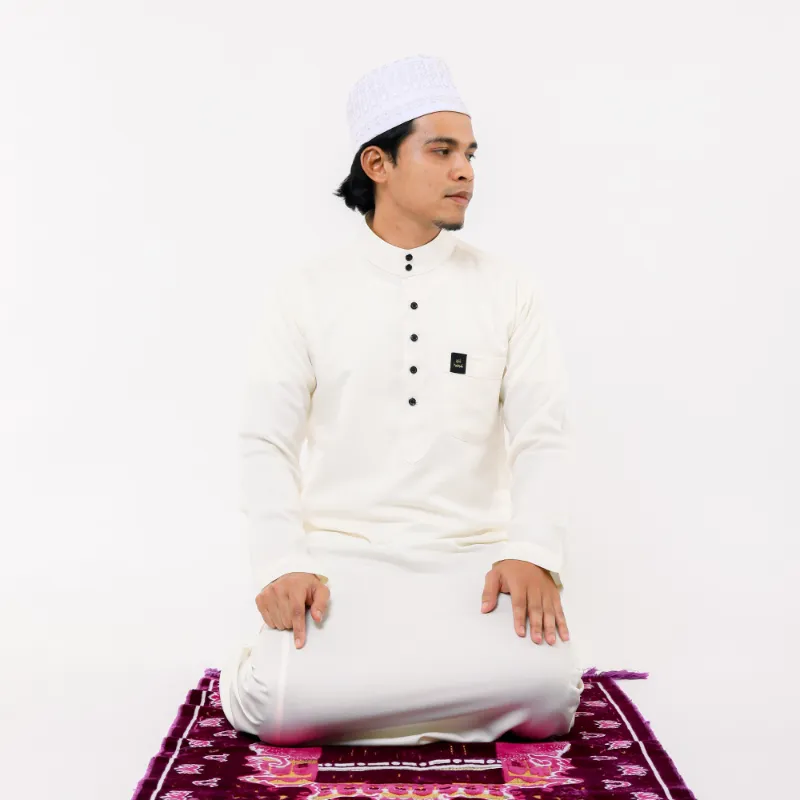
Ruling: The first salam is a pillar (obligatory), the second salam is sunnah. Turn to the right for the first salam, then to the left for the second.29
السَّلَامُ عَلَيْكُمْ وَرَحْمَةُ اللَّهِ
As-salāmu ‘alaikum wa raḥmatullāh.
Meaning
Peace be upon you, and the mercy of Allah.
Make sure the wording is complete, “as-salāmu ‘alaikum”, not “salāmu ‘alaikum” without “al” or “as-salāmu ‘alaika”. Adding “wa barakātuh” is not wrong, but the well-known wording in the school is without it.
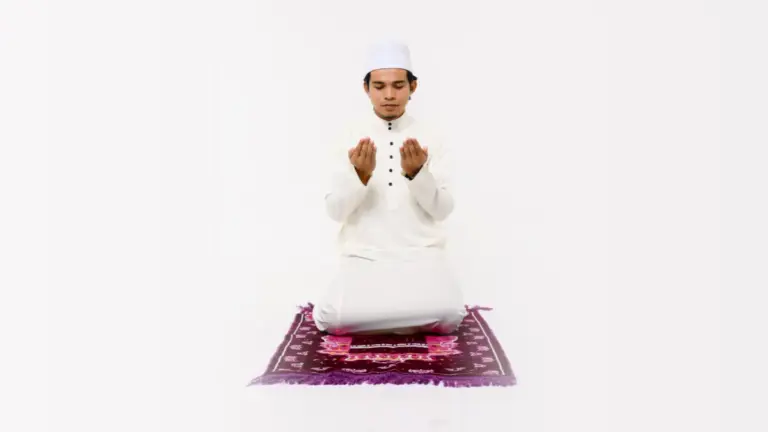
After Salam: Do Not Get Up Straight Away
The prayer is complete, but there is still one opportunity that many miss. The hundredfold dhikr after the prayer, that is Subḥānallāh, Al-ḥamdulillāh and Allāhu akbar 33 times each, completed with one declaration of tawhid, wipes away sins even if they are as much as the foam of the sea.30 It only takes a few minutes.
Continue after salam
Dhikr, Tasbih and Dua After Salah
The dhikr and duas after the obligatory prayer in Arabic, transliteration and meaning.
Recitations for the 5 Daily Prayers: Rak‘ahs, Aloud and Quiet
The recitations are the same. What differs is the number of rak‘ahs, the recitation aloud and the qunut.
The recitations in all five obligatory prayers are the same. The only differences are the number of rak‘ahs, the rak‘ahs recited aloud, the qunut and the first tashahhud.31
- Fajr (2 rak‘ahs): al-Fatihah and the surah are recited aloud in both rak‘ahs. The qunut is recited in i‘tidal of the second rak‘ah. There is no first tashahhud.
- Zuhr (4 rak‘ahs): everything is recited quietly. The first tashahhud comes after the second rak‘ah.
- Asr (4 rak‘ahs): the same as Zuhr.
- Maghrib (3 rak‘ahs): aloud in the first and second rak‘ahs, quietly in the third. The first tashahhud comes after the second rak‘ah.
- Isha (4 rak‘ahs): aloud in the first and second rak‘ahs, quietly in the third and fourth. The first tashahhud comes after the second rak‘ah.
What to Recite From the Second Rak‘ah to the Last
- Dua iftitah is recited only once, in the first rak‘ah.7
- Second rak‘ah: begin with the ta‘awwudh and al-Fatihah, then a surah.
- Third and fourth rak‘ahs: al-Fatihah only, without a surah.13
- Ruku‘, i‘tidal, sujud and sitting between the two sujud: the recitations are the same in every rak‘ah.
Imam, Ma’mum and Women
- Imam: says every takbir and “Sami‘allāhu liman ḥamidah” aloud so that the ma’mum can follow.21
- Ma’mum: recites quietly, except when saying āmīn with the imam, saying āmīn to the qunut and correcting the imam’s recitation.32
- Women: recite the same as men.33 Women recite aloud only when no non-mahram men can hear, with a lower voice than men.
- Always quiet for everyone: dua iftitah, ta‘awwudh, tasbih, tashahhud and dua.
A “quiet” recitation must still be spoken loudly enough for you to hear yourself, not just in the heart.
The Five Obligatory Recitations: For New Learners and New Muslims
Just learning to pray? Memorise these five recitations first.
If you are just learning, start with the five recitations below. With these five recitations, your prayer is valid. The sunnah recitations can be added later, little by little.
The five obligatory recitations
- Takbiratul ihram: “Allāhu akbar”, with the niyyah in the heart.
- Al-Fatihah in every rak‘ah: all seven verses, beginning with “Bismillāhir-raḥmānir-raḥīm”.
- Final tashahhud (minimum): its wording is below.
- Salawat: “Allāhumma ṣalli ‘alā Muḥammad.”
- First salam: “As-salāmu ‘alaikum.”
The minimum obligatory wording of the tashahhud:
التَّحِيَّاتُ لِلَّهِ سَلَامٌ عَلَيْكَ أَيُّهَا النَّبِيُّ وَرَحْمَةُ اللَّهِ وَبَرَكَاتُهُ سَلَامٌ عَلَيْنَا وَعَلَى عِبَادِ اللَّهِ الصَّالِحِينَ أَشْهَدُ أَنْ لَا إِلَهَ إِلَّا اللَّهُ وَأَشْهَدُ أَنَّ مُحَمَّدًا رَسُولُ اللَّهِ
At-taḥiyyātu lillāh, salāmun ‘alaika ayyuhan-nabiyyu wa raḥmatullāhi wa barakātuh, salāmun ‘alainā wa ‘alā ‘ibādillāhiṣ-ṣāliḥīn, ashhadu allā ilāha illallāh, wa ashhadu anna Muḥammadar rasūlullāh.
Meaning
All greetings belong to Allah. Peace be upon you, O Prophet, and the mercy of Allah and His blessings. Peace be upon us and upon the righteous servants of Allah. I bear witness that there is no god but Allah, and I bear witness that Muhammad is the Messenger of Allah.
If You Cannot Yet Recite Al-Fatihah
Al-Fatihah cannot be replaced with an English translation.34 Until you have memorised it, follow this order:
- Read al-Fatihah from a card or a mushaf, or follow someone beside you as they say it.
- If you cannot, recite seven other verses of the Quran that you have memorised.
- If you still cannot, recite dhikr in Arabic, at least seven kinds, roughly equal in length to al-Fatihah. For example “Subḥānallāh, wal-ḥamdu lillāh, wa lā ilāha illallāh, wallāhu akbar, wa lā ḥaula wa lā quwwata illā billāh”, with a short dua added. Intend it as a replacement for al-Fatihah.
- If you cannot recite anything at all, stand silently for about the time it takes to recite al-Fatihah.
A prayer done this way is valid as long as you are genuinely still learning.35 The duty to learn begins from the moment you embrace Islam, so do not delay. Even one verse a week is progress.36
Salah Translation in English: The Meaning of Every Recitation
When you understand what you are reciting, the prayer feels like speaking to Allah.
It is easier to have khushu‘ in the prayer when we understand what we are saying. In a hadith qudsi, Allah answers every verse of al-Fatihah that His servant recites.37 Here is the meaning or a short translation of each recitation, in order:
- Allāhu akbar: Allah is the Greatest.
- Dua iftitah: I turn my face to the Creator of the heavens and the earth, and my whole life and death are for Allah alone.
- A‘ūdhu billāh: I seek refuge in Allah from the accursed Shaitan.
- Al-Fatihah: praise of Allah, the declaration that He alone is worshipped and asked for help, and the request to be guided to the straight path.
- Āmīn: answer our prayer, O Allah.
- Subḥāna rabbiyal-‘aẓīm: Glory be to my Lord, the Most Great.
- Sami‘allāhu liman ḥamidah, rabbanā lakal-ḥamd: Allah accepts the praise of the one who praises Him. Our Lord, to You belongs all praise.
- Subḥāna rabbiyal-a‘lā: Glory be to my Lord, the Most High.
- Rabbighfir lī…: asking for forgiveness, mercy, sufficiency, rank, provision, guidance, well-being and pardon.
- At-taḥiyyāt: all greetings belong to Allah, peace upon the Prophet ﷺ and the righteous servants, then the two declarations of faith.
- Salawat: asking for mercy and blessings upon the Prophet Muhammad ﷺ and his family, as upon the Prophet Ibrahim.
- As-salāmu ‘alaikum wa raḥmatullāh: peace be upon you, and the mercy of Allah.
Can You Make Dua in English During Salah?
The intention is good, but the method must be right.
Many people like to make long duas in their own language in the last sujud or before salam. This needs to be understood correctly, because it can affect the validity of the prayer.
Important
- A dua in English (or any language other than Arabic) that is spoken during the prayer invalidates the prayer, including in sujud and before salam.38
- If you want to make dua in English, make it in your heart without speaking it.39
- A dua in Arabic, even one not taken from a hadith, does not invalidate the prayer. A dua that is ma’thur is better.
There is still plenty of room for long duas in your own language, after giving salam.
Common Misconceptions About the Recitations in Salah
Misconceptions that are often heard, and how the Shafi‘i school explains them.
| Misconception | Explanation |
|---|---|
| The ma’mum does not need to recite al-Fatihah if the imam recites aloud | The ma’mum must still recite it in every rak‘ah.8 |
| Reciting in the heart is enough | The recitation must be spoken loudly enough for you to hear yourself.2 |
| “Wa‘fu ‘annī” is the wording of the hadith | It is an addition from Imam al-Ghazali. Good to recite, but not the wording of the hadith.23 |
| The ma’mum only says “Rabbanā lakal-ḥamd” | The ma’mum also says “Sami‘allāhu liman ḥamidah” when rising.19 |
| The imam says “Sami‘allāh” quietly and “Rabbanā lakal-ḥamd” aloud | The sunnah is the other way round.21 |
| Tasbih must be said three times, or the prayer is invalid | Tasbih is sunnah. Once is enough to fulfil the basic sunnah.15 |
| Missing a takbir of movement requires sujud sahwi | Not needed. The prayer is still valid.14 |
| Al-Fatihah can be recited in an English translation | Not valid. Al-Fatihah must be recited in Arabic.34 |
Frequently Asked Questions About What to Say in Salah
Short answers to the questions asked most often.
Five: the takbiratul ihram, al-Fatihah in every rak‘ah, the final tashahhud, the salawat upon the Prophet ﷺ in the final tashahhud and the first salam. The other recitations are sunnah.1
No. The obligatory recitations must be spoken with the tongue loudly enough for you to hear yourself. If al-Fatihah is recited in the heart only, the prayer is not valid.2
Yes, in every rak‘ah according to the Shafi‘i school, even when the imam recites aloud. The only exception is a late ma’mum (masbuq) who does not have time to recite it.8
The ta‘awwudh and al-Fatihah only, without a surah, then the recitations of ruku‘, i‘tidal, sujud and sitting between the two sujud as usual.13
No. The niyyah for the prayer is made once in the heart at the takbiratul ihram, and it covers the whole prayer. What is recited in ruku‘ and sujud is the tasbih.40
Three times is sunnah. Once is enough to fulfil the basic sunnah. Someone praying alone may add up to eleven times, while the imam does not go beyond three.15
Yes, the wording is the same, including the dua iftitah. The difference is that women recite aloud only when no non-mahram men can hear.33
The prayer is still valid. For sunnah hai’ah such as the dua iftitah, tasbih and the takbir of movement, no sujud sahwi is needed. For sunnah ab‘ad such as the first tashahhud and the qunut in Fajr, sujud sahwi is sunnah.25
Yes, in the heart only. If it is spoken in English, the prayer is invalidated.38
Read it from a card or a mushaf, or follow someone else as they say it. If you cannot, replace it with seven other verses or dhikr in Arabic, while you keep learning. Al-Fatihah cannot be recited in translation.35
Closing
The recitations in salah are not just things to memorise. They are words we address to Allah, at least 17 rak‘ahs every day. Start with the five obligatory recitations and make sure you pronounce them correctly. Then add the sunnah recitations one by one, while understanding their meaning. That is where the prayer begins to feel alive.
May this guide help you, in sha’ Allah.
Keep Learning
- How to pray salah: the full prayer step by step
- Pillars of salah: the 13 rukun of prayer
- Niyyah for salah: the intention for every prayer
- Dua iftitah: the opening dua in salah
- Attahiyat: the first and final tashahhud
- Dua Qunoot for Fajr
- Sajda sahw: what to do if you forget in salah
- Dhikr, tasbih and dua after salah
Footnotes & References
- There are 13 pillars of salah. Five of them are recitations that must be spoken: the takbiratul ihram, al-Fatihah in every rak‘ah, the final tashahhud, the salawat upon the Prophet ﷺ in the final tashahhud and the first salam. The niyyah is also a pillar, but its place is the heart. [al-Nawawi, Minhaj al-Talibin, pp. 25-29] ↩︎
- Every obligatory recitation must be spoken at least loudly enough for you to hear yourself, if your hearing is normal and there is no noise. Sunnah recitations must also be audible to yourself to gain their sunnah reward. [Ibn Hajar al-Haytami, Tuhfat al-Muhtaj, vol. 2, p. 13. Zainuddin al-Malibari, Fath al-Mu‘in, vol. 1, p. 95. Federal Territory Mufti Office, Al-Kafi #662] ↩︎
- Hadith: “The key to prayer is purification, its opening is the takbir and its closing is the salam.” [Sunan Abi Dawud, nos. 61 and 618. Sunan al-Tirmidhi, no. 3] ↩︎
- The wording of the takbiratul ihram cannot be replaced, for example with “Allāhu a‘ẓam” or “Ar-Raḥmānu akbar”. “Allāhul-akbar” is valid but less preferable, because some scholars do not accept it. [al-Nawawi, Minhaj al-Talibin, p. 25. al-Ramli, Nihayat al-Muhtaj, vol. 1, p. 459. al-Nawawi, al-Adhkar, no. 234] ↩︎
- Mistakes that spoil the takbir: lengthening the hamzah of “Allāh”, saying “Akbār”, adding “wa” before “Allāh” and doubling the letter ba. The takbiratul ihram is said briefly and clearly, not drawn out. [al-Ramli, Nihayat al-Muhtaj, vol. 1, pp. 459-461. Ibn Hajar al-Haytami, Tuhfat al-Muhtaj, vol. 2, p. 14. al-Nawawi, al-Adhkar, nos. 237 and 240] ↩︎
- Saying the niyyah aloud before the takbir is sunnah, but what counts is the niyyah in the heart. [al-Bakri al-Dimyati, I‘anat al-Talibin, vol. 1, p. 152] ↩︎
- The dua iftitah is recited once after the takbiratul ihram, and its time passes once you begin the ta‘awwudh or al-Fatihah. The dua iftitah and the ta‘awwudh are sunnah to recite quietly. The ta‘awwudh is sunnah in every rak‘ah, and most emphasised in the first. [al-Nawawi, Minhaj al-Talibin, p. 26. Ibn Hajar al-Haytami, Tuhfat al-Muhtaj, vol. 2, pp. 31-33] ↩︎
- Al-Fatihah is obligatory in every rak‘ah, in quiet and audible prayers, for the imam, the ma’mum and someone praying alone, except a late ma’mum (masbuq) who does not have time to recite it. Hadith: “There is no prayer for one who does not recite al-Fatihah.” [al-Nawawi, Minhaj al-Talibin, p. 26. al-Ramli, Nihayat al-Muhtaj, vol. 1, pp. 476-477. Sahih al-Bukhari, no. 756. Sahih Muslim, no. 394. Sunan Abi Dawud, no. 823. Federal Territory Mufti Office, Al-Kafi #872] ↩︎
- In the Shafi‘i school, the basmalah is the first verse of al-Fatihah, based on the consensus of the Companions in writing it in the mushaf and on narrations from Abu Hurairah, ‘Ali and Ibn ‘Abbas. [al-Nawawi, Minhaj al-Talibin, p. 26. Ibn Hajar al-Haytami, Tuhfat al-Muhtaj, vol. 2, pp. 35-36. al-Ramli, Nihayat al-Muhtaj, vol. 1, p. 478] ↩︎
- Al-Fatihah contains 14 shaddahs, three of them in the basmalah. Dropping a shaddah or changing a letter, such as ḥ (ح) in “al-ḥamdu” to h (ه), makes the recitation of that word invalid. [Ibn Hajar al-Haytami, Tuhfat al-Muhtaj, vol. 2, pp. 36-37. al-Ramli, Nihayat al-Muhtaj, vol. 1, pp. 480-481] ↩︎
- A mistake that changes the meaning invalidates the prayer if it is made deliberately by someone who knows. If it is not deliberate, that word does not count and must be repeated correctly. [Ibn Hajar al-Haytami, Tuhfat al-Muhtaj, vol. 2, p. 38. Federal Territory Mufti Office, Al-Kafi #745] ↩︎
- It is sunnah to say “Āmīn” after al-Fatihah with a light mim. In an audible prayer, the ma’mum says it together with the imam. Hadith: “When the imam says āmīn, say āmīn.” [al-Nawawi, Minhaj al-Talibin, p. 26. Ibn Hajar al-Haytami, Tuhfat al-Muhtaj, vol. 2, pp. 49-51. Sahih al-Bukhari, nos. 780 and 782] ↩︎
- It is sunnah to recite a surah after al-Fatihah in the first two rak‘ahs for the imam and someone praying alone. A ma’mum in an audible prayer who can hear the imam does not recite a surah, but listens. [al-Nawawi, Minhaj al-Talibin, p. 26. al-Ramli, Nihayat al-Muhtaj, vol. 1, p. 493. Ibn Hajar al-Haytami, Tuhfat al-Muhtaj, vol. 2, pp. 51-52] ↩︎
- The takbir of movement is sunnah, and it is sunnah to draw it out until you reach the next pillar. If it is missed, whether deliberately or by forgetting, the prayer is not invalidated and no sujud sahwi is needed. [al-Nawawi, al-Adhkar, nos. 237-242. Ibn Hajar al-Haytami, Tuhfat al-Muhtaj, vol. 2, p. 60. Sahih al-Bukhari, nos. 788-789] ↩︎
- The tasbih in ruku‘ and sujud is sunnah. Once fulfils the basic sunnah, and three times is the lowest level of completeness. The imam does not add more than three, while someone praying alone may add up to eleven. [al-Nawawi, Minhaj al-Talibin, pp. 27-28. Ibn Hajar al-Haytami, Tuhfat al-Muhtaj, vol. 2, p. 61. al-Ramli, Nihayat al-Muhtaj, vol. 1, p. 499. Sahih Muslim, no. 772] ↩︎
- The dhikr in ruku‘, sujud and i‘tidal is sunnah in the Shafi‘i school and according to the majority of scholars. If it is left out, the prayer is not invalidated and no sujud sahwi is needed. [al-Nawawi, al-Adhkar, nos. 306 and 318] ↩︎
- The addition “wa biḥamdih” is held in the school. Its hadith is narrated by Abu Dawud, but Abu Dawud himself doubted the accuracy of that addition. [Ibn Hajar al-Haytami, Tuhfat al-Muhtaj, vol. 2, pp. 61 and 75. al-Ramli, Nihayat al-Muhtaj, vol. 1, p. 499. Sunan Abi Dawud, no. 870] ↩︎
- The additional duas in ruku‘ and sujud for someone praying alone. [Sahih Muslim, no. 771. al-Nawawi, Minhaj al-Talibin, pp. 27-28] ↩︎
- The imam, the ma’mum and someone praying alone all say “Sami‘allāhu liman ḥamidah” when rising, and “Rabbanā lakal-ḥamd” once standing upright. [al-Nawawi, Minhaj al-Talibin, p. 27. al-Ramli, Nihayat al-Muhtaj, vol. 1, pp. 501-502. Sahih al-Bukhari, no. 789. Sahih Muslim, no. 476] ↩︎
- The recitation up to “min shai’in ba‘d” is sunnah for everyone, including the imam. The addition “ahlath-thanā’i wal-majd…” is for someone praying alone and an imam whose followers are content with it. [Ibn Hajar al-Haytami, Tuhfat al-Muhtaj, vol. 2, p. 63. al-Ramli, Nihayat al-Muhtaj, vol. 1, p. 502. Sahih Muslim, no. 477] ↩︎
- The sunnah is for the imam to say “Sami‘allāhu liman ḥamidah” aloud because it is a dhikr of movement, while “Rabbanā lakal-ḥamd” is said quietly. [Ibn Hajar al-Haytami, Tuhfat al-Muhtaj, vol. 2, p. 63. al-Ramli, Nihayat al-Muhtaj, vol. 1, p. 501] ↩︎
- It is makruh to recite the Quran in ruku‘ and sujud. [Sahih Muslim, no. 479. al-Nawawi, al-Adhkar, no. 307] ↩︎
- The recitation while sitting between the two sujud gathers several narrations of the hadith of Ibn ‘Abbas. The addition “wa‘fu ‘annī” is quoted from Imam al-Ghazali in Ihya’ ‘Ulum al-Din. [al-Nawawi, Minhaj al-Talibin, p. 28. Ibn Hajar al-Haytami, Tuhfat al-Muhtaj, vol. 2, p. 77. al-Ramli, Nihayat al-Muhtaj, vol. 1, p. 517. Sunan Abi Dawud, no. 850. Sunan al-Tirmidhi, no. 284. Sunan Ibn Majah, no. 898] ↩︎
- The shortest recitation: “Rabbighfir lī, rabbighfir lī.” [Sunan Abi Dawud, no. 874. Sunan Ibn Majah, no. 897] ↩︎
- The first tashahhud, its salawat and the qunut in Fajr are sunnah ab‘ad. If one is missed, sujud sahwi is sunnah. The other sunnah acts (sunnah hai’ah) are not made up with sujud sahwi. [al-Nawawi, Minhaj al-Talibin, p. 33. Ibn Hajar al-Haytami, Tuhfat al-Muhtaj, vol. 2, p. 169] ↩︎
- The final tashahhud and the salawat upon the Prophet ﷺ within it are pillars. The first tashahhud is sunnah ab‘ad. The wording of the tashahhud chosen in the school is the narration of Ibn ‘Abbas. [al-Nawawi, Minhaj al-Talibin, pp. 28-29. Sahih Muslim, no. 403] ↩︎
- The minimum obligatory salawat in the final tashahhud is “Allāhumma ṣalli ‘alā Muḥammad”. Adding “sayyidinā” is better. [al-Nawawi, Minhaj al-Talibin, p. 29. Ibn Hajar al-Haytami, Tuhfat al-Muhtaj, vol. 2, p. 86. al-Ramli, Nihayat al-Muhtaj, vol. 1, p. 530] ↩︎
- It is sunnah to make dua after the final tashahhud before salam, and a dua that is ma’thur is better. [al-Nawawi, Minhaj al-Talibin, p. 29. Sahih Muslim, no. 588] ↩︎
- The first salam is a pillar and its minimum is “As-salāmu ‘alaikum”. The second salam is sunnah. It is not valid if “‘alaika” is said, or the “al” is left out, deliberately by someone who knows. [al-Nawawi, Minhaj al-Talibin, p. 29. Ibn Hajar al-Haytami, Tuhfat al-Muhtaj, vol. 2, pp. 89-92. al-Ramli, Nihayat al-Muhtaj, vol. 1, p. 535] ↩︎
- Hadith of Abu Hurairah: whoever says tasbih 33 times, tahmid 33 times and takbir 33 times after every prayer, then completes the hundred with “Lā ilāha illallāhu waḥdahū lā sharīka lah, lahul-mulku wa lahul-ḥamdu wa huwa ‘alā kulli shai’in qadīr”, his sins are forgiven even if they are as much as the foam of the sea. [Sahih Muslim, no. 597] ↩︎
- The recitation is aloud in Fajr, the first two rak‘ahs of Maghrib and Isha, the Jumu‘ah prayer and the Eid prayers. Women recite aloud only when no non-mahram men can hear, and with a lower voice than men. [Ibn Hajar al-Haytami, Tuhfat al-Muhtaj, vol. 2, pp. 56-57. Federal Territory Mufti Office, Al-Kafi #1584] ↩︎
- The ma’mum recites quietly except when saying āmīn to the imam’s recitation, saying āmīn to the qunut and correcting the imam’s recitation. The ta‘awwudh, iftitah, tasbih, tashahhud and dua are recited quietly by everyone. [al-Ramli, Nihayat al-Muhtaj, vol. 1, pp. 475 and 491. al-Nawawi, al-Adhkar, no. 377] ↩︎
- Women recite the same wording as men, including the dua iftitah, without changing it to the feminine form. [Ibn Hajar al-Haytami, Tuhfat al-Muhtaj, vol. 2, pp. 30-31. al-Ramli, Nihayat al-Muhtaj, vol. 1, p. 473] ↩︎
- Al-Fatihah cannot be recited in translation, because the wording of the Quran itself is the act of worship. The takbir, tashahhud, salawat and salam, however, may be said in translation by someone who is genuinely not yet able, while learning remains obligatory. [Ibn Hajar al-Haytami, Tuhfat al-Muhtaj, vol. 2, pp. 16 and 44. al-Ramli, Nihayat al-Muhtaj, vol. 1, p. 485] ↩︎
- Someone who has not memorised al-Fatihah may read it from a mushaf or follow someone else saying it. If he cannot, he recites seven other verses, then dhikr, and if he cannot do anything at all, he stands silently for about the length of al-Fatihah. [al-Nawawi, Minhaj al-Talibin, p. 26. Ibn Hajar al-Haytami, Tuhfat al-Muhtaj, vol. 2, pp. 43-49. al-Ramli, Nihayat al-Muhtaj, vol. 1, pp. 476 and 485-488] ↩︎
- The duty to learn begins from the moment of embracing Islam. A prayer done with a substitute while one was actually able to learn but delayed it must be repeated. [Ibn Hajar al-Haytami, Tuhfat al-Muhtaj, vol. 2, p. 17. al-Nawawi, al-Adhkar, no. 236] ↩︎
- Hadith qudsi: Allah says, “I have divided the prayer between Myself and My servant into two halves, and My servant shall have what he asks for.” Then Allah’s answer to each verse of al-Fatihah is described. [Sahih Muslim, no. 395] ↩︎
- Someone who is able may not translate the duas and dhikr of the prayer. A self-composed dua spoken in a language other than Arabic during the prayer invalidates the prayer. [al-Nawawi, Minhaj al-Talibin, p. 29. Ibn Hajar al-Haytami, Tuhfat al-Muhtaj, vol. 2, p. 89. al-Ramli, Nihayat al-Muhtaj, vol. 1, pp. 534-535] ↩︎
- A dua in Malay (or any language other than Arabic) during sujud is enough in the heart. [Federal Territory Mufti Office, Al-Kafi #118] ↩︎
- The niyyah must coincide with the takbiratul ihram. After that, the niyyah does not have to be kept up or repeated in every pillar, but it is sunnah to keep it in mind. [al-Ramli, Nihayat al-Muhtaj, vol. 1, p. 464] ↩︎
Further Bibliography
- al-Nawawi, Minhaj al-Talibin wa ‘Umdat al-Muftin.
- al-Nawawi, al-Adhkar.
- Ibn Hajar al-Haytami, Tuhfat al-Muhtaj bi Sharh al-Minhaj, vol. 2.
- Shamsuddin al-Ramli, Nihayat al-Muhtaj ila Sharh al-Minhaj, vol. 1.
- Zainuddin al-Malibari, Fath al-Mu‘in.
- al-Bakri al-Dimyati, I‘anat al-Talibin, vol. 1.