

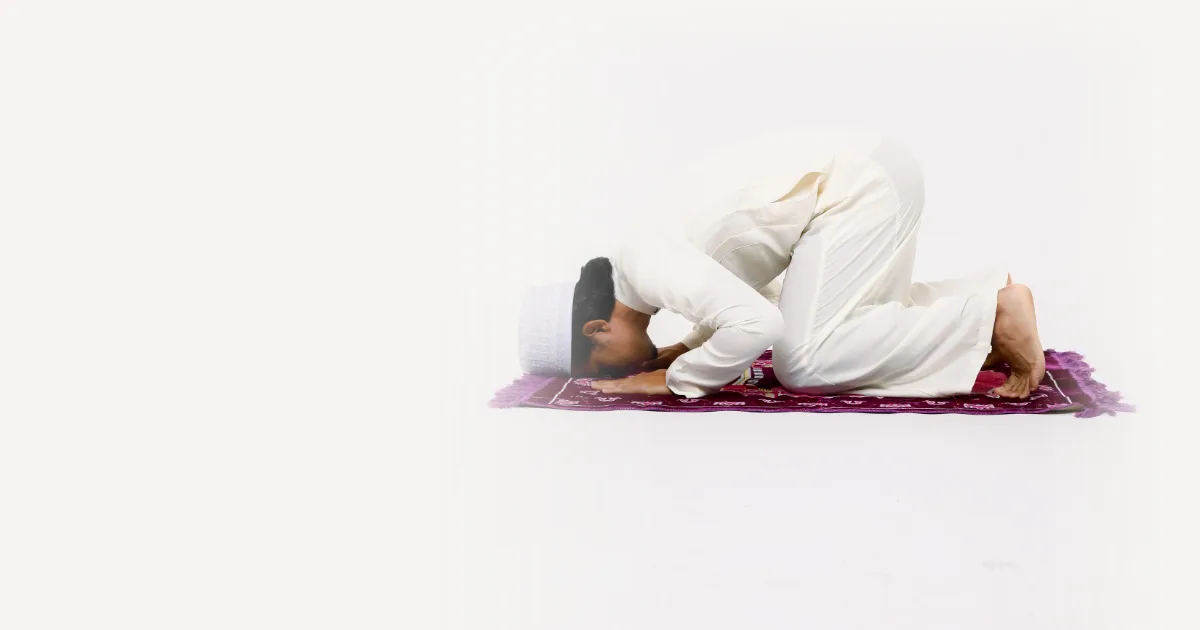
Sajda sahw (sujood as-sahw) is two prostrations made before salam to make up for something missed or a mistake in the prayer, such as forgetting the first tashahhud, adding an extra rak‘ah or being unsure how many rak‘ahs you have prayed. In the Shafi‘i school, it is a confirmed sunnah (sunnah mu’akkadah).1 Almost everyone forgets something in prayer at some point, yet many are still unsure of the basics: when sajda sahw is needed, what to say in it, and what to do if you only remember after salam.
The good news is that it is simple. This guide gives you what to say in sajda sahw in Arabic, transliteration and meaning, with audio, how to perform it step by step with pictures, and a list of the situations that happen most often, according to the Shafi‘i school.
Where to Start?
- Just want to know what to say? Go to what to say in sajda sahw (Arabic, transliteration, meaning and audio).
- In the middle of prayer and forgot something? See how to perform sajda sahw step by step.
- Not sure whether you need sajda sahw? Check the list of situations.
- Already gave salam and only just remembered? Read what you should do.
Contents
- What to Say in Sajda Sahw: Arabic, Transliteration and Meaning
- How to Perform Sajda Sahw Step by Step
- When Is Sajda Sahw Required? The Four Causes
- Sunnah Ab‘ad and Sunnah Hai’ah: The Difference
- Missing a Pillar: Sajda Sahw Does Not Replace It
- Forgetting the First Tashahhud or Dua Qunut
- Unsure How Many Rak‘ahs: Build on What Is Certain
- Sajda Sahw for the Ma’mum, the Imam and the Masbuq
- Forgot Sajda Sahw and Already Gave Salam
- Common Misconceptions About Sajda Sahw
- Frequently Asked Questions About Sajda Sahw
What to Say in Sajda Sahw: Arabic, Transliteration and Meaning
What you say in sajda sahw is the same as what you say in the sujud of the prayer. Press the audio to hear the pronunciation.
There is no specific recitation from the hadith for sajda sahw. According to the scholars of the Shafi‘i school, what is recommended is the same recitation as in the sujud of the prayer.2
What to say in sujud (in both prostrations)
سُبْحَانَ رَبِّيَ الأَعْلَى وَبِحَمْدِهِ
Subḥāna rabbiyal-a‘lā wa biḥamdih (3x)
Meaning
Glory be to my Lord, the Most High, and with His praise.
An additional recitation mentioned by some scholars
سُبْحَانَ مَنْ لَا يَنَامُ وَلَا يَسْهُو
Subḥāna man lā yanāmu wa lā yashū
Meaning
Glory be to the One who neither sleeps nor forgets.
This recitation is popular in Malaysia, but it is not a hadith of the Prophet ﷺ. Some scholars describe it as sunnah because it suits the state of someone who has forgotten. It can be recited together with the sujud tasbih above. If you left out a sunnah ab‘ad on purpose, it is more fitting to seek forgiveness (istighfar).3
What to say when sitting between the two prostrations
رَبِّ اغْفِرْ لِي وَارْحَمْنِي وَاجْبُرْنِي وَارْفَعْنِي وَارْزُقْنِي وَاهْدِنِي وَعَافِنِي وَاعْفُ عَنِّي
Rabbighfir lī warḥamnī wajburnī warfa‘nī warzuqnī wahdinī wa ‘āfinī wa‘fu ‘annī
Meaning
“My Lord, forgive me, have mercy on me, make up for my shortcomings, raise my rank, provide for me, guide me, grant me well-being, and pardon my faults.”
How to Perform Sajda Sahw Step by Step
Sajda sahw is made after the final tashahhud, before salam. It is only two prostrations with a sitting between them.
This is what the Prophet ﷺ did when he forgot to sit for the first tashahhud: he prostrated twice before salam, saying takbir for each prostration.4 The steps are the same for the imam and for someone praying alone.5
Finish the Final Tashahhud
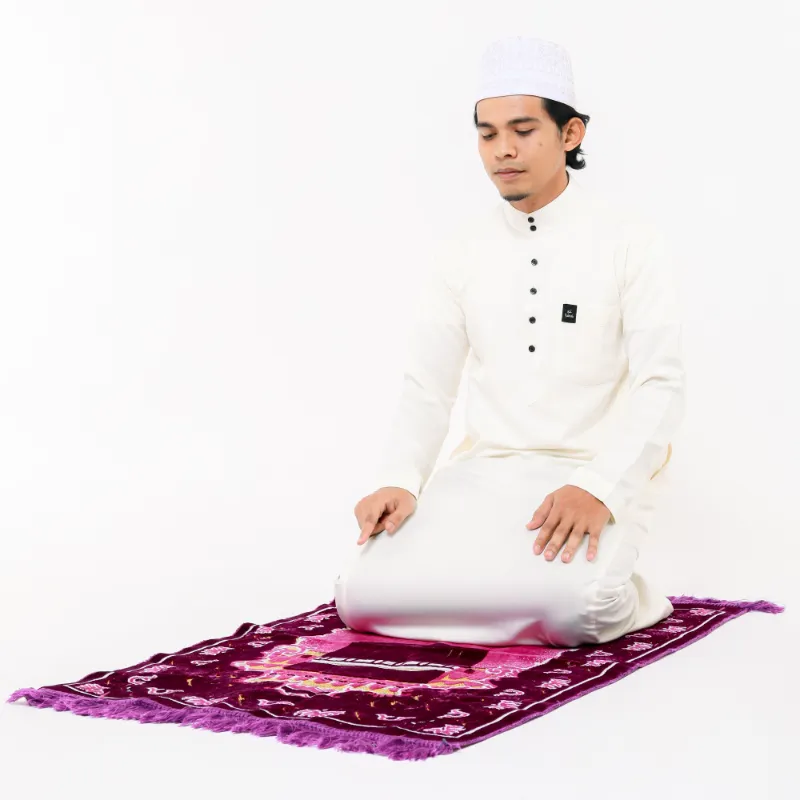
Recite the final tashahhud, salawat and dua as usual. When you reach the end, do not give salam straight away.
Make the Intention in Your Heart
The imam and someone praying alone must make the intention for sajda sahw in the heart as they begin to prostrate, for example “I make sajda sahw for Allah”. The ma’mum does not need to make the intention because he follows the imam.6
Do not say this intention aloud. Sajda sahw takes place within the prayer, so voicing its intention with the tongue, such as “Nawaitu sujūdas-sahwi…”, invalidates the prayer.7
Takbir and the First Prostration
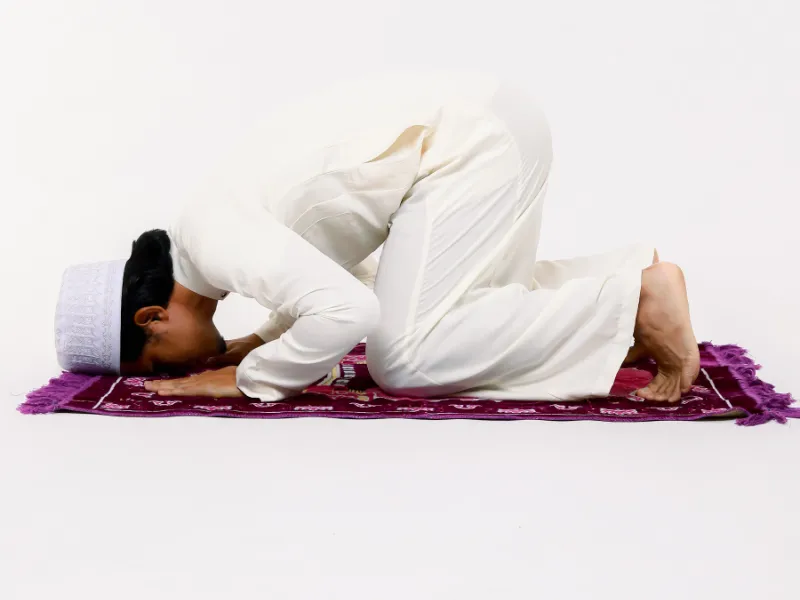
Say “Allāhu akbar” without raising the hands, then prostrate as in the sujud of the prayer. Recite the sujud tasbih three times.
Sit Between the Two Prostrations
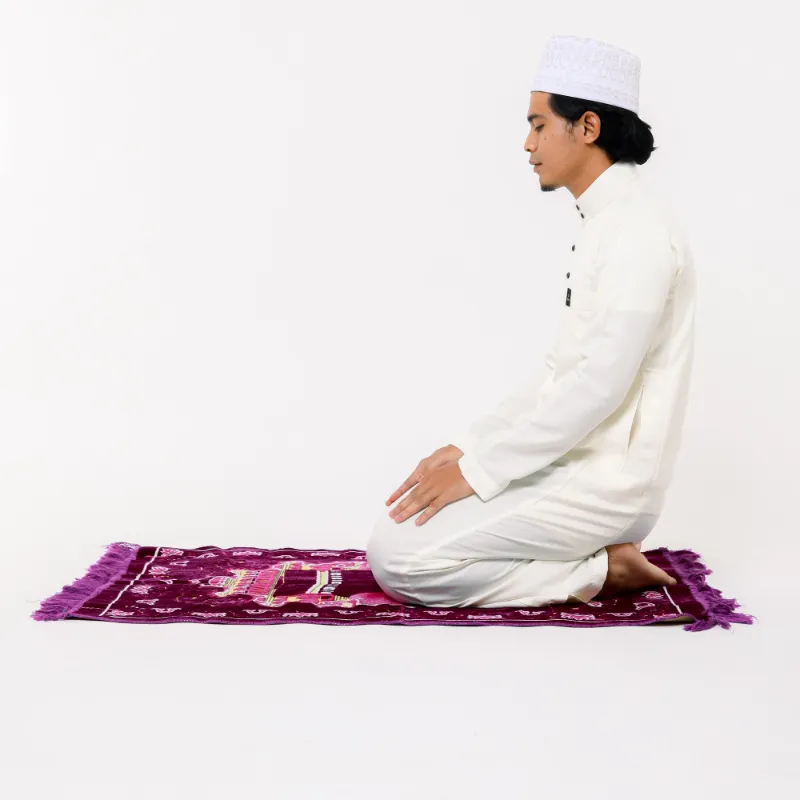
Say takbir and rise to sit in iftirash. Recite what is said when sitting between the two prostrations.
Takbir and the Second Prostration
Say takbir and prostrate once more, just like the first prostration.
Sit and Give Salam
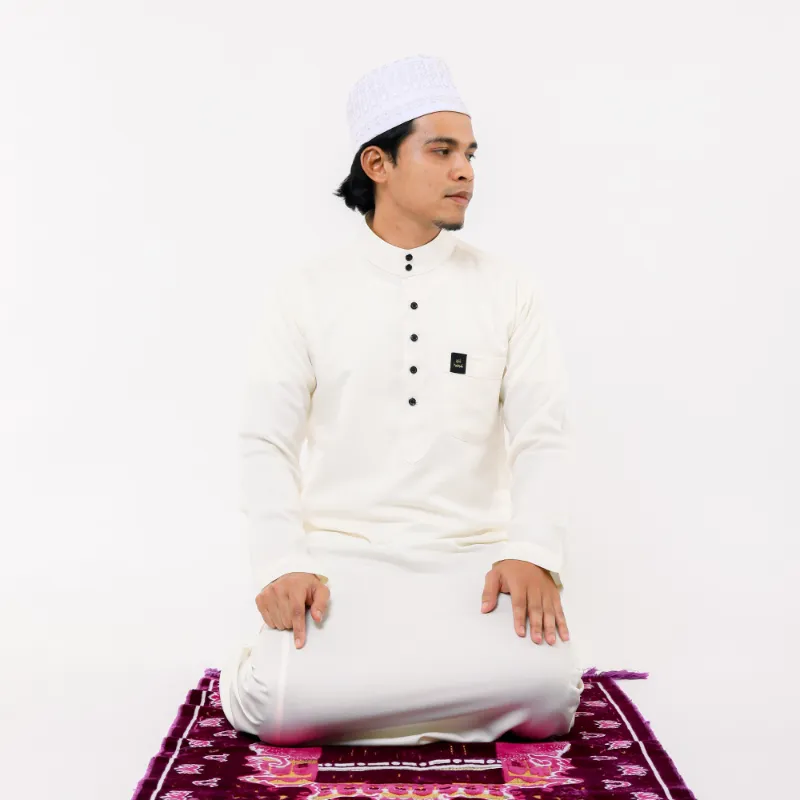
Say takbir and rise to sit in tawarruk, then give salam to the right and to the left straight away. There is no need to repeat the tashahhud.8
When Is Sajda Sahw Required? The Four Causes
Not every mistake requires sajda sahw. These are the four causes mentioned by the scholars of the Shafi‘i school.
- Leaving out a sunnah ab‘ad, for example forgetting the first tashahhud or the Fajr qunut. Even if it was left out on purpose, sajda sahw is still sunnah.10
- Doing something by mistake that would invalidate the prayer if done on purpose, for example adding an extra rak‘ah, giving salam before the prayer is complete, or speaking a little.
- Moving a recitation pillar to another place, for example reciting al-Fatihah in ruku‘ or the tashahhud while standing.11
- Doubt, for example being unsure whether you have prayed three or four rak‘ahs, or unsure whether you recited the qunut.12
Common situations and what to do
- Forgot the first tashahhud and already standing upright
Sajda sahw. Continue the prayer and do not go back to sitting.13 - Forgot the first tashahhud, remembered before standing upright
Go back, sit and recite the tashahhud. Sajda sahw only if you were already closer to standing.14 - Forgot the Fajr qunut, remembered after reaching sujud
Sajda sahw. Continue and do not go back to i‘tidal.15 - Unsure whether it is 3 or 4 rak‘ahs
Sajda sahw. Take the number you are certain of (3) and add one rak‘ah.16 - Added an extra rak‘ah by mistake
Sajda sahw. As soon as you realise, sit down at once and finish the prayer.17 - Gave salam after 2 rak‘ahs in a 4-rak‘ah prayer
If only a short time has passed: get up, complete the 2 rak‘ahs, sajda sahw. If a long time has passed: repeat the prayer.18 - Missed one sujud, remembered while standing in the next rak‘ah
Go back and make that sujud, then continue. Sajda sahw.19 - Recited al-Fatihah or the tashahhud in ruku‘ or sujud
Sajda sahw. The prayer is not invalidated.11 - Spoke a little, forgetting you were praying
Sajda sahw. Speaking a lot invalidates the prayer.20 - Missed the surah, dua iftitah, the transitional takbirs or the tasbih
No need for sajda sahw. Continue the prayer.21 - The imam makes sajda sahw
The ma’mum must follow, even without knowing the reason.22
Sunnah Ab‘ad and Sunnah Hai’ah: The Difference
Sajda sahw only makes up for a sunnah ab‘ad. A sunnah hai’ah does not need to be made up.
The sunnahs of the prayer are of two kinds. Sunnah ab‘ad are the sunnahs that are made up with sajda sahw if missed. Sunnah hai’ah are the other sunnahs, which are not made up.
List of the sunnah ab‘ad
- The first tashahhud, and sitting for it.
- The qunut (in Fajr, and in witr in the second half of Ramadan), and standing for it.
- Salawat upon the Prophet ﷺ after the first tashahhud, and sitting for it.
- Salawat upon the Prophet ﷺ in the qunut, and standing for it.
- Salawat upon the family of the Prophet ﷺ in the final tashahhud, and sitting for it.
- Salawat upon the family of the Prophet ﷺ in the qunut, and standing for it.
They come to twelve if each recitation and its position are counted separately.23 Qunut al-nazilah is not one of the sunnah ab‘ad.
Examples of sunnah hai’ah
Dua iftitah, reciting a surah after al-Fatihah, the transitional takbirs, the tasbih of ruku‘ and sujud, and other duas. If missed, the prayer is still complete and there is no sajda sahw.
Caution
Do not make sajda sahw “just to be safe” because you missed a sunnah hai’ah. If you do it on purpose while knowing the ruling, your prayer is invalidated.21
Missing a Pillar: Sajda Sahw Does Not Replace It
A pillar must be performed. Sajda sahw only makes up for other shortfalls.
If you miss a pillar such as ruku‘ or one sujud, that pillar must be performed. Sajda sahw alone is not enough.19 For example, missing one sujud in the first rak‘ah:
- Remembered while standing in the second rak‘ah: go back to sitting and make the missed sujud, then get up and continue. What you recited while standing does not count.
- Remembered after the sujud of the second rak‘ah: that sujud completes the first rak‘ah. The second rak‘ah does not count, so add one rak‘ah at the end of the prayer.
- Remembered at the end of the prayer, and the missed one is a sujud of the last rak‘ah: make that sujud, then repeat the tashahhud.
- Remembered at the end of the prayer, and the missed one is from an earlier rak‘ah: add one rak‘ah.
In all of these cases, sajda sahw before salam is sunnah. However, if what was missed is the intention or the opening takbir (takbiratul ihram), the prayer must be started again.
Forgetting the First Tashahhud or Dua Qunut
These are the two situations that happen most often. The key is whether you have already reached the next pillar.
Forgetting the first tashahhud
If you are already standing upright, continue the prayer and do not go back to sitting. Going back to sit on purpose while knowing the ruling invalidates the prayer. If you went back because you forgot or did not know, the prayer is not invalidated, but stand up at once as soon as you realise. Then make sajda sahw before salam.13
If you remember before standing upright, go back to sitting and recite the first tashahhud. Sajda sahw is sunnah if you were already closer to standing.14 The full wording of the first tashahhud is in the Attahiyat guide for the first and final tashahhud.
Forgetting dua qunut
If you have already gone down to sujud, do not go back to i‘tidal. Continue the prayer and make sajda sahw before salam.15 The full qunut, with what to do if you forget it, is in the dua qunoot guide.
Reciting the qunut before ruku‘ by mistake: that qunut does not count. Recite the qunut again after rising from ruku‘, and sajda sahw before salam is sunnah if the earlier recitation was intended as the qunut.24
Unsure How Many Rak‘ahs: Build on What Is Certain
If you are not sure how many rak‘ahs you have prayed, take the smallest number.
For example, you are unsure whether you have prayed three or four rak‘ahs. Take three because that is what is certain, add one more rak‘ah, then make sajda sahw before salam. Sajda sahw is still sunnah even if the doubt goes away before salam.16
Do not rely on a guess or on what the person beside you says, unless so many people witnessed it that you are truly certain.25
The same rule applies within sajda sahw. If you are unsure whether you have prostrated once or twice, take it as once and prostrate once more.26
Note
Doubt after giving salam about a pillar, other than the intention and the opening takbir, does not affect the prayer. A prayer that has been completed is considered valid.25
Sajda Sahw for the Ma’mum, the Imam and the Masbuq
In congregational prayer, the imam carries the mistakes of the ma’mum.
- The ma’mum makes a mistake while following the imam: no sajda sahw is needed. The imam carries it.
- The imam makes sajda sahw: the ma’mum must follow him, even without knowing what the imam’s mistake was.
- The imam made a mistake but did not make sajda sahw: the ma’mum makes sajda sahw on his own after the imam gives salam, then gives salam.22
- The masbuq (late joiner): makes sajda sahw with the imam, then gets up to complete the missed rak‘ahs, and makes sajda sahw once more before his own salam.27
The ma’mum does not need to intend sajda sahw. Following the imam is enough.6
Forgot Sajda Sahw and Already Gave Salam
Your prayer is still valid. The only difference is whether sajda sahw can still be made.
- Remembered shortly after salam: you may make the two prostrations of sajda sahw while sitting, then you must give salam again because you are considered to have returned to the prayer.
- Remembered after a long time: sajda sahw has lapsed. The prayer is still valid and does not need to be repeated.
- Gave salam on purpose knowing sajda sahw was due: sajda sahw lapses, and the prayer is still valid.28
Whether the time is “short” or “long” is judged by ‘urf, that is, what people generally consider normal.
Common Misconceptions About Sajda Sahw
Common confusions you may hear, and their explanation in the Shafi‘i school.
| Misconception | Explanation |
|---|---|
| “Subḥāna man lā yanāmu…” is the recitation of sajda sahw from the hadith | It is not a hadith. The basic recitation is the same as in the sujud of the prayer. That wording is recommended by some scholars.3 |
| The intention for sajda sahw must be said aloud | The intention is in the heart only. Saying it aloud within the prayer invalidates the prayer.7 |
| Sajda sahw is for any mistake | Not for a sunnah hai’ah such as the surah or the tasbih. If done on purpose, the prayer is invalidated.21 |
| Sajda sahw can replace a missed pillar | No. A pillar must be performed.19 |
| Many mistakes, many sajda sahw | Still only two prostrations.9 |
| Sajda sahw is obligatory, and without it the prayer is invalid | Sajda sahw is a confirmed sunnah. The prayer is still valid.1 |
| The ma’mum may choose not to follow the imam’s sajda sahw | The ma’mum must follow the imam.22 |
| The tashahhud must be repeated after sajda sahw | No need. Give salam straight away.8 |
Frequently Asked Questions About Sajda Sahw
Short answers to the questions asked most often.
Two, with a sitting between them, even if the mistake happened more than once.9
In the Shafi‘i school, sajda sahw is made before salam, that is, after the final tashahhud, the salawat and the dua.5
The imam and someone praying alone need to make the intention in the heart as they begin to prostrate. Do not say the intention aloud because it invalidates the prayer. The ma’mum does not need to make the intention.6,7
The prayer is still valid because sajda sahw is a confirmed sunnah. However, you miss out on a strongly encouraged sunnah.1
Yes. Mistakes in a sunnah prayer have the same ruling as in an obligatory prayer.29
No need. Reciting a surah is a sunnah hai’ah. Making sajda sahw for it on purpose, while knowing the ruling, invalidates the prayer.21
Yes. According to the most correct view (al-asahh), sajda sahw is still sunnah even if the sunnah ab‘ad was left out on purpose.10
Closing
Sajda sahw is a mercy that makes things easy. Allah does not demand a prayer free from forgetfulness, but He teaches us how to make up for it with two simple prostrations. What matters is knowing when it is needed, and when it is not needed at all.
May this guide be of help to you, insha’Allah.
Footnotes & References
- Sajda sahw is sunnah when a person leaves out something commanded or does something prohibited in the prayer. It is a confirmed sunnah, including in sunnah prayers, except the funeral prayer. [al-Nawawi, Minhaj al-Talibin, p. 33. Ibn Hajar al-Haitami, Tuhfat al-Muhtaj, vol. 2, p. 169] ↩︎
- The scholars of the school do not mention a specific recitation for sajda sahw. What is recommended is the same recitation as in the sujud of the prayer. [al-Nawawi, Raudat al-Talibin, vol. 1, p. 315. Ibn Hajar al-Haitami, Tuhfat al-Muhtaj, vol. 2, p. 199. al-Khatib al-Shirbini, Mughni al-Muhtaj, vol. 1, p. 439] ↩︎
- Some scholars mention that it is sunnah to recite “Subḥāna man lā yanāmu wa lā yashū” because it suits the situation. Ibn Hajar and al-Zarkashi explain that it suits someone who truly forgot. If the mistake was deliberate, what is fitting is to seek forgiveness. [al-Nawawi, Raudat al-Talibin, vol. 1, p. 315. Ibn Hajar al-Haitami, Tuhfat al-Muhtaj, vol. 2, p. 199. Shamsuddin al-Ramli, Nihayat al-Muhtaj, vol. 2, p. 88-89] ↩︎
- The Prophet ﷺ forgot to sit for the first tashahhud, so before salam he prostrated twice while sitting, saying takbir for each prostration, then gave salam. [Narrated by al-Bukhari, no. 1224, and Muslim, no. 570] ↩︎
- The place of sajda sahw is after the final tashahhud and the salawat, before salam. It is two prostrations like the sujud of the prayer with a sitting between them, even if the mistake happened many times. [al-Nawawi, Minhaj al-Talibin, p. 34. al-Nawawi, Raudat al-Talibin, vol. 1, p. 315] ↩︎
- The intention for sajda sahw is obligatory for the imam and for someone praying alone, that is, a purpose in the heart as they begin to prostrate. The ma’mum does not need to make the intention because he only follows the imam. [Ibn Hajar al-Haitami, Tuhfat al-Muhtaj, vol. 2, p. 199-200. Shamsuddin al-Ramli, Nihayat al-Muhtaj, vol. 2, p. 89] ↩︎
- According to Ibn Hajar and al-Ramli, voicing the intention for sajda sahw with the tongue within the prayer invalidates the prayer because there is no need to voice it. [Ibn Hajar al-Haitami, Tuhfat al-Muhtaj, vol. 2, p. 200. Shamsuddin al-Ramli, Nihayat al-Muhtaj, vol. 2, p. 89] ↩︎
- There is no need to repeat the tashahhud after sajda sahw. If it is repeated anyway, the prayer is not invalidated. [Ibn Hajar al-Haitami, Tuhfat al-Muhtaj, vol. 2, p. 200. Shamsuddin al-Ramli, Nihayat al-Muhtaj, vol. 2, p. 90] ↩︎
- Even if mistakes happen many times, sajda sahw is still only two prostrations, just as the Prophet ﷺ prostrated twice in the incident of Dhul-Yadayn, which involved several mistakes. [al-Nawawi, Minhaj al-Talibin, p. 34. Ibn Hajar al-Haitami, Tuhfat al-Muhtaj, vol. 2, p. 198] ↩︎
- Sajda sahw is also sunnah for leaving out a sunnah ab‘ad on purpose, according to the most correct view (al-asahh). [Ibn Hajar al-Haitami, Tuhfat al-Muhtaj, vol. 2, p. 173. Zainuddin al-Malibari, Fath al-Mu‘in, vol. 1, p. 134] ↩︎
- Reciting a recitation pillar such as al-Fatihah or the tashahhud in another place does not invalidate the prayer, and sajda sahw is sunnah. [al-Nawawi, Minhaj al-Talibin, p. 33. Ibn Hajar al-Haitami, Tuhfat al-Muhtaj, vol. 2, p. 176] ↩︎
- Sajda sahw is sunnah for leaving out a sunnah ab‘ad, for doing by mistake something that invalidates the prayer if done on purpose, for moving a recitation pillar to another place, and for doubt. [al-Nawawi, Minhaj al-Talibin, p. 33-34. Zainuddin al-Malibari, Fath al-Mu‘in, vol. 1, p. 134-137] ↩︎
- If you forget the first tashahhud and are already standing upright, you may not go back to sitting. If you go back on purpose knowing it is forbidden, the prayer is invalidated. If it was out of forgetfulness or ignorance, the prayer is not invalidated, you must stand up at once, and sajda sahw is sunnah. A ma’mum who stood up alone must go back to follow the imam. [al-Nawawi, Minhaj al-Talibin, p. 33-34. Ibn Hajar al-Haitami, Tuhfat al-Muhtaj, vol. 2, p. 178-180] ↩︎
- If you remember before standing upright, go back to sitting for the tashahhud. Sajda sahw is sunnah if you were already closer to standing. [Ibn Hajar al-Haitami, Tuhfat al-Muhtaj, vol. 2, p. 183. Shamsuddin al-Ramli, Nihayat al-Muhtaj, vol. 2, p. 77] ↩︎
- If you forget the qunut and have already reached sujud, do not go back to i‘tidal. Continue the prayer and make sajda sahw before salam. [al-Nawawi, Minhaj al-Talibin, p. 34. Ibn Hajar al-Haitami, Tuhfat al-Muhtaj, vol. 2, p. 184-185] ↩︎
- If you are in doubt whether you have prayed three or four rak‘ahs, take the number you are certain of, add one rak‘ah and make sajda sahw, even if the doubt goes away before salam. The Prophet ﷺ said: “Let him cast aside the doubt and build on what he is certain of, then prostrate twice before giving salam.” [al-Nawawi, Minhaj al-Talibin, p. 34. Ibn Hajar al-Haitami, Tuhfat al-Muhtaj, vol. 2, p. 187. Narrated by Muslim, no. 571] ↩︎
- The Prophet ﷺ once prayed Zuhr with five rak‘ahs, then he prostrated twice. [Narrated by al-Bukhari, no. 1226. Ibn Hajar al-Haitami, Tuhfat al-Muhtaj, vol. 2, p. 174] ↩︎
- If you give salam before the prayer is complete out of forgetfulness and remember within a short time, continue the prayer even if you have spoken a little or turned away from the qiblah, then make sajda sahw. If a long time has passed, the prayer is repeated. [Ibn Hajar al-Haitami, Tuhfat al-Muhtaj, vol. 2, p. 190-191. Zainuddin al-Malibari, Fath al-Mu‘in, vol. 1, p. 140. Narrated by al-Bukhari, no. 1229] ↩︎
- A missed pillar must be performed and cannot be replaced with sajda sahw. What is done after the missed pillar does not count until that pillar is performed. [al-Nawawi, Minhaj al-Talibin, p. 29-30 and 33. Ibn Hajar al-Haitami, Tuhfat al-Muhtaj, vol. 2, p. 170] ↩︎
- Speaking a little out of forgetfulness does not invalidate the prayer, and sajda sahw is sunnah. Speaking a lot invalidates the prayer even if out of forgetfulness. [al-Nawawi, Minhaj al-Talibin, p. 33. Zainuddin al-Malibari, Fath al-Mu‘in, vol. 1, p. 137] ↩︎
- Sunnahs other than the ab‘ad, such as dua iftitah, the surah, the transitional takbirs and the tasbih, are not made up with sajda sahw. If someone makes sajda sahw for them on purpose while knowing the ruling, his prayer is invalidated. [al-Nawawi, Minhaj al-Talibin, p. 33. Ibn Hajar al-Haitami, Tuhfat al-Muhtaj, vol. 2, p. 173-174. Shamsuddin al-Ramli, Nihayat al-Muhtaj, vol. 2, p. 70] ↩︎
- The mistakes of the ma’mum while following the imam are carried by the imam. If the imam makes sajda sahw, the ma’mum must follow him even without knowing the reason. If the imam does not prostrate, the ma’mum prostrates on his own after the imam gives salam. [al-Nawawi, Minhaj al-Talibin, p. 34. Ibn Hajar al-Haitami, Tuhfat al-Muhtaj, vol. 2, p. 192-196] ↩︎
- The sunnah ab‘ad are the first tashahhud, the qunut, salawat upon the Prophet ﷺ after both of them, and salawat upon his family in the final tashahhud and in the qunut, together with the sitting or standing for each. They come to twelve. [Ibn Hajar al-Haitami, Tuhfat al-Muhtaj, vol. 2, p. 171-173. Shamsuddin al-Ramli, Nihayat al-Muhtaj, vol. 2, p. 69-70] ↩︎
- In the Shafi‘i school, the Fajr qunut is recited after ruku‘. A qunut recited before ruku‘ does not count, the prayer is not invalidated, and sajda sahw is sunnah (al-Majmū‘ 3/496: «الصحيح أنه لا تبطل صلاته ولا يجزئه ويسجد للسهو»). It is recited again after rising from ruku‘ (Rawḍah al-Ṭālibīn 1/255: «لم يحسب على الصحيح، بل يعيده بعد الرفع»). That sajda sahw is sunnah if the first recitation was intended as the qunut (Ḥāshiyah al-Shabrāmallisī ‘alā Nihāyah al-Muḥtāj 1/503: «فيقنت بعده ويسجد للسهو إن نوى بالأول القنوت»). ↩︎
- A person in doubt does not rely on his own guess or on what others say or do, even if they are many, unless it reaches the level of mutawatir. Doubt after salam about a pillar, other than the intention and the opening takbir, does not affect the prayer. [Ibn Hajar al-Haitami, Tuhfat al-Muhtaj, vol. 2, p. 187. al-Nawawi, Minhaj al-Talibin, p. 34] ↩︎
- If you are unsure of the number of prostrations within sajda sahw, take what is certain, that is, the smaller number (Rawḍah al-Ṭālibīn 1/308 and al-Majmū‘ 4/128: «ولو شك هل سجد للسهو سجدة أم سجدتين سجد أخرى»). ↩︎
- The masbuq makes sajda sahw with the imam, then prostrates once more at the end of his own prayer. His mistakes after the imam gives salam are not carried by the imam. [al-Nawawi, Minhaj al-Talibin, p. 34] ↩︎
- If you give salam on purpose, sajda sahw lapses. If you give salam out of forgetfulness and remember within a short time according to ‘urf, you may prostrate, you are considered to have returned to the prayer, and you must give salam again. If a long time has passed, sajda sahw lapses and the prayer is still valid. [al-Nawawi, Minhaj al-Talibin, p. 34. Ibn Hajar al-Haitami, Tuhfat al-Muhtaj, vol. 2, p. 202-203. al-Nawawi, Raudat al-Talibin, vol. 1, p. 316-317] ↩︎
- Mistakes in a sunnah prayer have the same ruling as in an obligatory prayer, so sajda sahw is also sunnah. [al-Nawawi, Raudat al-Talibin, vol. 1, p. 317. Ibn Hajar al-Haitami, Tuhfat al-Muhtaj, vol. 2, p. 169] ↩︎
Further Bibliography
- al-Nawawi, Minhaj al-Talibin wa ‘Umdat al-Muftin.
- al-Nawawi, Raudat al-Talibin, vol. 1.
- Ibn Hajar al-Haitami, Tuhfat al-Muhtaj bi Sharh al-Minhaj, vol. 2.
- Shamsuddin al-Ramli, Nihayat al-Muhtaj ila Sharh al-Minhaj, vol. 2.
- al-Khatib al-Shirbini, Mughni al-Muhtaj, vol. 1.
- Zainuddin al-Malibari, Fath al-Mu‘in, vol. 1.
- al-Bukhari, Sahih al-Bukhari, and Muslim, Sahih Muslim.