

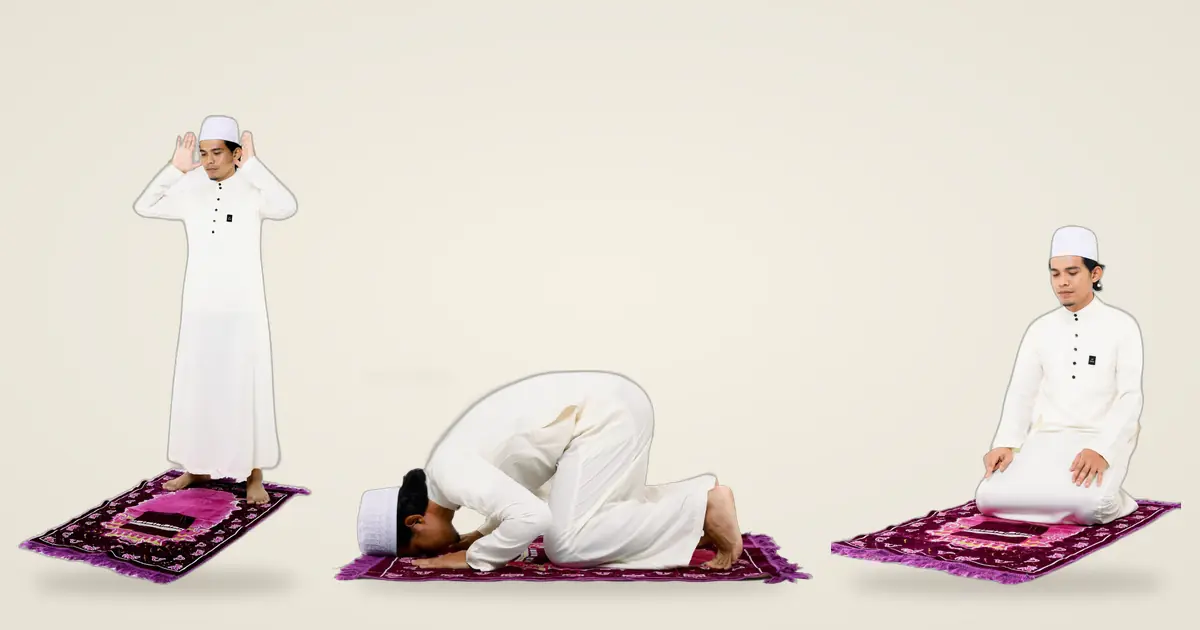
This is a complete guide to the 13 pillars of salah (the rukun of the obligatory prayer) in the Shafi‘i school. It explains each pillar one by one, what must be done and recited, and how to make sure your prayer is valid.
A pillar (rukn) is a part of the prayer that must be present. If one pillar is missing, the prayer is not valid, even if every sunnah act is done perfectly.1
The pillars are arranged by number, from the first to the last, with pictures and the minimum that must be fulfilled. It suits students, parents teaching their children, and new Muslims.
The 13 Pillars of Salah
- Intention (niyyah)
- Standing upright (for those who are able)
- Takbiratul ihram
- Reciting al-Fatihah
- Ruku‘
- I‘tidal
- Sujud twice
- Sitting between the two sujud
- Sitting for the final tashahhud
- Reciting the final tashahhud
- Salawat upon the Prophet ﷺ
- The first salam
- Correct order (tartib)
The 5th pillar is ruku‘, the 10th pillar is reciting the final tashahhud, and the last pillar is correct order.2
Contents
- List of the 13 Pillars of Salah and Their Types
- The 13 Pillars of Salah Explained One by One
- The Pillars of Salah Fall Into 3 Types: Qalbi, Qawli and Fi‘li
- Tuma’ninah, Short Pillars and the Count of 14 or 17 Pillars
- Pillars, Conditions and Sunnah Acts of Prayer: The Difference
- If You Miss a Pillar of Salah
- Frequently Asked Questions About the Pillars of Salah
List of the 13 Pillars of Salah and Their Types
This table suits quick reference and revision. Click the name of a pillar for its full explanation.
| No. | Pillar | Type | What is required (minimum) |
|---|---|---|---|
| 1 | Intention (niyyah) | Qalbi | In the heart at the takbir: intending to pray, which prayer, and that it is obligatory |
| 2 | Standing upright | Fi‘li | Spine upright (obligatory prayer, if able) |
| 3 | Takbiratul ihram | Qawli | “Allāhu akbar”, loud enough for yourself to hear |
| 4 | Reciting al-Fatihah | Qawli | Seven verses with the basmalah, in every rak‘ah |
| 5 | Ruku‘ | Fi‘li | Bending until the palms reach the knees, with tuma’ninah |
| 6 | I‘tidal | Fi‘li | Returning to stand upright, with tuma’ninah |
| 7 | Sujud twice | Fi‘li | Uncovered forehead on the ground, seven body parts, with tuma’ninah |
| 8 | Sitting between the two sujud | Fi‘li | Sitting with tuma’ninah, not prolonged |
| 9 | Sitting for the final tashahhud | Fi‘li | Sitting during the final tashahhud, salawat and salam |
| 10 | Reciting the final tashahhud | Qawli | The minimum wording of the tashahhud |
| 11 | Salawat upon the Prophet ﷺ | Qawli | “Allāhumma ṣalli ‘alā Muḥammad” |
| 12 | The first salam | Qawli | “As-salāmu ‘alaikum” |
| 13 | Correct order (tartib) | Fi‘li | All pillars in their order |
Types of pillar: qalbi done in the heart, qawli said with the tongue, and fi‘li done with the body.3
A note on the order
This order follows the Malaysian school textbooks, except that the KSSR textbook lists standing upright as the first pillar and the intention as the second.4 The book Minhaj al-Talibin lists the intention and takbir first, then standing.5 The content is the same. What matters is that the intention is present in the heart at the takbiratul ihram, and that you are already standing upright at that moment.
The 13 Pillars of Salah Explained One by One
Each pillar below comes with the minimum that is required. Anything beyond that perfects it and is sunnah.
Pillar 1: Intention (Niyyah)
The intention is the resolve in the heart to perform the prayer. It is made while saying the takbiratul ihram, not before or after it.6
For an obligatory prayer, the heart must bring three things to mind:
- Intending to pray (qasd)
- Which prayer, for example Zuhr or ‘Asr (ta‘yin)
- Obligatory, that is, the prayer that has been made compulsory
Saying the intention aloud, such as “Uṣallī farḍaẓ-ẓuhri…”, before the takbir is sunnah, to help the heart. The pillar itself is the intention in the heart.7
Pillar 2: Standing Upright
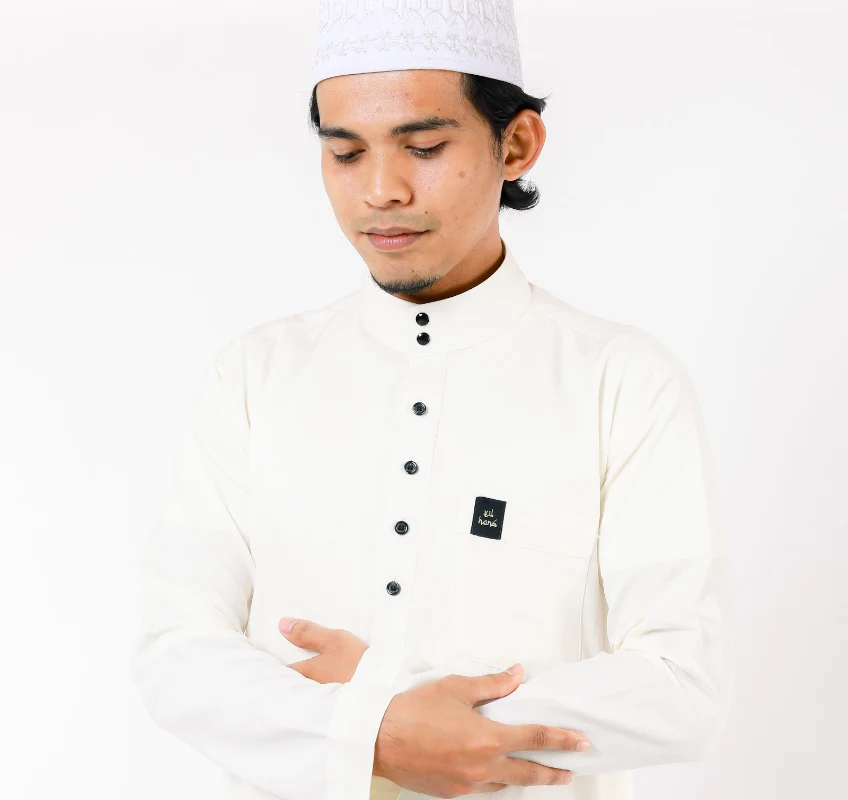
Standing with an upright spine is a pillar of the obligatory prayer for those who are able, including children. Standing so hunched or tilted that it no longer counts as standing makes this pillar invalid.8
For those with an excuse:
- Unable to stand: pray sitting.
- Unable to sit: pray lying on the right side, facing the qiblah.9
- Unable even then: make signs with the head or the eyes. The prayer is not dropped as long as the mind is sound.10
A sunnah prayer may be performed sitting, even if you are able to stand.
Pillar 3: Takbiratul Ihram
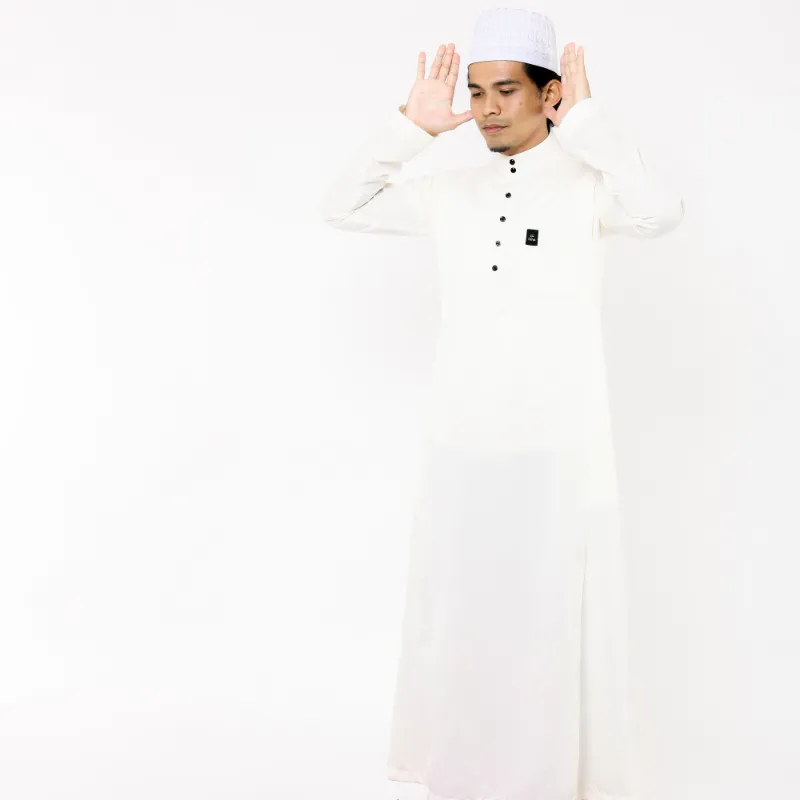
The takbiratul ihram is the first takbir that begins the prayer. Its wording is “Allāhu akbar”, said exactly in that order and loud enough for yourself to hear.11,12
It is called the takbir of “ihram” because after it, everything unrelated to the prayer becomes forbidden (haram) until the salam.13
Changing the order, such as “Akbarullāh”, is not valid. A new Muslim who cannot yet say it properly may say its meaning for the time being, while continuing to learn.
Pillar 4: Reciting al-Fatihah
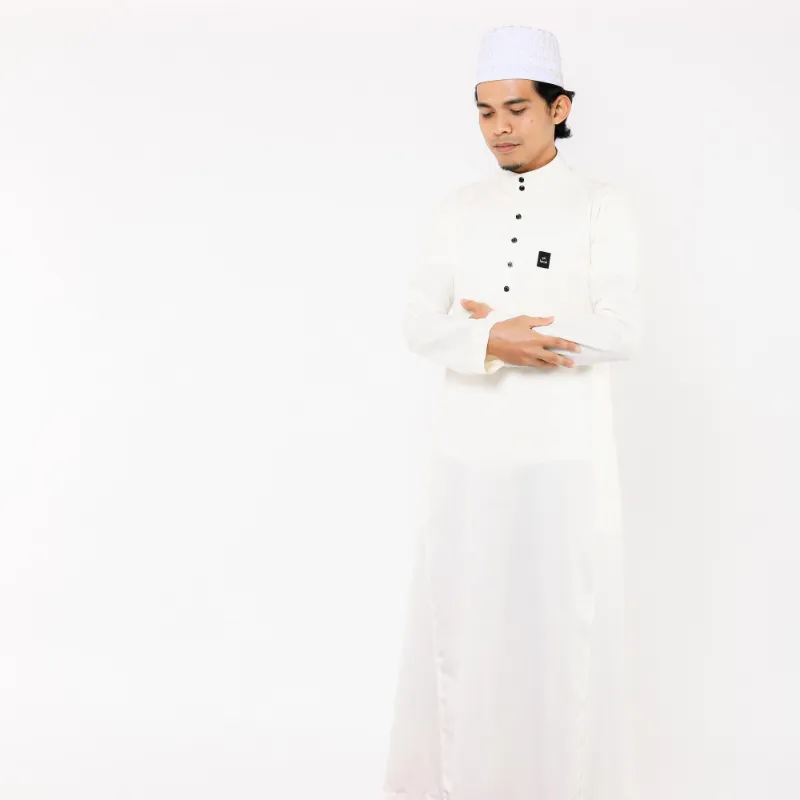
Reciting Surah al-Fatihah is a pillar in every rak‘ah, whether praying alone, leading as imam or following an imam.14
What must be observed:15
- All seven verses, beginning with the basmalah
- Every shaddah (doubled letter) is pronounced
- Letters are pronounced correctly
- Recited in the order of the verses, without interruption
Exception: a latecomer (masbuq) who has no time to recite it because the imam has already gone into ruku‘.
Pillar 5: Ruku‘ (Bowing)
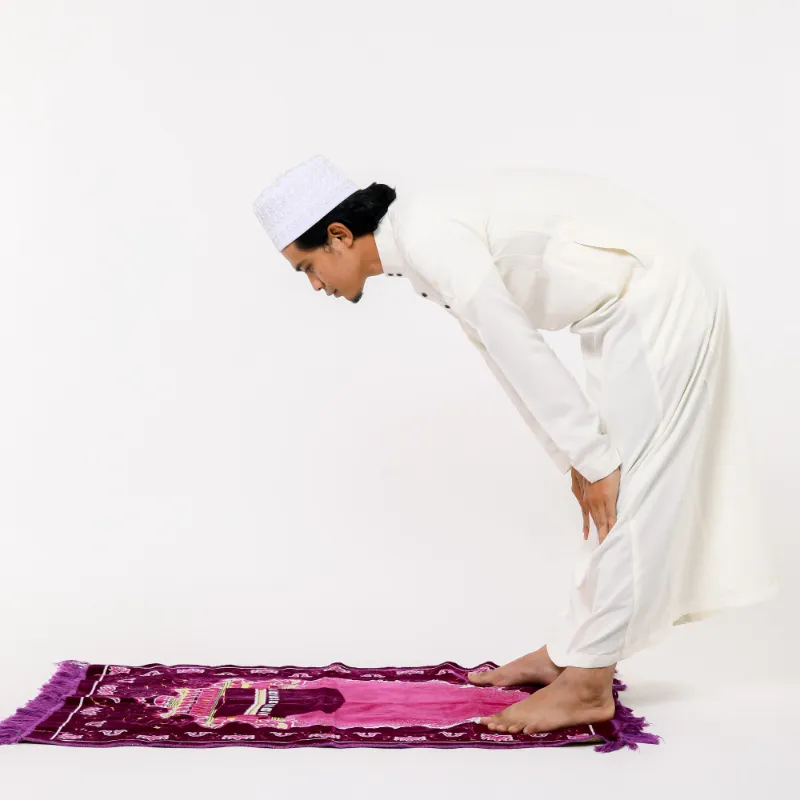
Ruku‘ is bowing after reciting al-Fatihah. Its minimum: bending so far that, if the palms were placed on the knees, they would reach them.16
Then remain still for a moment until the body is settled. This is tuma’ninah, and it is obligatory in ruku‘.17 A level back and neck is the most complete form.
Pillar 6: I‘tidal (Standing Up After Ruku‘)
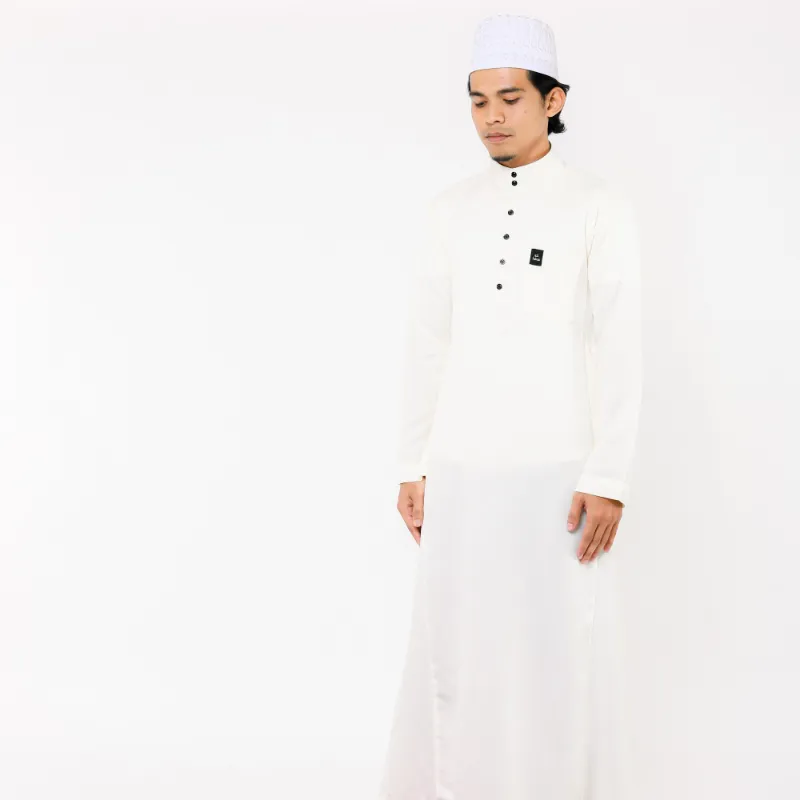
I‘tidal is rising from ruku‘ and returning to stand upright as before ruku‘, then remaining still for a moment (tuma’ninah).18
I‘tidal is a short pillar. Do not deliberately prolong it far beyond its dhikr. See long pillars and short pillars.
Pillar 7: Sujud Twice (Prostration)

Sujud is performed twice in every rak‘ah. The minimum for each sujud:19
- Part of the forehead, uncovered, touches the place of prostration
- Both palms, both knees and the toes of both feet are also placed down
- The hips are higher than the head
- Remaining still for a moment (tuma’ninah)
The forehead does not count if it is covered by cloth that moves with the body, such as the end of a turban, a cap or a headscarf being worn. Placing the nose down is sunnah.20
Pillar 8: Sitting Between the Two Sujud
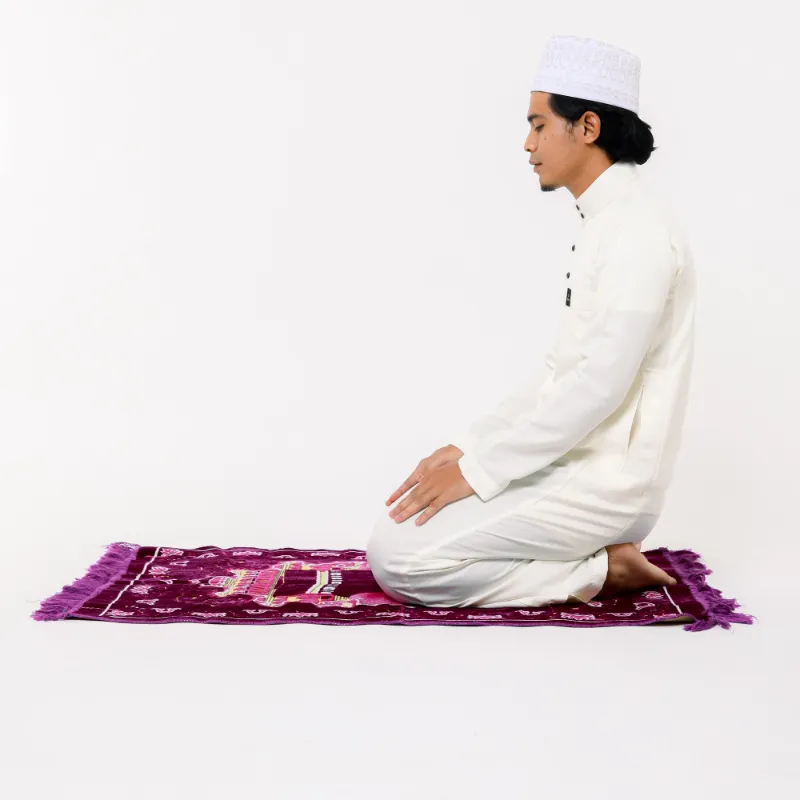
After the first sujud, rise and sit upright, then remain still for a moment before the second sujud.21
Like i‘tidal, this sitting is a short pillar. It must not be deliberately prolonged.
Pillar 9: Sitting for the Final Tashahhud
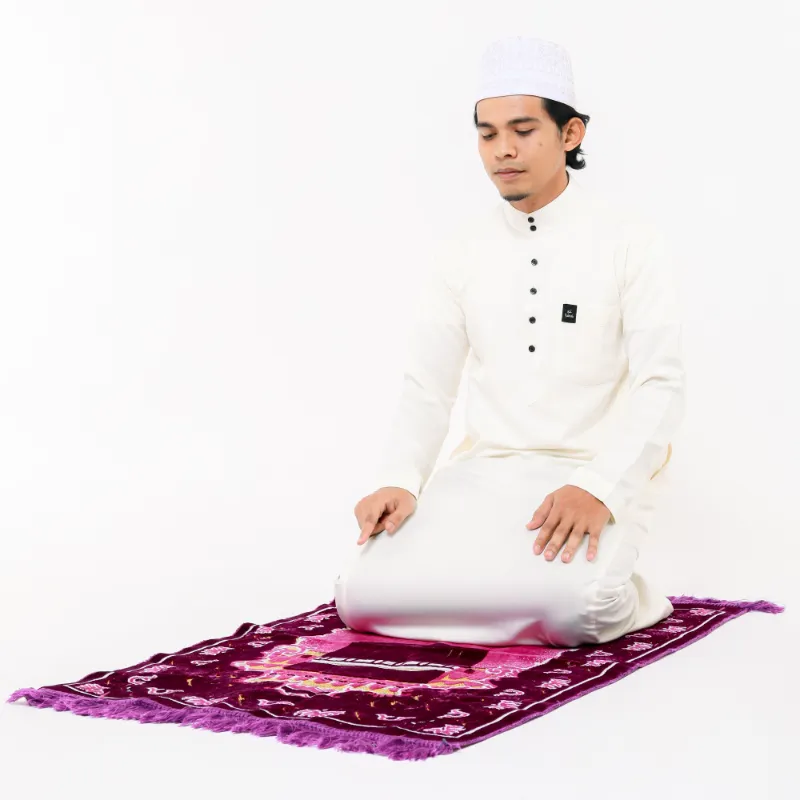
Sitting in the last rak‘ah to recite the final tashahhud, the salawat and the salam. Any manner of sitting is valid.22
The sunnah way is tawarruk: the left hip on the ground, the left foot brought out beneath the right leg, and the right foot upright.
Pillar 10: Reciting the Final Tashahhud
Reciting the tashahhud (attahiyat) in the final sitting is a pillar. The minimum that is valid:23
At-taḥiyyātu lillāh, salāmun ‘alaika ayyuhan-nabiyyu wa raḥmatullāhi wa barakātuh, salāmun ‘alainā wa ‘alā ‘ibādillāhiṣ-ṣāliḥīn, ashhadu allā ilāha illallāh, wa ashhadu anna Muḥammadar rasūlullāh.
The full wording that is commonly recited is better. See the complete recitation with audio in Attahiyat: the first and final tashahhud.
Pillar 11: Salawat upon the Prophet ﷺ
After the final tashahhud, it is obligatory to send salawat upon the Prophet ﷺ. The minimum is “Allāhumma ṣalli ‘alā Muḥammad”.24
The complete Salawat Ibrahimiyyah is sunnah and better.
Pillar 12: The First Salam
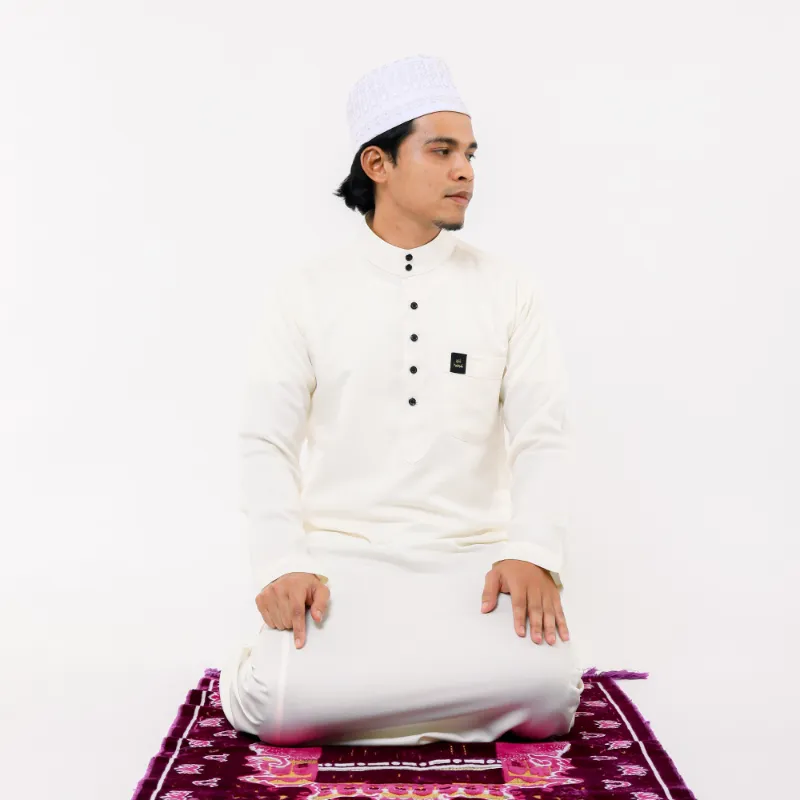
The first salam is the pillar that ends the prayer. The minimum is “As-salāmu ‘alaikum”, while seated.25
Turning the head to the right and left, the second salam, and adding “wa raḥmatullāh” are sunnah.
Pillar 13: Correct Order (Tartib)
Tartib means doing all the pillars in their order, from the first pillar to the 12th. For example, ruku‘ must come before sujud.26
Deliberately changing the order of the physical pillars invalidates the prayer.27 If it happens by forgetting, follow the steps in if you miss a pillar.
The Pillars of Salah Fall Into 3 Types: Qalbi, Qawli and Fi‘li
An easy way to remember the 13 pillars is to divide them into three types.
| Type | Meaning | Count | Pillar |
|---|---|---|---|
| Qalbi | In the heart | 1 | Intention (niyyah) |
| Qawli | Said with the tongue | 5 | Takbiratul ihram, al-Fatihah, final tashahhud, salawat, first salam |
| Fi‘li | Actions of the body | 7 | Standing, ruku‘, i‘tidal, sujud, sitting between the two sujud, sitting for the final tashahhud, correct order |
This division is mentioned in I‘anat al-Talibin, including placing correct order among the fi‘li pillars.3
Why does it matter? Every qawli pillar must be said at least loud enough for your own ears to hear. Saying it only in the heart is not enough.12
The fi‘li pillars must also follow their order. Deliberately doing a physical pillar early, such as sujud before ruku‘, invalidates the prayer.27
Tuma’ninah, Short Pillars and the Count of 14 or 17 Pillars
These three points often cause confusion, especially when learning from different sources.
What Is Tuma’ninah?
Tuma’ninah is remaining still for a moment until every part of the body is settled, before moving to the next position.17 It is obligatory in four pillars: ruku‘, i‘tidal, sujud and sitting between the two sujud.
Its evidence is the hadith of a man who prayed in haste. The Prophet ﷺ told him to repeat his prayer, then taught him to bow, rise, prostrate and sit calmly.28
Long Pillars and Short Pillars
I‘tidal and sitting between the two sujud are short pillar. Both serve as a separation between other pillars, so they must not be prolonged.29
If one is deliberately prolonged far beyond its dhikr, roughly the length of reciting al-Fatihah during i‘tidal, the prayer may be invalidated.30 I‘tidal while reciting qunoot is an exception, because it is prescribed to be long.31
The other physical pillars, such as standing, ruku‘, sujud and sitting for the final tashahhud, are long pillars.
Why Do Some Books Mention 14, 17 or 18 Pillars?
All the books of the Shafi‘i school agree on the content of the pillars of prayer. What differs is how tuma’ninah is counted.32
- 13 pillars: tuma’ninah is counted as part of ruku‘, i‘tidal, sujud and sitting between the two sujud. This is the count of Minhaj al-Talibin and the school textbooks.
- 14 pillars: tuma’ninah is counted as one separate pillar (Fath al-Mu‘in).
- 17 pillars: tuma’ninah in four places is counted as four separate pillars (Rawdat al-Talibin).
- 18 pillars: the intention to leave the prayer is added (al-Tanbih). This intention is not obligatory according to the sounder view.
So if you learned 17 pillars, you are not wrong. The content is the same, only the way of counting differs.
Pillars, Conditions and Sunnah Acts of Prayer: The Difference
Many people confuse pillars with conditions. Both are obligatory, but their place is different.
| Place | If missed | Example | |
|---|---|---|---|
| Pillar | Part of the prayer itself | The prayer is not valid. It must be done | Ruku‘, sujud, al-Fatihah |
| Condition of validity | Outside the prayer, must be present before and throughout the prayer | The prayer is not valid | Wudu, covering the ‘awrah, facing the qiblah |
| Sunnah ab‘ad | A sunnah within the prayer | The prayer is valid. Sujud sahwi is recommended | First tashahhud, Fajr qunoot |
| Sunnah hay’ah | A sunnah within the prayer | The prayer is valid. No sujud sahwi | Dua iftitah, a surah, the tasbih of ruku‘ |
The Shafi‘i jurists give an easy comparison to remember: the pillars are like the head, the conditions like the soul, the sunnah ab‘ad like the limbs, and the sunnah hay’ah like the hair.33
If You Miss a Pillar of Salah
The ruling depends on whether the pillar was left out deliberately, by forgetting, or out of doubt.
Leaving Out a Pillar Deliberately
The prayer is invalid. Repeat that prayer from the start.34
Forgetting the Intention or the Takbiratul Ihram
The prayer has not yet begun. Start again with the intention and the takbiratul ihram.35
Forgetting Another Pillar
Whatever is done after the missed pillar does not count. Then:36
- You remember before reaching the same pillar in the next rak‘ah: go back straight away and do the missed pillar, then carry on with the prayer as normal.
- You remember after reaching the same pillar in the next rak‘ah: that pillar completes the incomplete rak‘ah. What lies in between does not count, so add one rak‘ah at the end of the prayer.
- You remember after the salam: if not much time has passed, complete the prayer that was short. If a long time has passed, repeat the prayer.37
A simple example
In the first rak‘ah, you forget the second sujud and stand straight up. If you remember while standing, go back straight away and do the second sujud, then carry on with the prayer. If you only remember after the sujud of the second rak‘ah, that sujud completes the first rak‘ah, and you must add one rak‘ah at the end of the prayer.
Doubting Whether You Have Done a Pillar
While still in the prayer, assume you have not done it and do that pillar.38 Doubts after the salam are not to be acted upon, except about the intention or the takbiratul ihram.39
Sujud Sahwi Does Not Replace a Pillar
In these cases of forgetting or doubt, sujud sahwi (the prostration of forgetfulness) before the salam is recommended. But sujud sahwi does not replace a pillar. The missed pillar must still be done.40
For a follower (ma’mum)
A follower does not go back. For example, a follower who realises during ruku‘ that he has not recited al-Fatihah continues to follow the imam, then adds one rak‘ah after the imam gives the salam.41
Frequently Asked Questions About the Pillars of Salah
Short answers to the questions asked most often.
There are 13 pillars of salah according to the count of Minhaj al-Talibin and the school textbooks in Malaysia. Some books count 14 or 17 because they count tuma’ninah separately, but the content is the same.32
The intention, made in the heart at the takbiratul ihram. The KSSR textbook lists standing upright as the first pillar and the intention as the second, because a person is already standing before the prayer begins.4
Ruku‘ with tuma’ninah, that is, bending until the palms reach the knees and remaining still for a moment.16
Reciting the final tashahhud. The 9th pillar is sitting for the final tashahhud and the 11th pillar is the salawat upon the Prophet ﷺ.
The 13th pillar is correct order (tartib), that is, doing all the pillars in their order. The last pillar performed in the prayer is the first salam (the 12th pillar).26
Three types: qalbi (1, the intention), qawli (5) and fi‘li (7).3
The pillars that must be said with the tongue: the takbiratul ihram, al-Fatihah, the final tashahhud, the salawat upon the Prophet ﷺ and the first salam. They must be loud enough for yourself to hear.12
I‘tidal and sitting between the two sujud. Neither may be deliberately prolonged.29
Yes, they are the same. The difference is only in some sunnah acts, for example women keep their limbs close together in ruku‘ and sujud.42
A pillar is part of the prayer itself, such as ruku‘ and sujud. A condition is something outside the prayer that must be present before and throughout it, such as wudu and covering the ‘awrah. Both are obligatory.33
No. A missed pillar must be done. Sujud sahwi is recommended, but it does not replace a pillar.40
Closing
The pillars are the support of the prayer. As long as these 13 pillars are kept, your prayer is valid even if your sunnah recitations are still few. Start by making sure every pillar is done correctly and calmly, then perfect it with the sunnah acts little by little.
May this guide make things easier for you and your family, in sha’ Allah.
Footnotes & References
- Linguistically, the rukn of something is its strongest part. Technically, the pillars of prayer are the parts that make up the prayer itself. [Mughni al-Muhtaj, 1/260. I‘anat al-Talibin, 1/148] ↩︎
- There are 13 pillars of prayer according to Minhaj al-Talibin, with tuma’ninah counted as part of ruku‘, i‘tidal, sujud and sitting between the two sujud. [al-Nawawi, Minhaj al-Talibin, pp. 25-29. Tuhfat al-Muhtaj, 2/3] ↩︎
- The pillars of prayer fall into three types: qalbi (the intention), qawli (takbir, al-Fatihah, tashahhud, salawat and salam) and fi‘li (standing, ruku‘, i‘tidal, sujud, sitting between the two sujud, sitting for the final tashahhud and correct order). [I‘anat al-Talibin, 1/148-149] ↩︎
- The KSSR Islamic Education notes for Year 1 (Pillars of Prayer) list standing upright as the first pillar and the intention as the second. Pillars 3 to 13 are the same. ↩︎
- The Minhaj mentions the intention and the takbiratul ihram before standing because standing only becomes a pillar with the takbir and after it, even though a person is physically standing before the takbir. [Tuhfat al-Muhtaj, 2/21. Nihayat al-Muhtaj, 1/465] ↩︎
- The intention for an obligatory prayer must include qasd (intending to do it), ta‘yin (specifying which prayer) and the intention that it is obligatory, in the heart together with the takbiratul ihram. Saying the intention aloud before the takbir is sunnah. [Minhaj al-Talibin, p. 25] ↩︎
- Hadith: “Actions are only by intentions.” [Sahih al-Bukhari, no. 1. Sahih Muslim, no. 1907] ↩︎
- The condition of standing is an upright spine. Standing so hunched or tilted that it is no longer called standing is not valid. It is obligatory in the obligatory prayer for those who are able, including children. A sunnah prayer may be performed sitting. [Minhaj al-Talibin, p. 25. Tuhfat al-Muhtaj, 2/21. Nihayat al-Muhtaj, 1/465] ↩︎
- Hadith of ‘Imran ibn Husayn: “Pray standing. If you cannot, then sitting. If you cannot, then on your side.” [Sahih al-Bukhari, no. 1117] ↩︎
- If he cannot lie down, he makes signs with his head, then with his eyelids, then goes through the acts of the prayer in his heart. The prayer is not dropped as long as his mind is sound. [Tuhfat al-Muhtaj, 2/26-27] ↩︎
- The obligatory wording of the takbiratul ihram for one who is able is “Allāhu akbar”. “Akbarullāh” is not valid. A person who cannot yet say it may say its translation for the time being, and must learn it. [Minhaj al-Talibin, p. 25] ↩︎
- Every qawli pillar must be pronounced at least loud enough for oneself to hear, if one’s hearing is normal and there is no noise. [Fath al-Mu‘in, 1/95] ↩︎
- Hadith: “The key to prayer is purification, its opening (tahrim) is the takbir and its closing (tahlil) is the salam.” Al-Tirmidhi calls it the most authentic narration on this topic. [Sunan Abi Dawud, no. 61. Sunan al-Tirmidhi, no. 3. Sunan Ibn Majah, no. 275] ↩︎
- Hadith of ‘Ubadah ibn al-Samit: “There is no prayer for one who does not recite al-Fatihah.” [Sahih al-Bukhari, no. 756. Sahih Muslim, no. 394] ↩︎
- Al-Fatihah must be recited in every rak‘ah, including the basmalah and all its shaddahs, in order and without interruption, except for a latecomer (masbuq). [Minhaj al-Talibin, p. 26] ↩︎
- The minimum of ruku‘ is bending until both palms reach the knees for a person of average build, with tuma’ninah. Reaching only with the fingertips is not enough. [Minhaj al-Talibin, p. 26. Tuhfat al-Muhtaj, 2/58. Fath al-Mu‘in, 1/109] ↩︎
- Tuma’ninah is the body being still and settled so that the downward movement is separated from the upward movement. [Tuhfat al-Muhtaj, 2/59. Fath al-Mu‘in, 1/118] ↩︎
- I‘tidal is returning to the position before ruku‘ with tuma’ninah, and the rising must not be for another purpose, such as being startled. It is obligatory even in a sunnah prayer. [Minhaj al-Talibin, p. 27. Tuhfat al-Muhtaj, 2/62] ↩︎
- The minimum of sujud is part of the uncovered forehead touching the place of prostration, with slight pressure of the head, the hips higher than the head, and tuma’ninah. Part of both palms, both knees and the undersides of the toes of both feet must also be placed down, but they need not be uncovered. Placing the nose down is sunnah. [Minhaj al-Talibin, p. 27. Tuhfat al-Muhtaj, 2/70-74] ↩︎
- Hadith of Ibn ‘Abbas: “I have been commanded to prostrate on seven bones: the forehead (and he pointed to his nose), the two hands, the two knees and the ends of the two feet.” [Sahih al-Bukhari, no. 812. Sahih Muslim, no. 490] ↩︎
- Sitting between the two sujud is obligatory with tuma’ninah, the rising must be for this sitting, and it must not be prolonged. [Minhaj al-Talibin, p. 28] ↩︎
- Sitting for the final tashahhud is a pillar and is valid in any manner of sitting. Sitting in tawarruk is sunnah. [Minhaj al-Talibin, p. 28. Fath al-Mu‘in, 1/121] ↩︎
- The minimum of the final tashahhud is as mentioned above. [Minhaj al-Talibin, p. 29] ↩︎
- The salawat upon the Prophet ﷺ is obligatory in the final tashahhud. Its minimum is “Allāhumma ṣalli ‘alā Muḥammad”. “Allāhumma ṣalli ‘alaih” is not enough without mentioning his name or title. [Minhaj al-Talibin, p. 29. Tuhfat al-Muhtaj, 2/85-86] ↩︎
- The minimum of the salam is “As-salāmu ‘alaikum”. The second salam is sunnah, and the intention to leave the prayer is not obligatory. [Minhaj al-Talibin, p. 29] ↩︎
- The 13th pillar is correct order (tartib), that is, doing the pillars in their order. [Minhaj al-Talibin, p. 29] ↩︎
- Deliberately doing a fi‘li pillar early, such as sujud before ruku‘, invalidates the prayer. Doing a qawli pillar early (other than the salam) does not invalidate it, but it does not count. [Fath al-Mu‘in, 1/123. Tuhfat al-Muhtaj, 2/95-96] ↩︎
- Hadith of a man who prayed in haste. The Prophet ﷺ said: “Go back and pray, for you have not prayed.” Then he taught him to say the takbir, recite the Qur’an, bow until he was calm, rise until he was upright, prostrate until he was calm and sit until he was calm. [Sahih al-Bukhari, no. 757. Sahih Muslim, no. 397] ↩︎
- I‘tidal and sitting between the two sujud are short pillars. Deliberately prolonging them invalidates the prayer according to the sounder view. [Minhaj al-Talibin, p. 33] ↩︎
- Its measure: prolonging it beyond the dhikr prescribed in it by the length of reciting al-Fatihah during i‘tidal, or by the length of the minimum tashahhud while sitting between the two sujud, deliberately and knowing the ruling. [Tuhfat al-Muhtaj, 2/77] ↩︎
- Excepted are places where the Shariah itself prolongs it, such as qunoot. [al-Nawawi, al-Majmu‘, 4/126-127] ↩︎
- The Minhaj counts 13 pillars. Fath al-Mu‘in counts 14 by making tuma’ninah one pillar. Rawdat al-Talibin counts 17 by making tuma’ninah in four places separate pillars. Al-Tanbih counts 18 by adding the intention to leave the prayer, which is not obligatory according to the sounder view. This difference is only in wording. [Mughni al-Muhtaj, 1/340. Fath al-Mu‘in, 1/91. Rawdat al-Talibin, 1/223] ↩︎
- Things prescribed for the prayer: if obligatory and outside the prayer, it is a condition. If obligatory and within it, it is a pillar. If sunnah and made up for by sujud sahwi, it is a sunnah ab‘ad. Otherwise it is a sunnah hay’ah. The prayer is likened to a human being: the pillars are like the head, the conditions like the soul, the sunnah ab‘ad like the limbs and the sunnah hay’ah like the hair. [Nihayat al-Muhtaj, 1/449. I‘anat al-Talibin, 1/148] ↩︎
- Deliberately leaving out a pillar or changing its order invalidates the prayer by consensus (ijma‘). [Minhaj al-Talibin, p. 29. Tuhfat al-Muhtaj, 2/96] ↩︎
- If what may have been left out is the intention or the takbiratul ihram, that prayer is invalid. [Tuhfat al-Muhtaj, 2/97] ↩︎
- If he forgets, the actions after the missed pillar do not count. If he remembers before reaching the same pillar in the next rak‘ah, he goes back straight away to do it. If not, the pillar in the next rak‘ah completes the incomplete rak‘ah and he adds the rest of his prayer. [Minhaj al-Talibin, pp. 29-30. Tuhfat al-Muhtaj, 2/96. Fath al-Mu‘in, 1/124] ↩︎
- If he remembers after the salam and not much time has passed, he goes back to complete the prayer and performs sujud sahwi. If a long time has passed, the prayer is repeated. [Tuhfat al-Muhtaj, 2/190-191. Fath al-Mu‘in, 1/140] ↩︎
- Doubting in the middle of the prayer whether a pillar has been done is treated the same as remembering that it was left out. [Tuhfat al-Muhtaj, 2/96] ↩︎
- Doubt after the salam about a pillar does not affect the prayer, except about the intention and the takbiratul ihram. [Minhaj al-Talibin, p. 34. Tuhfat al-Muhtaj, 2/189] ↩︎
- Sujud sahwi is recommended in these cases, but it does not replace the missed pillar. [Minhaj al-Talibin, p. 33. Tuhfat al-Muhtaj, 2/97 and 2/170] ↩︎
- A follower who realises during ruku‘ that he has not recited al-Fatihah does not go back to recite it. He follows the imam and adds one rak‘ah after the imam gives the salam. [Minhaj al-Talibin, p. 42] ↩︎
- Women are the same as men in the pillars, conditions and sunnah ab‘ad of the prayer. The difference is only in some sunnah hay’ah. [al-Nawawi, al-Majmu‘, 3/526-527] ↩︎
Further Bibliography
- al-Nawawi, Minhaj al-Talibin wa ‘Umdat al-Muftin.
- al-Nawawi, Rawdat al-Talibin, vol. 1.
- al-Nawawi, al-Majmu‘ Sharh al-Muhadhdhab, vols. 3 and 4.
- Ibn Hajar al-Haytami, Tuhfat al-Muhtaj bi Sharh al-Minhaj, vol. 2.
- Shams al-Din al-Ramli, Nihayat al-Muhtaj ila Sharh al-Minhaj, vol. 1.
- al-Khatib al-Shirbini, Mughni al-Muhtaj, vol. 1.
- Zayn al-Din al-Malibari, Fath al-Mu‘in.
- al-Bakri al-Dimyati, I‘anat al-Talibin, vol. 1.