
This is a complete guide to Durood e Ibrahim, in Arabic, transliteration and English meaning, together with its ruling in salah according to the Shafi‘i school and the virtues of sending salawat upon the Prophet ﷺ.
Durood e Ibrahim (also called Durood Ibrahimi, and Salawat Ibrahimiyyah in Arabic) is the salawat the Prophet ﷺ himself taught when his Companions asked how they should send blessings upon him. It is recited in the final tashahhud of every prayer, and it can also be recited at any time outside prayer.
Durood e Ibrahim at a Glance
- Recitation: Allāhumma ṣalli ‘alā Muḥammadiw wa ‘alā āli Muḥammad … innaka ḥamīdum majīd.
- In salah: recited in the final tashahhud, after the two testimonies of faith and before salam.
- Ruling: salawat upon the Prophet ﷺ is a pillar, at minimum Allāhumma ṣalli ‘alā Muḥammad. Salawat upon his family is sunnah ab‘ad. The rest is sunnah.
- First tashahhud: stop at Allāhumma ṣalli ‘alā Muḥammad.
- Outside salah: recommended at any time, and especially on Friday.
Durood e Ibrahim in Arabic, Transliteration and English
The wording the Prophet ﷺ taught his Companions.
Recite it from beginning to end as one continuous salawat:
Durood e Ibrahim
اَللّٰهُمَّ صَلِّ عَلَى مُحَمَّدٍ وَعَلَى آلِ مُحَمَّدٍ، كَمَا صَلَّيْتَ عَلَى إِبْرَاهِيمَ وَعَلَى آلِ إِبْرَاهِيمَ، وَبَارِكْ عَلَى مُحَمَّدٍ وَعَلَى آلِ مُحَمَّدٍ، كَمَا بَارَكْتَ عَلَى إِبْرَاهِيمَ وَعَلَى آلِ إِبْرَاهِيمَ، فِي الْعَالَمِينَ إِنَّكَ حَمِيدٌ مَجِيدٌ
Allāhumma ṣalli ‘alā Muḥammadiw wa ‘alā āli Muḥammad, kamā ṣallaita ‘alā Ibrāhīma wa ‘alā āli Ibrāhīm, wa bārik ‘alā Muḥammadiw wa ‘alā āli Muḥammad, kamā bārakta ‘alā Ibrāhīma wa ‘alā āli Ibrāhīma fil-‘ālamīna innaka ḥamīdum majīd.
O Allah, send Your blessings upon Muhammad and the family of Muhammad, as You sent blessings upon Ibrahim and the family of Ibrahim. And bless Muhammad and the family of Muhammad, as You blessed Ibrahim and the family of Ibrahim. In all the worlds, You are indeed Praiseworthy, Most Glorious.1
This is the wording commonly recited in the final tashahhud. The meaning of each line is as follows:
| Transliteration | Meaning |
|---|---|
| Allāhumma ṣalli ‘alā Muḥammad | O Allah, send Your blessings upon Muhammad. (The first tashahhud stops here.) |
| Wa ‘alā āli Muḥammad, kamā ṣallaita ‘alā Ibrāhīma wa ‘alā āli Ibrāhīm | And upon the family of Muhammad, as You sent blessings upon Ibrahim and the family of Ibrahim. |
| Wa bārik ‘alā Muḥammadiw wa ‘alā āli Muḥammad, kamā bārakta ‘alā Ibrāhīma wa ‘alā āli Ibrāhīm | And bless Muhammad and the family of Muhammad, as You blessed Ibrahim and the family of Ibrahim. |
| Fil-‘ālamīna innaka ḥamīdum majīd | In all the worlds, You are indeed Praiseworthy, Most Glorious. |
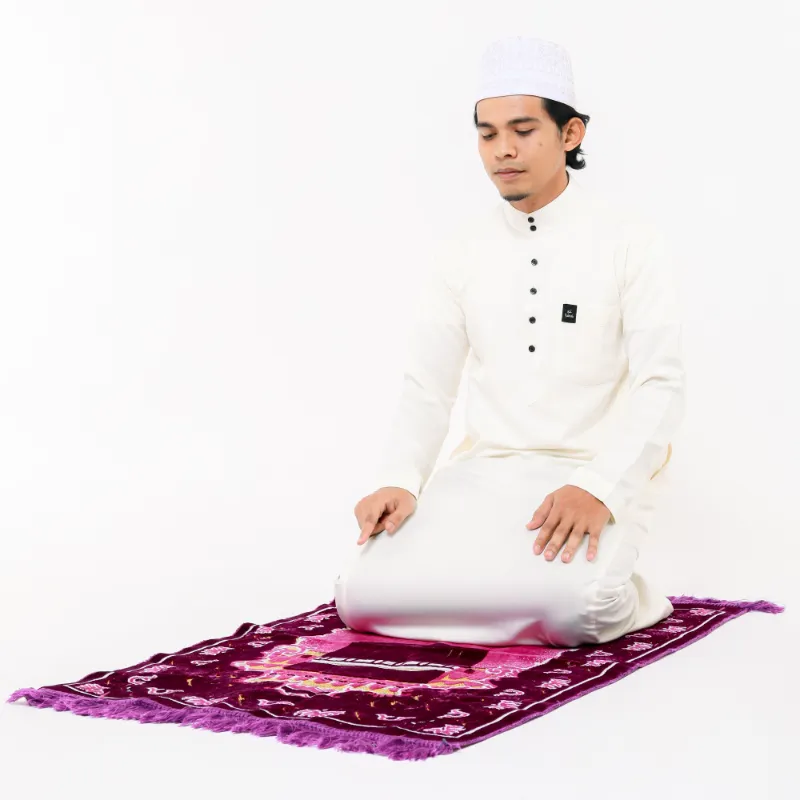
The tashahhud recited before this durood, and how to sit for it, are in the guide Attahiyat: the first and final tashahhud.
When Is Durood e Ibrahim Recited?
In the final tashahhud of every prayer, and at any time outside prayer.
In the final tashahhud. After the two testimonies of faith, continue with Durood e Ibrahim. Then it is sunnah to make dua before salam, and end the prayer with salam. This is where salawat is a pillar of the prayer.2
In the first tashahhud. The recitation stops at Allāhumma ṣalli ‘alā Muḥammad. Salawat upon his family is not sunnah here, because the first tashahhud is meant to be brief.3
Outside salah. Allah commands the believers to send salawat upon the Prophet ﷺ without tying it to a particular time, so Durood e Ibrahim can be recited at any time. The Prophet ﷺ encouraged sending abundant salawat on Friday.4
The duas that are sunnah after the durood and before salam are in the Attahiyat guide.
The Ruling of Durood e Ibrahim in Salah
Which part is a pillar and which part is sunnah, in the Shafi‘i school.
In the Shafi‘i school, Durood e Ibrahim in the final tashahhud is made up of three parts with different rulings:
| Part | Ruling | Note |
|---|---|---|
| Allāhumma ṣalli ‘alā Muḥammad | Pillar | Must be recited in the final tashahhud. This is the minimum salawat.2 |
| Wa ‘alā āli Muḥammad (salawat upon his family) | Sunnah ab‘ad | If it is left out, the prayer is valid and sujud sahwi is recommended.5 |
| The rest of the wording up to ḥamīdum majīd | Sunnah | The prayer is valid without it, but reciting it is more complete.2 |
If Salawat upon the Prophet’s Family Is Recited in the First Tashahhud
The prayer remains valid. Al-Ramli held that sujud sahwi is not recommended for it. Ibn Hajar held that sujud sahwi is recommended if it was recited with the intention of it being part of the final tashahhud.6
Can You Add Sayyidina?
The wording with sayyidinā, and the narration of “fil-‘ālamīn”.
Adding “sayyidinā” (our master) before the name of the Prophet ﷺ is better according to the scholars of the Shafi‘i school, as a matter of good manners towards him. The hadith “do not call me master in prayer”, which is sometimes quoted, is false and has no basis.7
This is Durood e Ibrahim with sayyidinā:
Durood e Ibrahim with sayyidinā
اَللّٰهُمَّ صَلِّ عَلَى سَيِّدِنَا مُحَمَّدٍ وَعَلَى آلِ سَيِّدِنَا مُحَمَّدٍ، كَمَا صَلَّيْتَ عَلَى سَيِّدِنَا إِبْرَاهِيمَ وَعَلَى آلِ سَيِّدِنَا إِبْرَاهِيمَ، وَبَارِكْ عَلَى سَيِّدِنَا مُحَمَّدٍ وَعَلَى آلِ سَيِّدِنَا مُحَمَّدٍ، كَمَا بَارَكْتَ عَلَى سَيِّدِنَا إِبْرَاهِيمَ وَعَلَى آلِ سَيِّدِنَا إِبْرَاهِيمَ، فِي الْعَالَمِينَ إِنَّكَ حَمِيدٌ مَجِيدٌ
Allāhumma ṣalli ‘alā sayyidinā Muḥammadiw wa ‘alā āli sayyidinā Muḥammad, kamā ṣallaita ‘alā sayyidinā Ibrāhīma wa ‘alā āli sayyidinā Ibrāhīm, wa bārik ‘alā sayyidinā Muḥammadiw wa ‘alā āli sayyidinā Muḥammad, kamā bārakta ‘alā sayyidinā Ibrāhīma wa ‘alā āli sayyidinā Ibrāhīma fil-‘ālamīna innaka ḥamīdum majīd.
O Allah, send Your blessings upon our master Muhammad and the family of our master Muhammad, as You sent blessings upon our master Ibrahim and the family of our master Ibrahim. And bless our master Muhammad and the family of our master Muhammad, as You blessed our master Ibrahim and the family of our master Ibrahim. In all the worlds, You are indeed Praiseworthy, Most Glorious.
Both wordings, with or without sayyidinā, are valid. The phrase fil-‘ālamīn comes from the narration of Abu Mas‘ud al-Ansari RA, while the narration of Ka‘b ibn ‘Ujrah RA does not mention it. The common wording combines both.1
Virtues of Sending Salawat on the Prophet
Only what is established by the Quran and authentic hadith.
Allah Himself and His angels send salawat upon the Prophet ﷺ, and He commands the believers to do the same:
إِنَّ ٱللَّهَ وَمَلَٰٓئِكَتَهُۥ يُصَلُّونَ عَلَى ٱلنَّبِيِّۚ يَٰٓأَيُّهَا ٱلَّذِينَ ءَامَنُواْ صَلُّواْ عَلَيۡهِ وَسَلِّمُواْ تَسۡلِيمًا ٥٦
Meaning: “Indeed, Allah and His angels send blessings upon the Prophet. O you who believe, send blessings upon him and greet him with a worthy greeting of peace.” (Surah al-Ahzab, 33:56)
Among the virtues of sending salawat mentioned in authentic hadith:
- Rewarded ten times over. Whoever sends salawat upon the Prophet ﷺ once, Allah sends salawat upon him ten times.8
- Presented to him. The salawat of his ummah is presented to the Prophet ﷺ, and he encouraged sending it abundantly on Friday.4
One short salawat is answered with ten. This reward is open to anyone, at any time.
Common Misconceptions About Durood e Ibrahim
A few points that are often misunderstood.
| Misconception | Explanation |
|---|---|
| “Durood e Ibrahim must be recited in full in salah.” | Only Allāhumma ṣalli ‘alā Muḥammad is a pillar. Salawat upon his family is sunnah ab‘ad, and the rest is sunnah.2 |
| “Salawat upon the Prophet’s family is also recited in the first tashahhud.” | It is not sunnah. The first tashahhud stops at Allāhumma ṣalli ‘alā Muḥammad.3 |
| “Saying sayyidinā in salah invalidates the prayer.” | It does not invalidate it, and it is in fact better according to the Shafi‘i school.7 |
| “Durood e Ibrahim is only for salah.” | It can be recited at any time. The command to send salawat in Surah al-Ahzab, verse 56, is not tied to salah. |
Frequently Asked Questions About Durood e Ibrahim
Short answers to the questions asked most often.
Allāhumma ṣalli ‘alā Muḥammadiw wa ‘alā āli Muḥammad, kamā ṣallaita ‘alā Ibrāhīma wa ‘alā āli Ibrāhīm, wa bārik ‘alā Muḥammadiw wa ‘alā āli Muḥammad, kamā bārakta ‘alā Ibrāhīma wa ‘alā āli Ibrāhīma fil-‘ālamīna innaka ḥamīdum majīd. Meaning: “O Allah, send Your blessings upon Muhammad and the family of Muhammad, as You sent blessings upon Ibrahim and the family of Ibrahim. And bless Muhammad and the family of Muhammad, as You blessed Ibrahim and the family of Ibrahim. In all the worlds, You are indeed Praiseworthy, Most Glorious.”
Yes. They are names used in Urdu and English for the same salawat, known in Arabic as al-Salat al-Ibrahimiyyah and in Malay as Selawat Ibrahimiyah. The wording is the same.
What is obligatory (a pillar) in the final tashahhud is only Allāhumma ṣalli ‘alā Muḥammad. Salawat upon his family is sunnah ab‘ad, and the rest of the wording up to ḥamīdum majīd is sunnah. Reciting it in full is more complete.
No. In the first tashahhud, the recitation stops at Allāhumma ṣalli ‘alā Muḥammad. The full Durood e Ibrahim is recited in the final tashahhud.
Yes, and it is better according to the scholars of the Shafi‘i school as a matter of good manners towards the Prophet ﷺ. The wording without sayyidinā is also valid.
The prayer remains valid. Salawat upon the Prophet’s family in the final tashahhud is sunnah ab‘ad, so sujud sahwi is recommended before salam.
Yes, at any time. The Prophet ﷺ encouraged sending abundant salawat on Friday.
Whoever sends salawat upon the Prophet ﷺ once, Allah sends salawat upon him ten times, as narrated by Muslim.
Closing
We repeat Durood e Ibrahim at least five times a day in the final tashahhud. Once its meaning is understood, it is no longer just something memorised, but a sincere prayer we offer for the Prophet ﷺ and his family.
Keep the obligatory part, complete it with the full wording, and make salawat a habit outside salah too.
May this guide benefit you, in sha’ Allah.
Footnotes & References
- The wording of Salawat Ibrahimiyyah is from the hadith of Ka‘b ibn ‘Ujrah RA, and the phrase “fil-‘ālamīn” is from the narration of Abu Mas‘ud al-Ansari RA. [Sahih al-Bukhari 3370] [Sahih Muslim 405] ↩︎
- Salawat upon the Prophet ﷺ in the final tashahhud is a pillar. The minimum is “Allāhumma ṣalli ‘alā Muḥammad”. Salawat upon his family and the full wording up to “ḥamīdum majīd” are sunnah. [Minhaj al-Talibin, p. 28-29] [Tuhfat al-Muhtaj 2/86] [al-Adhkar, no. 378] ↩︎
- Salawat in the first tashahhud is sunnah, but salawat upon the Prophet’s family (āl) is not sunnah in it according to the sound view, because the first tashahhud is meant to be brief. [Minhaj al-Talibin, p. 29] [Tuhfat al-Muhtaj 2/81] [al-Adhkar, no. 380-381] ↩︎
- Hadith of Aws ibn Aws RA: among the best of your days is Friday, so send abundant salawat upon me on that day, for your salawat is presented to me. Al-Albani graded it sahih. [Sunan Abi Dawud 1047] ↩︎
- Salawat upon the Prophet’s family (āl) after the final tashahhud is one of the sunnah ab‘ad, a sunnah for which sujud sahwi is recommended if it is left out. [Fath al-Mu‘in with I‘anat al-Talibin 1/231: «وصلاة على آل بعد تشهد أخير وقنوت»] ↩︎
- If salawat upon the Prophet’s family is recited in the first tashahhud, the prayer remains valid. Al-Ramli held that the prostration of forgetfulness is not sunnah for it. Ibn Hajar held that one prostrates if it was recited with the intention of it being part of the final tashahhud. [Nihayat al-Muhtaj 2/74] [Tuhfat al-Muhtaj 2/177] ↩︎
- Adding “sayyidinā” before the name of the Prophet ﷺ is better, as a matter of good manners towards him. The hadith “lā tusayyidūnī fiṣ-ṣalāh” (do not call me master in prayer) is false and has no basis. [Nihayat al-Muhtaj 1/530] [Fath al-Mu‘in 1/120] [I‘anat al-Talibin 1/198, 1/201] ↩︎
- Hadith of Abu Hurairah RA: the Messenger of Allah ﷺ said, whoever sends salawat upon me once, Allah sends salawat upon him ten times. [Sahih Muslim 408: «مَنْ صَلَّى عَلَىَّ وَاحِدَةً صَلَّى اللَّهُ عَلَيْهِ عَشْرًا»] ↩︎
Further Bibliography
- al-Nawawi, Minhaj al-Talibin wa ‘Umdat al-Muftin.
- al-Nawawi, al-Adhkar.
- Ibn Hajar al-Haytami, Tuhfat al-Muhtaj bi Sharh al-Minhaj.
- al-Ramli, Nihayat al-Muhtaj ila Sharh al-Minhaj.
- al-Dimyati, I‘anat al-Talibin.
- al-Bukhari, Sahih al-Bukhari. Muslim, Sahih Muslim. Abu Dawud, Sunan Abi Dawud.