

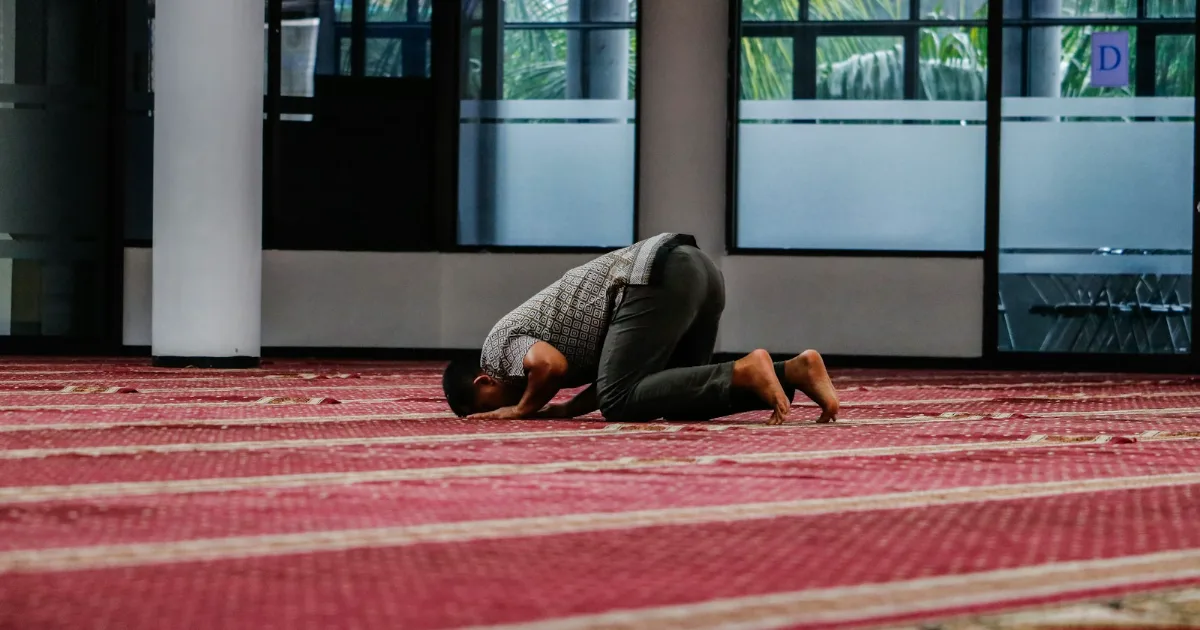
This is a complete guide to the sunnah rawatib prayers, the sunnah prayers prayed before (qabliyah) and after (ba‘diyah) the five daily obligatory prayers.1
It covers the rawatib for each prayer time, which are mu’akkadah and which are ghayr mu’akkadah, the intentions, how to pray them, and the rulings on making them up and on rawatib while travelling, according to the Shafi‘i school.
Every intention comes with Arabic, transliteration and meaning, so you can start practising even if you cannot yet read Arabic fluently.
Sunnah Rawatib at a Glance
- Mu’akkadah (10 rak‘ahs): 2 before Fajr, 2 before Zuhr, 2 after Zuhr, 2 after Maghrib and 2 after ‘Isha’.
- Ghayr mu’akkadah (12 rak‘ahs): 2 more before and after Zuhr, 4 before ‘Asr, 2 before Maghrib and 2 before ‘Isha’.
- No ba‘diyah after Fajr and ‘Asr.
- How: two rak‘ahs with one salam, recited quietly, and prayed individually.
Contents
What Are Sunnah Rawatib? Qabliyah and Ba‘diyah
Rawatib are the sunnah prayers that regularly accompany the obligatory prayers, before or after them.
The word rawatib comes from Arabic and means something fixed and constant. These prayers are so named because they always accompany the obligatory prayers.
| Term | Meaning | Example |
|---|---|---|
| Qabliyah | A sunnah prayer before the obligatory prayer | Two rak‘ahs before Fajr |
| Ba‘diyah | A sunnah prayer after the obligatory prayer | Two rak‘ahs after Maghrib |
| Mu’akkadah | Rawatib that are strongly emphasised and that the Prophet ﷺ almost never left | Two rak‘ahs after ‘Isha’ |
| Ghayr mu’akkadah | Rawatib that are encouraged, but not as strongly as the mu’akkadah | Four rak‘ahs before ‘Asr |
You may see other spellings such as qobliyah, qabliah, ba’diyyah or badiah. They all refer to the same thing.
The two-rak‘ah sunnah prayer usually prayed after the adhan and before the iqamah is a qabliyah prayer, the rawatib before the obligatory prayer.
Why Rawatib Matter
Our obligatory prayers are rarely perfect. The mind wanders, the recitation is rushed, or focus slips for a moment. Rawatib make up for those shortcomings. On the Day of Judgement, when a person’s obligatory prayers are found lacking, Allah will look at their sunnah prayers to complete them.2
List of Sunnah Rawatib by Prayer Time
There are 22 rak‘ahs in a day and night. Ten of them are mu’akkadah.
| Time | Before the prayer (qabliyah) | After the prayer (ba‘diyah) |
|---|---|---|
| Fajr | 2 rak‘ahs (mu’akkadah) | None |
| Zuhr | 2 rak‘ahs mu’akkadah, plus 2 more optional | 2 rak‘ahs mu’akkadah, plus 2 more optional |
| ‘Asr | 4 rak‘ahs (ghayr mu’akkadah) | None |
| Maghrib | 2 light rak‘ahs (ghayr mu’akkadah) | 2 rak‘ahs (mu’akkadah) |
| ‘Isha’ | 2 rak‘ahs (ghayr mu’akkadah) | 2 rak‘ahs (mu’akkadah) |
| Jumu‘ah | As before Zuhr | 2 rak‘ahs mu’akkadah, plus 2 more optional |
This division is mentioned by the scholars of the Shafi‘i school.3,4
Mu’akkadah Rawatib: 10 Rak‘ahs
These are the most important rawatib to keep. Ibn ‘Umar mentioned ten rak‘ahs that he memorised from the practice of the Prophet ﷺ.5
- 2 rak‘ahs before Fajr
- 2 rak‘ahs before Zuhr
- 2 rak‘ahs after Zuhr
- 2 rak‘ahs after Maghrib
- 2 rak‘ahs after ‘Isha’
Of all the rawatib, the two rak‘ahs before Fajr are the most emphasised. The Prophet ﷺ described them as better than the world and everything in it.6
Ghayr Mu’akkadah Rawatib: 12 Rak‘ahs
- 2 more rak‘ahs before Zuhr (making 4)
- 2 more rak‘ahs after Zuhr (making 4)7
- 4 rak‘ahs before ‘Asr8
- 2 rak‘ahs before Maghrib9
- 2 rak‘ahs before ‘Isha’10
If time is short, keep the mu’akkadah first. The ghayr mu’akkadah are extra reward for those who are able.
The Twelve Rak‘ahs Promised a House in Paradise
The well-known hadith about 12 rak‘ahs of rawatib mentions four rak‘ahs before Zuhr, two after it, two after Maghrib, two after ‘Isha’ and two before Fajr. Whoever keeps them every day will have a house built for them in Paradise.11 ‘A’ishah also said that the Prophet ﷺ never left the four rak‘ahs before Zuhr.12
That is why some scholars count the four rak‘ahs before Zuhr as mu’akkadah. Either way, both are sunnah. The difference is only in the degree of emphasis.
Why Are There No Rawatib After Fajr and ‘Asr?
From after the Fajr prayer until sunrise, and from after the ‘Asr prayer until sunset, are times in which sunnah prayers without a specific reason are forbidden. So there is no ba‘diyah for these two prayers.13
Rawatib on Friday (Jumu‘ah)
The rawatib of Jumu‘ah are the same as Zuhr: two or four rak‘ahs before it, and two or four rak‘ahs after it.14 The Prophet ﷺ used to pray two rak‘ahs after Jumu‘ah at home.15
Niyyah (Intention) for Sunnah Rawatib
The intention is made in the heart at the opening takbir. The wording below helps the heart settle the intention.
The intention for rawatib must specify two things: which obligatory prayer, and before or after it.16,17 For example, intending “the sunnah of Zuhr” alone is not enough, because Zuhr has both a qabliyah and a ba‘diyah.
All the wordings below are for two rak‘ahs. If you pray four rak‘ahs with two salams, repeat the same intention for each set of two rak‘ahs.
Intention for the Sunnah Before Fajr
Before Fajr (qabliyah)
أُصَلِّي سُنَّةَ الصُّبْحِ رَكْعَتَيْنِ قَبْلِيَّةً لِلّٰهِ تَعَالَى
Usolli sunnatas-subhi rak‘ataini qabliyyatan lillahi ta‘ala.
Meaning
“I pray two rak‘ahs of the sunnah before Fajr for the sake of Allah, the Most High.”
Full guide: Sunnah Before Fajr.
Intention for the Sunnah Before and After Zuhr
Before Zuhr (qabliyah)
أُصَلِّي سُنَّةَ الظُّهْرِ رَكْعَتَيْنِ قَبْلِيَّةً لِلّٰهِ تَعَالَى
Usolli sunnataz-zuhri rak‘ataini qabliyyatan lillahi ta‘ala.
Meaning
“I pray two rak‘ahs of the sunnah before Zuhr for the sake of Allah, the Most High.”
After Zuhr (ba‘diyah)
أُصَلِّي سُنَّةَ الظُّهْرِ رَكْعَتَيْنِ بَعْدِيَّةً لِلّٰهِ تَعَالَى
Usolli sunnataz-zuhri rak‘ataini ba‘diyyatan lillahi ta‘ala.
Meaning
“I pray two rak‘ahs of the sunnah after Zuhr for the sake of Allah, the Most High.”
Full guide: Sunnah Before and After Zuhr.
Intention for the Sunnah Before ‘Asr
Before ‘Asr (qabliyah)
أُصَلِّي سُنَّةَ الْعَصْرِ رَكْعَتَيْنِ قَبْلِيَّةً لِلّٰهِ تَعَالَى
Usolli sunnatal-‘asri rak‘ataini qabliyyatan lillahi ta‘ala.
Meaning
“I pray two rak‘ahs of the sunnah before ‘Asr for the sake of Allah, the Most High.”
Full guide: Sunnah Before Asr.
Intention for the Sunnah Before and After Maghrib
Before Maghrib (qabliyah)
أُصَلِّي سُنَّةَ الْمَغْرِبِ رَكْعَتَيْنِ قَبْلِيَّةً لِلّٰهِ تَعَالَى
Usolli sunnatal-maghribi rak‘ataini qabliyyatan lillahi ta‘ala.
Meaning
“I pray two rak‘ahs of the sunnah before Maghrib for the sake of Allah, the Most High.”
After Maghrib (ba‘diyah)
أُصَلِّي سُنَّةَ الْمَغْرِبِ رَكْعَتَيْنِ بَعْدِيَّةً لِلّٰهِ تَعَالَى
Usolli sunnatal-maghribi rak‘ataini ba‘diyyatan lillahi ta‘ala.
Meaning
“I pray two rak‘ahs of the sunnah after Maghrib for the sake of Allah, the Most High.”
Full guide: Sunnah Before and After Maghrib.
Intention for the Sunnah Before and After ‘Isha’
Before ‘Isha’ (qabliyah)
أُصَلِّي سُنَّةَ الْعِشَاءِ رَكْعَتَيْنِ قَبْلِيَّةً لِلّٰهِ تَعَالَى
Usolli sunnatal-‘isha’i rak‘ataini qabliyyatan lillahi ta‘ala.
Meaning
“I pray two rak‘ahs of the sunnah before ‘Isha’ for the sake of Allah, the Most High.”
After ‘Isha’ (ba‘diyah)
أُصَلِّي سُنَّةَ الْعِشَاءِ رَكْعَتَيْنِ بَعْدِيَّةً لِلّٰهِ تَعَالَى
Usolli sunnatal-‘isha’i rak‘ataini ba‘diyyatan lillahi ta‘ala.
Meaning
“I pray two rak‘ahs of the sunnah after ‘Isha’ for the sake of Allah, the Most High.”
Full guide: Sunnah Before and After Isha.
Intention for the Sunnah Before and After Jumu‘ah
Before Jumu‘ah (qabliyah)
أُصَلِّي سُنَّةَ الْجُمُعَةِ رَكْعَتَيْنِ قَبْلِيَّةً لِلّٰهِ تَعَالَى
Usolli sunnatal-jumu‘ati rak‘ataini qabliyyatan lillahi ta‘ala.
Meaning
“I pray two rak‘ahs of the sunnah before Jumu‘ah for the sake of Allah, the Most High.”
After Jumu‘ah (ba‘diyah)
أُصَلِّي سُنَّةَ الْجُمُعَةِ رَكْعَتَيْنِ بَعْدِيَّةً لِلّٰهِ تَعَالَى
Usolli sunnatal-jumu‘ati rak‘ataini ba‘diyyatan lillahi ta‘ala.
Meaning
“I pray two rak‘ahs of the sunnah after Jumu‘ah for the sake of Allah, the Most High.”
Full guide: Sunnah Before and After Jumu‘ah.
How to Pray Sunnah Rawatib
Rawatib are prayed like any ordinary two-rak‘ah prayer. There is no adhan, no iqamah, and no congregation.
- Make the intention in your heart at the opening takbir, naming which prayer and whether it is before or after the obligatory prayer.
- Say the opening takbir (takbiratul ihram), then recite the opening dua.
- Recite al-Fatihah and a short surah quietly.
- Ruku‘, i‘tidal and sujud, sit between the two prostrations and make the second sujud, as in any prayer.
- Rise for the second rak‘ah, and recite al-Fatihah and a surah.
- Sit for the final tashahhud, then give the salam.
If you are still learning to pray, follow the steps of an ordinary two-rak‘ah prayer and replace the intention with the rawatib intention.
Recited Quietly, Even at Night
All rawatib are recited quietly, including the ba‘diyah of Maghrib and ‘Isha’ prayed at night.18
Recommended Surahs
You may recite any surah. But for the two rak‘ahs before Fajr and the two rak‘ahs after Maghrib, it is sunnah to recite al-Kafirun in the first rak‘ah and al-Ikhlas in the second.19,20
Four Rak‘ahs: One Salam or Two?
For four rak‘ahs before Zuhr, after Zuhr or before ‘Asr, the better way is two rak‘ahs with one salam, twice. Four rak‘ahs with one salam is still valid, but less virtuous.21
At Home or in the Mosque?
Rawatib are better prayed at home.22 The Prophet ﷺ himself used to pray the ba‘diyah of Maghrib and ‘Isha’ at home. But if you are worried you will forget or be busy after you get home, praying them in the mosque is better than leaving them.
Can Rawatib Be Prayed Sitting?
Yes, even if you are able to stand. The reward is half that of praying standing.23
The Time of Sunnah Rawatib and How to Make Them Up
Rawatib have their own times. If you miss them, it is sunnah to make them up.
| Type | Begins | Ends |
|---|---|---|
| Qabliyah | When the time of the obligatory prayer begins | When the time of the obligatory prayer ends |
| Ba‘diyah | After the obligatory prayer has been prayed | When the time of the obligatory prayer ends |
The best time for the qabliyah is after the adhan and before the iqamah.24 The ba‘diyah is best prayed soon after the obligatory prayer and its dhikr.25
Missed the Qabliyah Because the Iqamah Has Been Called
Do not start the qabliyah once the iqamah has been called. Join the imam first. After the obligatory prayer, pray that qabliyah. As long as the time of the obligatory prayer has not ended, it still counts as on time (ada’), not a make-up.26
For example, you arrive at the mosque as the iqamah for Zuhr is being called. Pray Zuhr with the imam, then pray the sunnah before and after Zuhr.
Making Up Missed Rawatib
In the Shafi‘i school, it is sunnah to make up missed rawatib, even if their time passed long ago.27 The Prophet ﷺ himself once made up the two rak‘ahs after Zuhr at the time of ‘Asr.28
- The intention is the same as usual, for example the intention for the sunnah before Fajr. Saying the word qada’ in the intention is not required.
- Missed rawatib may be made up even in times when prayer is forbidden, such as after the Fajr prayer, because their reason came earlier.29
- A missed sunnah of Fajr may also be made up after sunrise.30
If you have missed obligatory prayers, give priority to making up the obligatory prayers first.
Sunnah Rawatib When Travelling and Combining Prayers
Travelling does not cancel the sunnah rawatib. Only their order changes when combining prayers.
In the Shafi‘i school, rawatib remain sunnah while travelling, even if you shorten your prayers. They are simply more emphasised when you are at home.31 If the journey is tiring, keep at least the two rak‘ahs before Fajr.
The Order of Rawatib When Combining Prayers
Combined prayers (jam‘) must be prayed one after the other, so rawatib cannot be placed between the two obligatory prayers. The order is as follows:32
| Combining | Order |
|---|---|
| Zuhr and ‘Asr | Qabliyah of Zuhr, Zuhr, ‘Asr, ba‘diyah of Zuhr, then the sunnah before ‘Asr |
| Maghrib and ‘Isha’ | Maghrib, ‘Isha’, ba‘diyah of Maghrib, ba‘diyah of ‘Isha’, then witr |
The Virtues of Sunnah Rawatib
Rewards mentioned by the Messenger of Allah ﷺ himself.
- They make up for shortcomings in the obligatory prayers on the Day of Reckoning.2
- A house in Paradise for whoever keeps the 12 rak‘ahs every day.11
- Better than the world and everything in it: the two rak‘ahs before Fajr.6
- Forbidden from the Fire: whoever keeps four rak‘ahs before and four rak‘ahs after Zuhr.7
- A prayer for mercy from the Messenger of Allah ﷺ for whoever prays four rak‘ahs before ‘Asr.8
Start with the easiest. Keep the two rak‘ahs before Fajr and the two rak‘ahs after Maghrib until they become a habit, then add more little by little.
Sunnah Rawatib FAQ
Short answers to the most common questions.
Sunnah rawatib are the sunnah prayers that accompany the five daily obligatory prayers. Those prayed before the obligatory prayer are called qabliyah, and those prayed after it are called ba‘diyah.1
Ten rak‘ahs: two before Fajr, two before Zuhr, two after Zuhr, two after Maghrib and two after ‘Isha’. All the rawatib together, including the ghayr mu’akkadah, come to 22 rak‘ahs.5,3
It is a qabliyah prayer, the rawatib before the obligatory prayer. It is prayed between the adhan and the iqamah.10
There is no ba‘diyah for Fajr and ‘Asr, because sunnah prayers without a specific reason are forbidden after these two prayers.13
“Usolli sunnatal-maghribi rak‘ataini ba‘diyyatan lillahi ta‘ala”, meaning: I pray two rak‘ahs of the sunnah after Maghrib for the sake of Allah, the Most High. The intention is made in the heart at the opening takbir.16
Yes. If you miss it because the iqamah has already been called, pray the qabliyah after the obligatory prayer. As long as the time of the obligatory prayer has not ended, it still counts as on time (ada’).26
It is valid, but the better way is two rak‘ahs with one salam, twice.21
Yes, in fact it is sunnah to make them up if missed, according to the sound view in the Shafi‘i school.27
Quietly, including the ba‘diyah of Maghrib and ‘Isha’ at night.18
Closing
Rawatib are small deeds that are easy to reach. Two rak‘ahs take only a few minutes, but their reward is great, and they make up for what is lacking in our obligatory prayers.
There is no need to keep all 22 rak‘ahs straight away. Start with the ten mu’akkadah rak‘ahs, and let them become part of your daily prayer, in sha’ Allah.
Footnotes & References
- Rawatib are the sunnah prayers that accompany the obligatory prayers, whether prayed before or after them. They are divided into mu’akkadah and ghayr mu’akkadah. [Federal Territory Mufti’s Office, Al-Kafi li al-Fatawi, series 1029: “Solat Sunat Rawatib yang Mu’akkad dan Tidak Mu’akkad”. al-Bujayrimi, Hashiyah ‘ala al-Khatib, 1/413-414] ↩︎
- The hadith of Abu Hurayrah: the first thing a person will be held to account for on the Day of Judgement is the prayer. If their obligatory prayers are lacking, Allah will say: “Look, does My servant have any voluntary prayers?” and the shortfall in the obligatory prayers will be completed with them. [Sunan Abi Dawud, no. 864. Sunan al-Tirmidhi, no. 413] ↩︎
- Mu’akkadah: two rak‘ahs before Fajr, two (or four) before Zuhr, two after Zuhr, two after Maghrib and two after ‘Isha’. Ghayr mu’akkadah: two additional rak‘ahs before and after Zuhr, four before ‘Asr, two before Maghrib and two before ‘Isha’. [Al-Kafi li al-Fatawi, series 1029. al-Taqrirat al-Sadidah, pp. 284-285. Matla‘ al-Badrayn, 1/132-133] ↩︎
- al-Nawawi lists the mu’akkadah rawatib, then mentions the difference of opinion about the four rak‘ahs before and after Zuhr and the four before ‘Asr, and states: “All of them are sunnah. The difference is only over which are mu’akkadah.” He also affirms two light rak‘ahs before Maghrib. [al-Nawawi, Minhaj al-Talibin, 1/36] ↩︎
- Ibn ‘Umar said: “I memorised ten rak‘ahs from the Prophet ﷺ: two rak‘ahs before Zuhr, two rak‘ahs after it, two rak‘ahs after Maghrib in his house, two rak‘ahs after ‘Isha’ in his house, and two rak‘ahs before the Fajr prayer.” [Sahih al-Bukhari, no. 1180] ↩︎
- The Prophet ﷺ said: “The two (sunnah) rak‘ahs of Fajr are better than the world and everything in it.” [Sahih Muslim, no. 725] ↩︎
- Umm Habibah narrated: “Whoever keeps four rak‘ahs before Zuhr and four rak‘ahs after it, Allah forbids him from the Fire.” [Sunan Abi Dawud, no. 1269. Sunan al-Tirmidhi, no. 427] ↩︎
- Ibn ‘Umar narrated: “May Allah have mercy on a person who prays four rak‘ahs before ‘Asr.” [Sunan Abi Dawud, no. 1271. Sunan al-Tirmidhi, no. 430] ↩︎
- The Prophet ﷺ said: “Pray before Maghrib.” The third time he added: “for whoever wishes”, because he did not want people to take it as a binding sunnah. The Companions would hurry to the pillars of the mosque to pray two rak‘ahs before Maghrib as soon as the adhan was called. [Sahih al-Bukhari, nos. 1183 and 625] ↩︎
- ‘Abdullah ibn Mughaffal narrated: “Between every two calls (the adhan and the iqamah) there is a prayer.” He said it three times, and the third time added: “for whoever wishes.” [Sahih al-Bukhari, no. 624. Sahih Muslim, no. 838] ↩︎
- Umm Habibah narrated: “Whoever prays twelve rak‘ahs in a day and night, a house will be built for him in Paradise: four rak‘ahs before Zuhr, two rak‘ahs after it, two rak‘ahs after Maghrib, two rak‘ahs after ‘Isha’ and two rak‘ahs before Fajr.” Al-Tirmidhi graded it hasan sahih. [Sahih Muslim, no. 728. Sunan al-Tirmidhi, no. 415] ↩︎
- ‘A’ishah said that the Prophet ﷺ never left the four rak‘ahs before Zuhr and the two rak‘ahs before Fajr. [Sahih al-Bukhari, no. 1182] ↩︎
- The times in which sunnah prayers without a reason are forbidden include from after the Fajr prayer until sunrise and from after the ‘Asr prayer until sunset. That is why there is no ba‘diyah for Fajr and ‘Asr. [al-Nawawi, al-Majmu‘ Sharh al-Muhadhdhab, 4/170. al-Muqaddimah al-Hadramiyyah, p. 58] ↩︎
- After Jumu‘ah, four rak‘ahs are sunnah, and before it the same as before Zuhr. The Federal Territory Mufti preferred the view that the sunnah before Jumu‘ah is part of the rawatib. [al-Nawawi, Minhaj al-Talibin, 1/36. Al-Kafi li al-Fatawi, series 1279: “Hukum Solat Sunat Sebelum Jumaat”, 6 June 2019] ↩︎
- Ibn ‘Umar mentioned that the Prophet ﷺ did not pray after Jumu‘ah until he went home, and then prayed two rak‘ahs (at home). [Sahih al-Bukhari, no. 937] ↩︎
- Sunnah prayers with a set time, such as the rawatib, are like the obligatory prayers in their intention: one must intend to perform it and specify which prayer it is. The intention is in the heart, and it is sunnah to say it before the takbir. [al-Nawawi, Minhaj al-Talibin, 1/25] ↩︎
- The relied-upon view requires intending qabliyah or ba‘diyah for a prayer that has both. The view that does not require it is considered weak. [Ibn Hajar al-Haytami, Tuhfat al-Muhtaj, 2/228] ↩︎
- All the sunnah rawatib that accompany the obligatory prayers are recited quietly, by agreement of the Shafi‘i scholars, including those prayed at night. [al-Nawawi, al-Majmu‘ Sharh al-Muhadhdhab, 3/391] ↩︎
- The Prophet ﷺ recited al-Kafirun and al-Ikhlas in the two sunnah rak‘ahs before Fajr. [Sahih Muslim, no. 726] ↩︎
- Ibn Mas‘ud said he could not count how many times he heard the Prophet ﷺ recite al-Kafirun and al-Ikhlas in the two rak‘ahs after Maghrib and the two rak‘ahs before Fajr. [Sunan al-Tirmidhi, no. 431] ↩︎
- For someone praying four rak‘ahs before or after Zuhr, the sunnah is to give the salam after every two rak‘ahs, based on the hadith “The prayer of the night and the day is two by two.” Four rak‘ahs with one salam is still valid. [al-Nawawi, al-Majmu‘, 4/10. Sunan Abi Dawud, no. 1295. Al-Kafi li al-Fatawi, series 1843] ↩︎
- Zayd ibn Thabit narrated: “The best prayer of a person is in his house, except the obligatory prayer.” [Sahih al-Bukhari, no. 731. Sahih Muslim, no. 781] ↩︎
- ‘Imran ibn Husayn narrated: whoever prays standing, that is best. Whoever prays sitting has half the reward of the one who stands. [Sahih al-Bukhari, no. 1115] ↩︎
- The sunnah of Fajr is prayed after the time of Fajr begins and before the obligatory Fajr prayer. [Al-Kafi li al-Fatawi, series 1726: “Bilakah Waktu Menunaikan Solat Sunat Subuh”. Sahih Muslim, no. 725] ↩︎
- The ba‘diyah is best prayed soon after the obligatory prayer, because its very name means the prayer that follows the obligatory one. [Al-Kafi li al-Fatawi, series 1212: “Bolehkah Dilakukan Solat Sunat Ba‘diyah Isyak Selepas Tempoh yang Lama”] ↩︎
- The time of the qabliyah begins when the time of the obligatory prayer begins, and the time of the ba‘diyah begins after the obligatory prayer has been prayed. Both end when the time of the obligatory prayer ends. So a qabliyah prayed after the obligatory prayer still counts as on time (ada’), though it should not be delayed unless the iqamah has been called. [al-Nawawi, Minhaj al-Talibin, 1/36. al-Khatib al-Shirbini, Mughni al-Muhtaj, 1/457] ↩︎
- Sunnah prayers tied to a time, including the rawatib, are sunnah to make up if missed. This is the sound view in the Shafi‘i school, unlike Abu Hanifah and Malik. [al-Nawawi, al-Majmu‘, 4/43. Minhaj al-Talibin, 1/36. Al-Kafi li al-Fatawi, series 996] ↩︎
- Umm Salamah related that the Prophet ﷺ once prayed two rak‘ahs after ‘Asr. When asked, he explained that they were the two rak‘ahs after Zuhr that he had missed because he was busy with visitors. [Sahih al-Bukhari, no. 1233. Sahih Muslim, no. 834] ↩︎
- A prayer with an earlier reason, including making up obligatory prayers and sunnah rawatib, may be prayed in the times when prayer is forbidden. [al-Nawawi, al-Majmu‘, 4/170] ↩︎
- The hadith: “Whoever has not prayed the two (sunnah) rak‘ahs of Fajr, let him pray them after sunrise.” [Sunan al-Tirmidhi, no. 423] ↩︎
- The Shafi‘i scholars state that it is sunnah to pray the rawatib while travelling, including for someone shortening their prayers, but they are more emphasised when at home. This is also the view of the majority of scholars. Ibn ‘Umar, however, held that they are not needed. [al-Nawawi, al-Majmu‘, 4/29, 4/378 and 4/400] ↩︎
- al-Nawawi states: when combining Zuhr and ‘Asr, pray the sunnah before Zuhr first, then Zuhr, then ‘Asr, then the sunnah after Zuhr, then the sunnah of ‘Asr. When combining Maghrib and ‘Isha’, pray both obligatory prayers first, then the sunnah of Maghrib, the sunnah of ‘Isha’ and witr. [al-Nawawi, Rawdat al-Talibin, 1/402] ↩︎
Further Reading
- al-Nawawi, Minhaj al-Talibin wa ‘Umdat al-Muftin.
- al-Nawawi, al-Majmu‘ Sharh al-Muhadhdhab, volumes 3 and 4.
- al-Nawawi, Rawdat al-Talibin, volume 1.
- Ibn Hajar al-Haytami, Tuhfat al-Muhtaj bi Sharh al-Minhaj, volume 2.
- al-Khatib al-Shirbini, Mughni al-Muhtaj, volume 1.
- al-Bukhari, Sahih al-Bukhari. Muslim, Sahih Muslim. Abu Dawud, Sunan Abi Dawud. al-Tirmidhi, Sunan al-Tirmidhi.
- Federal Territory Mufti’s Office, Al-Kafi li al-Fatawi, series 996, 1029, 1212, 1279, 1726 and 1843.