

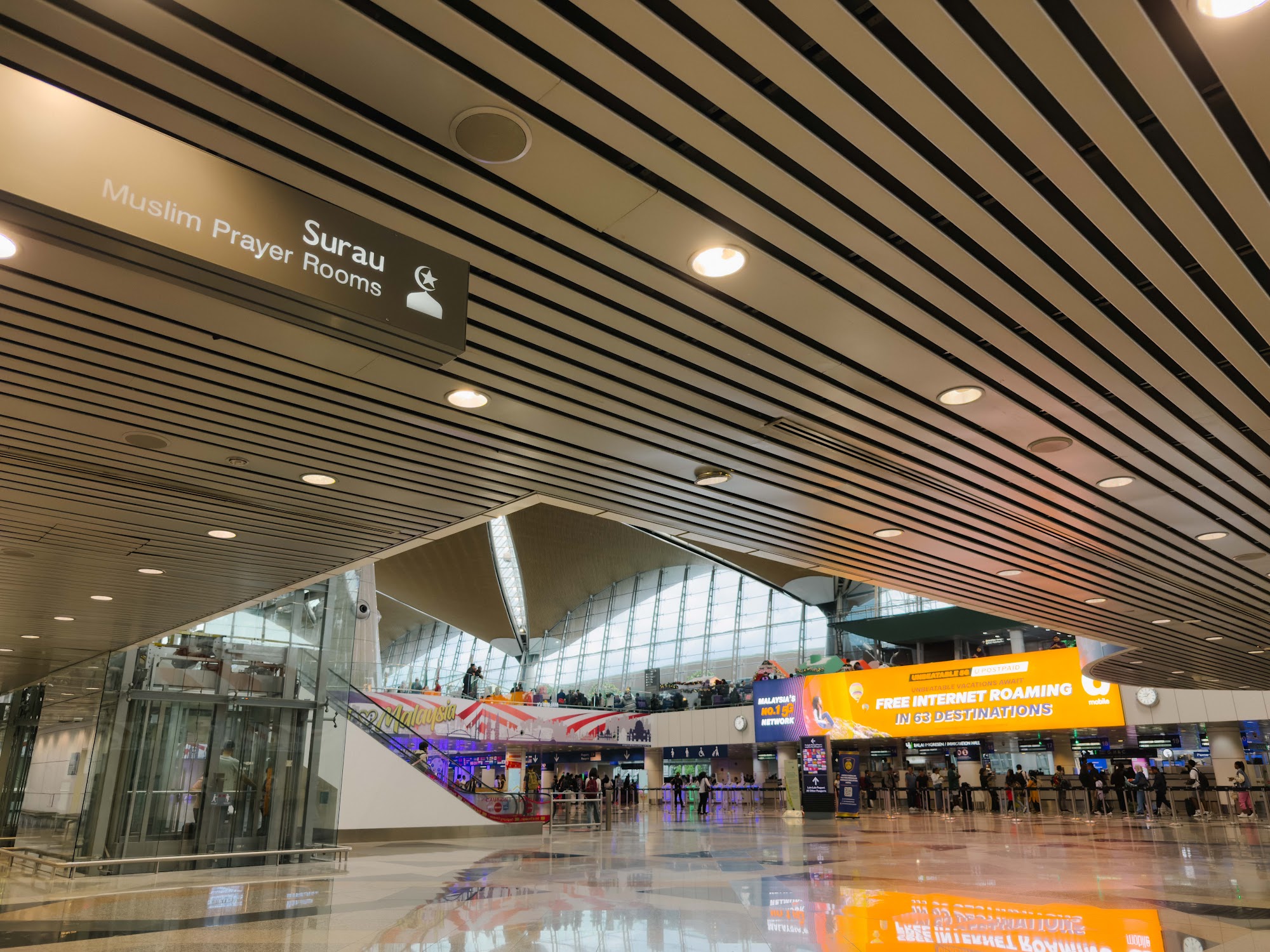
Jama‘ and qasr is a concession in Islam that allows a traveller (musafir) to combine two obligatory prayers into one prayer time (jama‘) and to shorten four-rak‘ah prayers to two rak‘ahs (qasr). It is often simply called the traveller’s prayer.1
If you are planning a long journey, you may be wondering: how is the niyyah worded, which prayers can be shortened, and for how many days can this concession be used?
Do not worry, because the method is actually simple. This guide gives the niyyah for jama‘ and qasr for every pair of prayers, with transliteration, audio and meaning, together with how to perform them step by step. The conditions and rulings are explained according to the Shafi‘i school.
May this guide be of help to you, in sha’ Allah.
Quick Answer
A traveller whose journey reaches two marhalah, about 81 km one way, for a permissible purpose, may combine and shorten prayers after leaving the boundary of the area where they live.
- Prayers that can be shortened: Zuhr, ‘Asr and Isha are shortened from four rak‘ahs to two. Maghrib stays at three rak‘ahs and Fajr stays at two.
- Pairs for jama‘: Zuhr is combined with ‘Asr, and Maghrib is combined with Isha.
- Jama‘ taqdim: Both prayers are performed in the time of the first prayer. The first prayer comes first, and the second is prayed straight after it. It is also described as bringing ‘Asr forward to Zuhr or bringing Isha forward to Maghrib.
- Jama‘ takhir: Both prayers are performed in the time of the second prayer. It is also described as delaying Zuhr to ‘Asr or delaying Maghrib to Isha. You must make the intention to delay the first prayer while its time still remains.
- Niyyah for qasr: The intention to shorten must be present in the heart at the opening takbir (takbiratul ihram) of every prayer that is shortened.
- Duration: The concession continues as long as you do not intend to stay at the destination for more than three full days, not counting the day of arrival and the day of departure.
Choose your pair of prayers below to go straight to its niyyah and steps.
Contents
- How to Perform Jama‘ and Qasr Prayer
- Niyyah for Jama‘ Prayer
- Niyyah for Combining Zuhr and ‘Asr (JAMA‘ TAQDIM)
- Niyyah for Combining Zuhr and ‘Asr (JAMA‘ TAKHIR)
- Niyyah for Combining Maghrib and Isha (JAMA‘ TAQDIM)
- Niyyah for Combining Maghrib and Isha (JAMA‘ TAKHIR)
- Niyyah for Combining Jumu‘ah and ‘Asr
- Niyyah for Qasr Only (Without Jama‘)
- Niyyah for Jama‘ Without Qasr (Jama‘ Tamam)
- The Rukhsah (Concession) in Prayer
- What Jama‘ and Qasr Mean
- How to Work Out Your Traveller Status
- Conditions for Jama‘ Taqdim & Jama‘ Takhir
- Conditions for Praying Qasr
- Difference Between Jama‘ and Qasr
- Combining Prayers Without Travelling
- Frequently Asked Questions on Jama‘ and Qasr (FAQ)
- Closing: Islam Is a Religion of Ease
How to Perform Jama‘ and Qasr Prayer
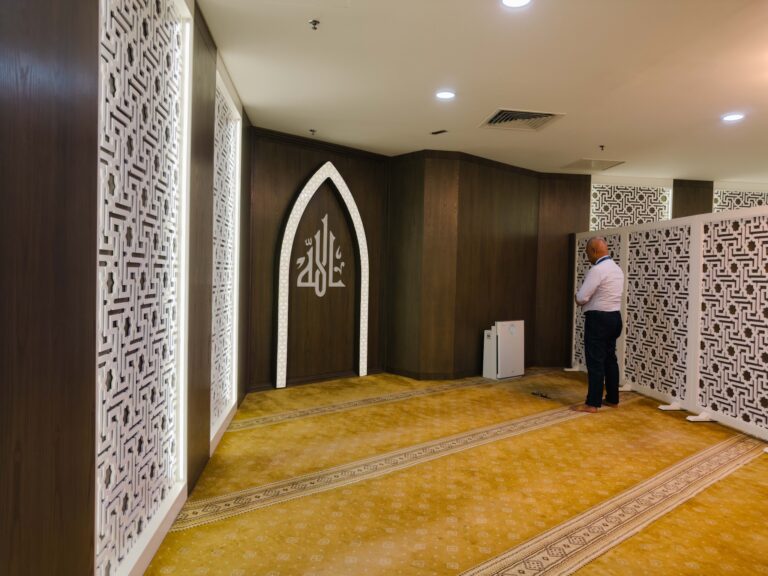
Jama‘ means combining two prayers in one prayer time. Qasr means shortening a four-rak‘ah prayer to two rak‘ahs. Each prayer still has its own niyyah and its own salam.
In every rak‘ah, recite al-Fatihah and complete the pillars of prayer in order and with tuma’ninah (stillness). Reciting an additional surah is sunnah. For Maghrib, the additional surah is normally recited in the first two rak‘ahs. Follow the specific guide below for the pair of prayers you need.2
Niyyah for Jama‘ Prayer
Distinguish the intention of the prayer and of qasr from the intention to combine the times:
- Qasr: make the intention to shorten present at the opening takbir of the prayer you are shortening.3
- Jama‘ taqdim: the intention to combine is made within the first prayer. If you did not intend it at the start, you may still make the intention during the first prayer, before you finish its salam.4
- Jama‘ takhir: the intention to delay the first prayer must be made within the first prayer’s time, before less than one rak‘ah’s worth of its time remains. It is best to make it as early as possible. Do not wait until its time is almost over.5
The Arabic wording and transliteration below help you understand the niyyah, but what counts is the intention in the heart.
Below is a guide to the niyyah for jama‘ and qasr, together with how to perform jama‘ and qasr (taqdim and takhir) step by step for each obligatory prayer:
Niyyah for Combining Zuhr and ‘Asr (JAMA‘ TAQDIM)
Jama‘ taqdim of Zuhr and ‘Asr is also known as bringing ‘Asr forward to Zuhr, because the ‘Asr prayer is brought into the time of Zuhr.
How to perform jama‘ taqdim of Zuhr and ‘Asr:
Once the time of Zuhr has come in and you are already on your journey as a traveller, make wudu and get ready to pray.
The niyyah for Zuhr in jama‘ taqdim is as follows:
Niyyah for Zuhr (Jama‘ Taqdim)
أُصَلِّي فَرْضَ الظُّهْرِ قَصْرًا رَكْعَتَيْنِ جَمْعَ تَقْدِيمٍ لِلَّهِ تَعَالَى
Uṣallī farḍaẓ-ẓuhri qaṣran rak‘ataini jam‘a taqdīmin lillāhi ta‘ālā
Meaning:
I intend to pray the obligatory Zuhr, shortened to two rak‘ahs, combined in advance (jama‘ taqdim), for the sake of Allah Ta‘ala.
At the opening takbir, make the intention in your heart according to the meaning of the niyyah above.

Pray the obligatory Zuhr as two rak‘ahs, reciting Surah al-Fatihah followed by another surah.
As soon as you finish the salam, stand straight up for the obligatory ‘Asr without reciting dhikr, dua or praying a sunnah prayer. Do not leave too long a gap between the two obligatory prayers (muwalat).

The niyyah for ‘Asr in jama‘ taqdim:
Niyyah for ‘Asr (Jama‘ Taqdim)
أُصَلِّي فَرْضَ العَصْرِ قَصْرًا رَكْعَتَيْنِ جَمْعَ تَقْدِيمٍ لِلَّهِ تَعَالَى
Uṣallī farḍal-‘aṣri qaṣran rak‘ataini jam‘a taqdīmin lillāhi ta‘ālā
Meaning:
I intend to pray the obligatory ‘Asr, shortened to two rak‘ahs, combined in advance (jama‘ taqdim), for the sake of Allah Ta‘ala.
At the opening takbir, make the intention in your heart according to the meaning of the niyyah above.
Pray the obligatory ‘Asr as two rak‘ahs, reciting Surah al-Fatihah followed by another surah.
With that, you do not need to pray the obligatory ‘Asr again when the time of ‘Asr comes in.
Niyyah for Combining Zuhr and ‘Asr (JAMA‘ TAKHIR)
Jama‘ takhir of Zuhr and ‘Asr is also known as delaying Zuhr to ‘Asr, because the Zuhr prayer is delayed into the time of ‘Asr.
Which prayer first? Both orders are valid, whether Zuhr or ‘Asr comes first. The sunnah is to pray Zuhr first.6 The steps below follow this sunnah order, Zuhr first and then ‘Asr.
How to perform jama‘ takhir of Zuhr and ‘Asr:
Once the time of Zuhr has come in and you are already on your journey as a traveller, make the intention to pray the obligatory Zuhr later, in the time of ‘Asr.
The intention is roughly this: “I intend to pray the obligatory Zuhr as jama‘ takhir, later in the time of ‘Asr.”
This intention is a condition for jama‘ takhir. If it is not made within the time of Zuhr, the jama‘ is not valid.
If the time of Zuhr ends without the intention for jama‘ takhir, Zuhr must be made up (qada’) when you remember. Forgetting does not make the takhir intention happen automatically. If the prayer was missed while travelling and is made up while you still meet the conditions of a traveller, making it up as qasr is permitted. If you are already resident, pray four rak‘ahs. See forgetting the intention for takhir in the FAQ section.
When the time of ‘Asr comes in, get ready to pray. Begin with the obligatory Zuhr first. Standing and facing the qiblah, say its niyyah:
Niyyah for Zuhr (Jama‘ Takhir)
أُصَلِّي فَرْضَ الظُّهْرِ قَصْرًا رَكْعَتَيْنِ جَمْعَ تَأْخِيرٍ لِلَّهِ تَعَالَى
Uṣallī farḍaẓ-ẓuhri qaṣran rak‘ataini jam‘a ta’khīrin lillāhi ta‘ālā
Meaning:
I intend to pray the obligatory Zuhr, shortened to two rak‘ahs, combined later (jama‘ takhir), for the sake of Allah Ta‘ala.
At the opening takbir, make the intention in your heart according to the meaning of the niyyah above.
Pray the obligatory Zuhr as two rak‘ahs, reciting Surah al-Fatihah followed by another surah.
After salam, pray the other prayer in the same prayer time. It is sunnah to pray them one after the other, but continuity (muwalat) is not a condition for the validity of jama‘ takhir. Make sure the conditions of jama‘ takhir are met, including remaining a traveller until both prayers are finished.7
The niyyah for ‘Asr in jama‘ takhir:
Niyyah for ‘Asr (Jama‘ Takhir)
أُصَلِّي فَرْضَ العَصْرِ قَصْرًا رَكْعَتَيْنِ جَمْعَ تَأْخِيرٍ لِلَّهِ تَعَالَى
Uṣallī farḍal-‘aṣri qaṣran rak‘ataini jam‘a ta’khīrin lillāhi ta‘ālā
Meaning:
I intend to pray the obligatory ‘Asr, shortened to two rak‘ahs, combined later (jama‘ takhir), for the sake of Allah Ta‘ala.
At the opening takbir, make the intention in your heart according to the meaning of the niyyah above.
Pray the obligatory ‘Asr as two rak‘ahs, reciting Surah al-Fatihah followed by another surah.
Niyyah for Combining Maghrib and Isha (JAMA‘ TAQDIM)
Jama‘ taqdim of Maghrib and Isha is also known as bringing Isha forward to Maghrib, because the Isha prayer is brought into the time of Maghrib.
How to perform jama‘ taqdim of Maghrib and Isha:
Once the time of Maghrib has come in and you are already on your journey as a traveller, make wudu and get ready to pray.
Stand upright and face the qiblah. The niyyah for Maghrib in jama‘ taqdim is as follows:
Niyyah for Maghrib (Jama‘ Taqdim)
أُصَلِّي فَرْضَ المَغْرِبِ ثَلَاثَ رَكَعَاتٍ جَمْعَ تَقْدِيمٍ لِلَّهِ تَعَالَى
Uṣallī farḍal-maghribi thalātha raka‘ātin jam‘a taqdīmin lillāhi ta‘ālā
Meaning:
I intend to pray the obligatory Maghrib, three rak‘ahs, combined in advance (jama‘ taqdim), for the sake of Allah Ta‘ala.
There is no qasr (shortening) for the obligatory Maghrib. It is combined only.
At the opening takbir, make the intention in your heart according to the meaning of the niyyah above.
Pray the obligatory Maghrib as three rak‘ahs, reciting Surah al-Fatihah followed by another surah.
As soon as you finish the salam, stand straight up for the obligatory Isha without reciting dhikr, dua or praying a sunnah prayer. Do not leave too long a gap between the two obligatory prayers (muwalat).
The niyyah for Isha in jama‘ taqdim:
Niyyah for Isha (Jama‘ Taqdim)
أُصَلِّي فَرْضَ العِشَاءِ قَصْرًا رَكْعَتَيْنِ جَمْعَ تَقْدِيمٍ لِلَّهِ تَعَالَى
Uṣallī farḍal-‘ishā’i qaṣran rak‘ataini jam‘a taqdīmin lillāhi ta‘ālā
Meaning:
I intend to pray the obligatory Isha, shortened to two rak‘ahs, combined in advance (jama‘ taqdim), for the sake of Allah Ta‘ala.
At the opening takbir, make the intention in your heart according to the meaning of the niyyah above.
Pray the obligatory Isha as two rak‘ahs, reciting Surah al-Fatihah followed by another surah.
With that, you do not need to pray the obligatory Isha again when the time of Isha comes in.
Niyyah for Combining Maghrib and Isha (JAMA‘ TAKHIR)
Jama‘ takhir of Maghrib and Isha is also known as delaying Maghrib to Isha, because the Maghrib prayer is delayed into the time of Isha.
Which prayer first? Both orders are valid, whether Maghrib or Isha comes first. The sunnah is to pray Maghrib first. The steps below follow this sunnah order, Maghrib first and then Isha.
How to perform jama‘ takhir of Maghrib and Isha:
Once the time of Maghrib has come in and you are already on your journey as a traveller, make the intention to pray the obligatory Maghrib later, in the time of Isha.
The intention is roughly this: “I intend to pray the obligatory Maghrib as jama‘ takhir, later in the time of Isha.”
This intention is a condition for jama‘ takhir. If it is not made within the time of Maghrib, the jama‘ is not valid.
If the time of Maghrib ends without the intention for jama‘ takhir, Maghrib must be made up (qada’) when you remember. Forgetting does not make the takhir intention happen automatically. Maghrib is still prayed as three rak‘ahs. See forgetting the intention for takhir in the FAQ section.
When the time of Isha comes in, get ready to pray. Begin with the obligatory Maghrib first. Standing and facing the qiblah, say its niyyah:
Niyyah for Maghrib (Jama‘ Takhir)
أُصَلِّي فَرْضَ المغْرِبِ ثَلَاثَ رَكَعَاتٍ جَمْعَ تَأْخِيرٍ لِلَّهِ تَعَالَى
Uṣallī farḍal-maghribi thalātha raka‘ātin jam‘a ta’khīrin lillāhi ta‘ālā
Meaning:
I intend to pray the obligatory Maghrib, three rak‘ahs, combined later (jama‘ takhir), for the sake of Allah Ta‘ala.
At the opening takbir, make the intention in your heart according to the meaning of the niyyah above.
Pray the obligatory Maghrib as three rak‘ahs (there is no qasr for Maghrib), reciting Surah al-Fatihah followed by another surah.
After salam, pray the other prayer in the same prayer time. It is sunnah to pray them one after the other, but continuity (muwalat) is not a condition for the validity of jama‘ takhir. Make sure the conditions of jama‘ takhir are met, including remaining a traveller until both prayers are finished.8
The niyyah for Isha in jama‘ takhir:
Niyyah for Isha (Jama‘ Takhir)
أُصَلِّي فَرْضَ العِشَاءِ قَصْرًا رَكْعَتَيْنِ جَمْعَ تَأْخِيرٍ لِلَّهِ تَعَالَى
Uṣallī farḍal-‘ishā’i qaṣran rak‘ataini jam‘a ta’khīrin lillāhi ta‘ālā
Meaning:
I intend to pray the obligatory Isha, shortened to two rak‘ahs, combined later (jama‘ takhir), for the sake of Allah Ta‘ala.
At the opening takbir, make the intention in your heart according to the meaning of the niyyah above.
Pray the obligatory Isha as two rak‘ahs, reciting Surah al-Fatihah followed by another surah.
Niyyah for Combining Jumu‘ah and ‘Asr
How to perform jama‘ taqdim of Jumu‘ah and ‘Asr:
A traveller who sets off before dawn (Fajr) on Friday is not obliged to pray Jumu‘ah. Even so, if you wish to pray Jumu‘ah and the obligatory ‘Asr combined, it is permitted and valid.
In the Shafi‘i school, they may be combined by jama‘ taqdim only, not by jama‘ takhir, because the Jumu‘ah prayer may not be delayed beyond its time.9
Imam al-Khatib al-Shirbini said in al-Iqna‘: “Jumu‘ah is like Zuhr in jama‘ taqdim. Jama‘ takhir is not allowed, because the Jumu‘ah prayer cannot be delayed beyond its time.”
To combine Jumu‘ah with ‘Asr, first pray Jumu‘ah as usual. Its niyyah is:
Niyyah for the Jumu‘ah Prayer
أُصَلِّي فَرْضَ الْجُمُعَةِ رَكْعَتَيْنِ مَأْمُومًا لِلَّهِ تَعَالَى
Uṣallī farḍal-jumu‘ati rak‘ataini ma’mūman lillāhi ta‘ālā
Meaning:
I intend to pray the obligatory Jumu‘ah, two rak‘ahs, as a follower (ma’mum), for the sake of Allah Ta‘ala.
At the opening takbir, make the intention in your heart according to the meaning of the niyyah above.
Intention to combine: During the Jumu‘ah prayer, also make the intention in your heart to combine ‘Asr with it as jama‘ taqdim. This intention may be made at the opening takbir or during the Jumu‘ah prayer before the salam.
As soon as you finish the salam, stand straight up for the obligatory ‘Asr without reciting dhikr, dua or praying a sunnah prayer. Do not leave too long a gap between the two obligatory prayers (muwalat).
The niyyah for ‘Asr in jama‘ taqdim:
Niyyah for ‘Asr (Jama‘ Taqdim)
أُصَلِّي فَرْضَ العَصْرِ قَصْرًا رَكْعَتَيْنِ جَمْعَ تَقْدِيمٍ لِلَّهِ تَعَالَى
Uṣallī farḍal-‘aṣri qaṣran rak‘ataini jam‘a taqdīmin lillāhi ta‘ālā
Meaning:
I intend to pray the obligatory ‘Asr, shortened to two rak‘ahs, combined in advance (jama‘ taqdim), for the sake of Allah Ta‘ala.
At the opening takbir, make the intention in your heart according to the meaning of the niyyah above. Pray the obligatory ‘Asr as two rak‘ahs, reciting Surah al-Fatihah followed by another surah.
With that, you do not need to pray the obligatory ‘Asr again when the time of ‘Asr comes in.
Niyyah for Qasr Only (Without Jama‘)
Use this niyyah if you are travelling but pray in the prayer’s own time without combining it. For example, you stop at a rest area during the time of ‘Asr and pray ‘Asr only. Qasr without jama‘ is permitted.10
Niyyah for Zuhr (Qasr)
أُصَلِّي فَرْضَ الظُّهْرِ قَصْرًا رَكْعَتَيْنِ لِلَّهِ تَعَالَى
Uṣallī farḍaẓ-ẓuhri qaṣran rak‘ataini lillāhi ta‘ālā
Meaning:
I intend to pray the obligatory Zuhr, shortened to two rak‘ahs, for the sake of Allah Ta‘ala.
Niyyah for ‘Asr (Qasr)
أُصَلِّي فَرْضَ العَصْرِ قَصْرًا رَكْعَتَيْنِ لِلَّهِ تَعَالَى
Uṣallī farḍal-‘aṣri qaṣran rak‘ataini lillāhi ta‘ālā
Meaning:
I intend to pray the obligatory ‘Asr, shortened to two rak‘ahs, for the sake of Allah Ta‘ala.
Niyyah for Isha (Qasr)
أُصَلِّي فَرْضَ العِشَاءِ قَصْرًا رَكْعَتَيْنِ لِلَّهِ تَعَالَى
Uṣallī farḍal-‘ishā’i qaṣran rak‘ataini lillāhi ta‘ālā
Meaning:
I intend to pray the obligatory Isha, shortened to two rak‘ahs, for the sake of Allah Ta‘ala.
Niyyah for Jama‘ Without Qasr (Jama‘ Tamam)
A traveller may choose not to shorten and to pray the full number of rak‘ahs (tamam), although shortening is better.11 If you combine without shortening, use the niyyah below. For Maghrib, use the jama‘ niyyah for Maghrib above, because Maghrib stays at three rak‘ahs.
The steps are the same as jama‘ taqdim and jama‘ takhir above. The only difference is the niyyah and the number of rak‘ahs: Zuhr, ‘Asr and Isha are prayed as four rak‘ahs.
Jama‘ taqdim without qasr (in the time of Zuhr or Maghrib):
Niyyah for Zuhr, Jama‘ Taqdim (4 Rak‘ahs)
أُصَلِّي فَرْضَ الظُّهْرِ أَرْبَعَ رَكَعَاتٍ جَمْعَ تَقْدِيمٍ لِلَّهِ تَعَالَى
Uṣallī farḍaẓ-ẓuhri arba‘a raka‘ātin jam‘a taqdīmin lillāhi ta‘ālā
Meaning:
I intend to pray the obligatory Zuhr, four rak‘ahs, combined in advance (jama‘ taqdim), for the sake of Allah Ta‘ala.
Niyyah for ‘Asr, Jama‘ Taqdim (4 Rak‘ahs)
أُصَلِّي فَرْضَ العَصْرِ أَرْبَعَ رَكَعَاتٍ جَمْعَ تَقْدِيمٍ لِلَّهِ تَعَالَى
Uṣallī farḍal-‘aṣri arba‘a raka‘ātin jam‘a taqdīmin lillāhi ta‘ālā
Meaning:
I intend to pray the obligatory ‘Asr, four rak‘ahs, combined in advance (jama‘ taqdim), for the sake of Allah Ta‘ala.
Niyyah for Isha, Jama‘ Taqdim (4 Rak‘ahs)
أُصَلِّي فَرْضَ العِشَاءِ أَرْبَعَ رَكَعَاتٍ جَمْعَ تَقْدِيمٍ لِلَّهِ تَعَالَى
Uṣallī farḍal-‘ishā’i arba‘a raka‘ātin jam‘a taqdīmin lillāhi ta‘ālā
Meaning:
I intend to pray the obligatory Isha, four rak‘ahs, combined in advance (jama‘ taqdim), for the sake of Allah Ta‘ala.
Jama‘ takhir without qasr (in the time of ‘Asr or Isha):
Remember, the intention to delay the first prayer must be made while its time still remains.
Niyyah for Zuhr, Jama‘ Takhir (4 Rak‘ahs)
أُصَلِّي فَرْضَ الظُّهْرِ أَرْبَعَ رَكَعَاتٍ جَمْعَ تَأْخِيرٍ لِلَّهِ تَعَالَى
Uṣallī farḍaẓ-ẓuhri arba‘a raka‘ātin jam‘a ta’khīrin lillāhi ta‘ālā
Meaning:
I intend to pray the obligatory Zuhr, four rak‘ahs, combined later (jama‘ takhir), for the sake of Allah Ta‘ala.
Niyyah for ‘Asr, Jama‘ Takhir (4 Rak‘ahs)
أُصَلِّي فَرْضَ العَصْرِ أَرْبَعَ رَكَعَاتٍ جَمْعَ تَأْخِيرٍ لِلَّهِ تَعَالَى
Uṣallī farḍal-‘aṣri arba‘a raka‘ātin jam‘a ta’khīrin lillāhi ta‘ālā
Meaning:
I intend to pray the obligatory ‘Asr, four rak‘ahs, combined later (jama‘ takhir), for the sake of Allah Ta‘ala.
Niyyah for Isha, Jama‘ Takhir (4 Rak‘ahs)
أُصَلِّي فَرْضَ العِشَاءِ أَرْبَعَ رَكَعَاتٍ جَمْعَ تَأْخِيرٍ لِلَّهِ تَعَالَى
Uṣallī farḍal-‘ishā’i arba‘a raka‘ātin jam‘a ta’khīrin lillāhi ta‘ālā
Meaning:
I intend to pray the obligatory Isha, four rak‘ahs, combined later (jama‘ takhir), for the sake of Allah Ta‘ala.
Quick Reference: Jama‘ and Qasr by Pair
| Pair | Time and number of rak‘ahs |
|---|---|
| Zuhr & ‘Asr | Taqdim: both in the time of Zuhr (‘Asr brought forward) Takhir: both in the time of ‘Asr (Zuhr delayed) Rak‘ahs: 2 + 2 with qasr, 4 + 4 if tamam |
| Maghrib & Isha | Taqdim: both in the time of Maghrib (Isha brought forward) Takhir: both in the time of Isha (Maghrib delayed) Rak‘ahs: Maghrib 3 + Isha 2 with qasr, 3 + 4 if tamam |
| Jumu‘ah & ‘Asr | Taqdim only: ‘Asr is prayed straight after Jumu‘ah Takhir: not allowed Rak‘ahs: Jumu‘ah 2 + ‘Asr 2 with qasr, ‘Asr 4 if tamam |
| Fajr | Cannot be combined and cannot be shortened. It stays at 2 rak‘ahs in its own time. |
The intention for qasr is made present in the heart at the opening takbir of every prayer that is shortened. For jama‘ takhir, the intention to delay the first prayer must be made while its time still remains.
Before You Set Off
- Plan your prayer times along the journey. If you will be on the road during Zuhr, choose either jama‘ taqdim at a rest area or jama‘ takhir at your destination, as long as you remain a traveller until both prayers are finished.
- If you choose jama‘ takhir, make the intention to delay the first prayer before its time ends.
- If you wish, pray the two-rak‘ah prayer before travelling before leaving home.
- Recite the dua for riding a vehicle as you begin the journey.
- Remember that the concession of jama‘ and qasr only begins after you leave the boundary of the area where you live.
If you have to pray on a bus or a train, follow the rules for praying in a land vehicle.
The Rukhsah (Concession) in Prayer
Allah, the Most Generous, does not burden His servants with obligations they cannot bear.
When our journey reaches two marhalah and meets the other conditions of travel, we are given the allowance to combine (jama‘) and shorten (qasr) our prayers. This is called rukhsah (concession).
This concession depends on the conditions of travel. Two marhalah has been standardised by Malaysia’s National Fatwa Committee (MKI) at about 81 km. See the explanation of the distance and state authority rulings below.
This means we may combine two prayers and shorten them at the same time.
What Jama‘ and Qasr Mean

In short: jama‘ means combining two obligatory prayers in one prayer time, while qasr means shortening a four-rak‘ah prayer to two rak‘ahs. Jama‘ is of two kinds: jama‘ taqdim (performed in the time of the first prayer) and jama‘ takhir (performed in the time of the second prayer).
Jama‘ and qasr prayer combines two concessions (rukhsah) given to Muslims when they travel.
- Jama‘ allows two obligatory prayer times to be combined (for example, Zuhr with ‘Asr, or Maghrib with Isha) and performed in one prayer time.
- Qasr reduces the number of rak‘ahs in an obligatory prayer from four to two, specifically for Zuhr, ‘Asr and Isha.
When combined, a traveller may bring two prayer times together and, at the same time, shorten the number of rak‘ahs.
What Jama‘ Means
Jama‘ means combining. Linguistically, jama‘ is an Arabic word meaning to gather or to bring together things that are scattered. In prayer, it means combining two obligatory prayer times by performing them in one prayer time.
What Qasr Means
Qasr means shortening the prayer. For example, four rak‘ahs are shortened to two. The prayers that can be shortened to two rak‘ahs are Isha, Zuhr and ‘Asr. Qasr can also be combined with jama‘, by shortening the number of rak‘ahs and combining the prayers.
What Tamam Prayer Means
Tamam prayer means performing the prayer in full without taking the concession of qasr. It means praying the full number of rak‘ahs as prescribed, for example four rak‘ahs for Zuhr, ‘Asr and Isha when a person is not travelling.
Tamam prayer is the opposite of qasr prayer, in which the number of rak‘ahs is shortened to two for certain prayers while travelling.
How to Work Out Your Traveller Status
Travel begins once a person passes the boundary of the area where they live, such as a river, a drain, a housing area, or land without buildings or signs of habitation. As soon as they leave this area, they count as a traveller and qualify for the concessions (rukhsah) in worship, such as jama‘ and qasr.12
The journey ends when the person returns to the original area where they started. At that point, all the concessions allowed while travelling, such as jama‘ and qasr, are no longer valid. They must return to praying in full (tamam) as usual.
Minimum Distance for Jama‘ and Qasr
A journey that allows qasr must reach a distance of two marhalah and meet the other conditions of travel. The 118th MKI National Fatwa Committee meeting standardised two marhalah at about 81 km (taqribi, an estimate). The Selangor State Fatwa Committee ruling also sets it at no less than 81 km.13
The journey must be made with a clear intention from the start, not for a sinful purpose, and must meet the other conditions, such as not intending to stay at the location for more than three full days.
The legislation of qasr is supported by the Qur’an and the hadith. The following verse explains the concession of qasr, not a specific number of kilometres. Among them is the word of Allah in Surah an-Nisa’, verse 101: “When you travel in the land, there is no blame on you for shortening the prayer.”14
Further, Anas ibn Malik RA narrated that the Messenger of Allah ﷺ prayed Zuhr as four rak‘ahs in Madinah, then prayed ‘Asr as two rak‘ahs at Dhul Hulaifah after setting out on his journey.15
The distance is counted one way, not by adding the outward and return journeys together.16 The concession also begins after leaving the boundary of the area where you live, not merely because you intend to travel far. Refer to your state religious authority for local implementation. The MKI decision is a national standard. Its implementation in each state depends on the decision of that state’s fatwa committee and religious authority.
Examples:
- A journey from Kuala Lumpur to Melaka (about 145 km): you may take the traveller’s concession if all the other conditions are met.
- A journey from Kuala Lumpur to Klang (about 40 km): does not reach the distance of two marhalah for the traveller’s concession described above.
How Many Days Can You Combine and Shorten Prayers?
In the Shafi‘i school, jama‘ and qasr are allowed for 3 full days at the location (not counting the day of arrival and the day of return) if a person does not intend to stay for more than 3 full days.17 If they intend to stay for more than 3 full days, the concession of jama‘ and qasr is not allowed from the day they arrive at the location.
Ahmad plans a trip from Kuala Lumpur to Johor Bahru (more than 300 km) to attend a seminar. He intends to stay in Johor Bahru for 3 full days or less before returning to Kuala Lumpur. His situation is as follows:
- Ahmad keeps his traveller status throughout his stay in Johor Bahru, because he intends to stay for only 3 full days or less. So jama‘ and qasr are valid on the way there, while he is there, and on the way back.
If from the start you intend to stay four full days or more, not counting the day of arrival and the day of departure, the traveller’s concession at the destination ends as soon as you arrive. You may still take the concession on the journey itself if it meets the conditions. Distinguish your situation on the journey from your situation after reaching the destination.18
| Day and situation | Jama‘ & qasr status |
|---|---|
| Monday, still on the journey before arriving | May combine and shorten if all the conditions are met. |
| Monday, after arriving at the destination | No longer takes the traveller’s concession at the destination. |
| Tuesday to Friday | Four full days of residence. Pray in full (tamam) and in each prayer’s own time. |
| Saturday, before setting off home | Still resident at the destination. |
| Saturday, after leaving the boundary of the area and beginning the journey home | May take the concession again if all the conditions are met. |
If Your Business Is Not Yet Finished
- If your business is expected to finish at any moment and you will set off as soon as it is done, but it keeps being delayed from one day to the next, jama‘ and qasr may continue for up to 18 days according to the al-asah (more correct) view in the Shafi‘i school.19 This allowance does not apply if you knew from the start that your business would need four full days or more.
Conditions for Jama‘ Taqdim & Jama‘ Takhir

Jama‘ is a concession (rukhsah) given to travellers to combine two prayers in one prayer time, either by jama‘ taqdim (praying in the time of the first prayer) or jama‘ takhir (delaying to the time of the second prayer). Each kind has its own conditions that must be observed.
Conditions for Jama‘ Taqdim
Jama‘ taqdim is done by praying both prayers in the time of the first prayer. For example, Zuhr is prayed in the time of Zuhr before ‘Asr, or Maghrib is prayed in the time of Maghrib before Isha.
The conditions are as follows:
1. Order of the Prayers
The first prayer must be prayed before the second. For example, Zuhr must be prayed before ‘Asr, and Maghrib before Isha. If this order is not kept, the jama‘ taqdim is not valid.
2. Intention to Combine in the First Prayer
The intention to combine the two prayers (jama‘) must be made in the first prayer. It may be made at the start, at the opening takbir. If you forget, the intention is still valid if made during the first prayer, before giving salam.
3. Continuity Between the Two Prayers (Muwalat)
- The first and second prayers must be prayed one after the other without a long gap.20
- If the gap between the two prayers is long by common custom (‘urf), the jama‘ taqdim is no longer valid, and the second prayer is prayed in its own time.
- A short gap, such as for the iqamah or for making wudu, does not affect it. Some scholars estimate a long gap as longer than the time of two light rak‘ahs.
4. Remaining a Traveller
A person must still be a traveller at least until they make the opening takbir of the second prayer. It is not required to remain a traveller until both prayers are finished.21
This condition is specific to jama‘. Qasr, on the other hand, requires you to remain a traveller throughout the prayer being shortened. If you arrive at your home while the second prayer is still in progress, complete that prayer as four rak‘ahs.
Conditions for Jama‘ Takhir
Jama‘ takhir is done by delaying the first prayer into the time of the second. For example, Zuhr is prayed in the time of ‘Asr, or Maghrib in the time of Isha.
The conditions are as follows:
1. Intention to Combine Within the First Prayer’s Time
A person must intend to delay the first prayer into the time of the second while at least one rak‘ah’s worth of the first prayer’s time still remains. For example, do not wait until the time of Zuhr has ended to intend to delay Zuhr to the time of ‘Asr.
2. Remaining a Traveller
A person must still be a traveller until both prayers are finished.22 If the traveller status ends before both prayers are finished, the concession to combine is no longer valid.
3. Praying in the Time of the Second Prayer
Both prayers must be performed in the time of the second prayer. For example, Zuhr and ‘Asr must be prayed in the time of ‘Asr.
Example Situations
Example of jama‘ taqdim:
Ali is a traveller on his way from Kuala Lumpur to Johor. When the time of Zuhr comes in, he stops at a highway rest area (R&R) and prays Zuhr followed by ‘Asr (jama‘ taqdim). He makes sure that:
- The intention to combine is made at the start of the Zuhr prayer.
- Zuhr and ‘Asr are prayed one after the other without a long gap.
- He is still a traveller until he has made the opening takbir of ‘Asr.
Example of jama‘ takhir:
Ahmad is a traveller who cannot pray Zuhr in its time because he is short of time on the road. He intends to delay Zuhr into the time of ‘Asr (jama‘ takhir). In the time of ‘Asr, he prays Zuhr first followed by ‘Asr, making sure that:
- The intention to combine is made within the time of Zuhr, before that time ends.
- Both prayers are performed in the time of ‘Asr.
- He is still a traveller until both prayers are finished.
Conditions for Praying Qasr

Qasr is a concession (rukhsah) given to travellers to shorten four-rak‘ah obligatory prayers to two rak‘ahs. However, there are conditions that must be met for the qasr prayer to be valid.
The conditions in detail are as follows:
Intention for qasr at the opening takbir: the intention for qasr must be present at the opening takbir. If it is not, complete the prayer as four rak‘ahs.23
The other conditions are as follows:
1. The Journey Is Not for a Sinful Purpose
The journey must be for a purpose permitted by the Shariah. If it is for a sinful purpose, such as robbery, gambling or anything else forbidden by religion, qasr is not allowed.24
2. The Journey Is at Least Two Marhalah
The journey must reach two marhalah. See the explanation of about 81 km, one-way distance and state authority rulings above, and meet the other conditions of travel.
3. Which Prayers Can Be Shortened
- Only four-rak‘ah obligatory prayers can be shortened, namely Zuhr, ‘Asr and Isha.
- Two-rak‘ah obligatory prayers such as Fajr and three-rak‘ah prayers such as Maghrib cannot be shortened.
- A four-rak‘ah prayer missed while resident must be made up as four rak‘ahs.
- A prayer missed while travelling may be made up (qada’) as qasr if you still meet the conditions of a traveller when you make it up. If you are already resident when you make it up, pray four rak‘ahs.25
4. Pray Four Rak‘ahs When Following an Imam Who Prays in Full
A traveller may pray in congregation behind an imam who prays four rak‘ahs. When following such an imam, the traveller must also complete four rak‘ahs and not give salam after two rak‘ahs as qasr.26
5. The Destination Must Be Determined
- The traveller’s destination must be clear and determined.27
- If the destination is uncertain or not fixed (for example, someone wandering without a particular direction), qasr is not valid.
6. Still Travelling Until the Prayer Ends
You must remain a traveller throughout the prayer being shortened. If the concession of qasr ends during the prayer, for example because you arrive at the place where you reside, complete that prayer as four rak‘ahs.28
7. Knowing That Qasr Is Permitted
A traveller must know that the Shariah permits them to pray qasr. If they do not know this and simply do it without understanding, the qasr prayer is not valid.
Example Situations
- Valid qasr: Ahmad makes a journey of two marhalah to attend a relative’s wedding. After passing the boundary of the area where he lives and meeting the other conditions of travel, he stops at a rest area and prays Zuhr as two rak‘ahs of qasr.
- Invalid qasr: Ali wanders aimlessly around his village area, only 50 km from his home. In this case, qasr is not valid, because the distance is not enough and the destination is not clear.
Difference Between Jama‘ and Qasr

The main difference: jama‘ concerns time, meaning two prayers are performed in one prayer time. Qasr concerns the number of rak‘ahs, meaning four rak‘ahs are shortened to two. A traveller may combine without shortening, shorten without combining, or do both at once.
Jama‘ and qasr are two different concessions (rukhsah) in prayer for those who travel:
- Jama‘ allows two obligatory prayer times to be combined into one. For example, Zuhr and ‘Asr may be combined and performed either in the time of Zuhr or in the time of ‘Asr.
- Qasr means shortening the number of rak‘ahs in a prayer. It reduces Zuhr, ‘Asr and Isha from four rak‘ahs to two for those who travel.
Jama‘ is often associated with qasr to make prayer easier while travelling, but the two have different definitions and applications.
A summary of the differences between jama‘ and qasr:
| Criterion | Jama‘ | Qasr |
|---|---|---|
| Definition | Combining two obligatory prayers in one prayer time (for example, Zuhr and ‘Asr, or Maghrib and Isha). | Shortening four-rak‘ah obligatory prayers (Zuhr, ‘Asr and Isha) to two rak‘ahs. |
| Main conditions |
|
|
| Types |
| There are no different types. Qasr can only be done for four-rak‘ah obligatory prayers (Zuhr, ‘Asr and Isha). |
| Number of rak‘ahs | The number of rak‘ahs does not change. Zuhr, ‘Asr and Isha stay at 4 rak‘ahs, Maghrib at 3. The rak‘ahs are reduced only if qasr is also taken. | Shortened to two for four-rak‘ah prayers only (Zuhr, ‘Asr and Isha). Maghrib and Fajr cannot be shortened. |
| Niyyah | Taqdim: intention to combine within the first prayer, before its salam is finished. Takhir: intention to delay within the first prayer’s time, before less than one rak‘ah’s worth of its time remains. | The intention for qasr must be made at the opening takbir. |
| Which is better | Jama‘ is a concession. A traveller may choose not to combine and pray each prayer in its own time. | Qasr is a concession that is better to take, especially when the journey reaches three marhalah (about 121.5 km). A traveller may still choose to pray in full.29 |
| When it can be done |
| Only on a journey that meets the condition of two marhalah. It cannot be done while resident. |
| Imam and follower | Jama‘ may be done behind someone who is not combining. | A traveller may follow an imam who prays in full, but must then complete four rak‘ahs and not shorten that prayer. |
| Examples |
|
|
- Maghrib and Fajr cannot be shortened because their number of rak‘ahs is fixed.
- Jama‘ can be combined with qasr to make full use of the concession (for example, Zuhr and ‘Asr, 2 rak‘ahs each, in the time of Zuhr or ‘Asr).
- For the traveller’s concession, the journey must not be for a sinful purpose and must meet the distance of two marhalah and the other conditions of travel. See the explanation of distance and state authority rulings above.
- In the Shafi‘i school, combining prayers because of rain is only allowed in congregation at the mosque, with these conditions: the rain soaks one’s clothes and makes it difficult to walk to the mosque, it is done only as jama‘ taqdim with the second prayer prayed in congregation at a mosque or surau, and it is not valid at home. In modern settings it remains relevant in areas affected by heavy rain, but you should refer to the latest fatwa of the mufti of your state.
Combining Prayers Without Travelling

Jama‘ without qasr is also discussed for certain excuses. Scholars differ on combining prayers because of illness. Some scholars permit it when the illness causes serious hardship in purifying oneself or in praying each prayer in its own time. This is not a general permission to combine prayers because of ordinary busyness.30
According to the relied-upon (mu‘tamad) view of the Shafi‘i school, combining without travel is only permitted because of rain. However, mufti offices permit jama‘ without qasr in certain situations of serious hardship, based on the view strengthened by Imam al-Nawawi. Among the examples discussed:
- A woman about to give birth who finds it hard to make wudu and pray in each prayer time.
- Health workers, for example a surgeon operating on a patient, when the shift covers at least two prayer times, there is no other shift option and protective clothing cannot be removed.31
- A midwife who fears that a delay would cause the death of the baby being delivered or harm the mother giving birth.
For other situations, for example a patient undergoing haemodialysis, or a woman with istihadah (irregular bleeding) who finds it difficult to pray, seek the view of your state religious office.
Frequently Asked Questions on Jama‘ and Qasr (FAQ)

Here are the questions readers ask most often. They are useful if you need a quick and complete answer.
A traveller may only shorten prayers once they have left the area where they reside (the boundary of their local area).
If they shorten a prayer while about to leave home, or before leaving the boundary of their local area, the shortened prayer is not valid.
Both orders are valid. In jama‘ takhir of Zuhr and ‘Asr, you may pray Zuhr or ‘Asr first. In jama‘ takhir of Maghrib and Isha, you may pray Maghrib or Isha first.
The sunnah is to pray the prayer of the first time first, namely Zuhr or Maghrib. This differs from jama‘ taqdim, in which the prayer of the first time must come first.
No. Jama‘ is only allowed for two pairs: Zuhr with ‘Asr, and Maghrib with Isha.
‘Asr cannot be combined with Maghrib, and Fajr cannot be combined with any prayer. Fajr and Maghrib also cannot be shortened.
First
If the hometown is still your watan (place of residence), for example there is a house of yours in which your family lives, you may not combine and shorten prayers there.
This is because the hometown is your original watan, so you do not count as a traveller while you are there (it is as if you were at home or had not travelled anywhere).
Second
If you have settled or reside elsewhere (earning a living and building your own household there) and only return for a holiday or a visit, even if the place is your original hometown, the permission to shorten depends on how long you stay there.32
If you stay there for three full days, you are still a traveller and may combine and shorten prayers.
If you stay there for more than three days, or four full days or more (not counting the day of arrival and the day you set off again), your traveller status has ended and you have become resident (you may not combine and shorten prayers)
A husband and wife are the same in the rulings of travel.
If a wife is at her husband’s hometown (her in-laws’) and her husband is allowed to combine and shorten prayers at that time, she takes the same ruling, namely she may combine and shorten prayers even though she is not at her own parents’ hometown.
If a husband and wife live apart for reasons permitted by the Shariah, for example because they work in different places, and the husband returns to where his wife lives or vice versa, and the distance between them permits qasr, they may shorten prayers only on the journey.
They may not shorten after arriving, because both have become resident. This is because the husband’s home is also counted as the wife’s home, and vice versa. They are considered to have two watan according to the criteria of Ibn Hajar al-Haitami.33
The same applies if a husband has several wives who live more than two marhalah away from him.
People who are always travelling need to be looked at from two angles.
Either they bring their wife, children and daily necessities on board the ship all the time (as if the vehicle were their home), or they are always travelling but do not make the ship or vehicle their home.
If they bring their wife, children and daily necessities on board (such as food and clothing) and make the ship or vehicle their home, then according to the Shafi‘i school they may still shorten prayers when they meet the conditions of travel. However, praying in full (tamam) is better for them.
As for those whose work is always on a ship and who are always travelling but do not bring their wife, children and daily necessities on board, and instead have a watan (a homeland where they live), they may shorten prayers every time they begin a journey.
Express bus drivers may shorten their prayers every time they travel to drive the bus.
Scholars differ on the sunnah rawatib prayers (before and after the obligatory prayers) while travelling. Ibn ‘Umar RA, who travelled with the Messenger of Allah ﷺ, did not add sunnah prayers after shortened obligatory prayers.34
In the Shafi‘i school, the sunnah rawatib prayers remain sunnah while travelling. Imam al-Nawawi explained that Imam al-Shafi‘i, the scholars of his school and the majority of scholars recommended them.35
Among those most worth keeping are the two rak‘ahs before Fajr and the witr prayer, because the Messenger of Allah ﷺ kept praying them while travelling.
For outstation work, count the full days at the destination without including the day of arrival and the day of departure. If you intend to stay four full days or more, the traveller’s concession at the destination ends as soon as you arrive. If it is three full days or less, the concession may continue when the other conditions of travel are met.
Owning a house or working in an area does not necessarily make you resident there. The ruling depends on your intention and where you actually live.
If that area is where you live most of the time, or where your family lives, it counts as your watan and jama‘ and qasr are not allowed there.
If you only come there for work and intend to return to another place where you live, check the conditions of distance and length of stay as usual.
A person has bought a house somewhere but does not live in it.
Instead, the house is intended as the home they will live in in the future (for example, after retiring or when they move to a new workplace).
If each time they go to the house it is not because they work there (for example, only to visit it), they count as a traveller.
A person who commutes every day to a workplace two marhalah from home counts as a traveller throughout that journey.
They may also take the concession of jama‘ and qasr at the workplace, on condition that the workplace is outside the area where they are settled and the other conditions of jama‘ are met.36
If the workplace is still within the area where they are settled, the concession is not permitted.
If a person lives in a place or house (even if only renting, borrowing or staying as a guest), and it is considered their permanent home with their family, to which they return after travelling or going out to work, they count as resident there.
A person lives in a house with their family, even if they only come home and stay there every weekend, on holidays or on certain days.
They count as resident while they are in that house.
A person who moves to another place because of work makes that new place their new place of residence, whether or not they own a house there.
The default ruling of a thing is permissible, as long as there is no evidence that makes it forbidden and nothing takes it out of the bounds of permissibility, such as doing things the Shariah prohibits.
If so, travelling to watch football is permissible and the concessions of prayer may be taken.
If the first prayer’s time ends without the intention for jama‘ takhir, the first prayer must be made up (qada’). Forgetting does not make the takhir intention happen automatically. Make up the missed prayer when you remember.
For a four-rak‘ah prayer missed while travelling and made up while you still meet the conditions of a traveller, making it up as qasr is permitted according to the Shafi‘i view explained by the Federal Territory Mufti’s Office. If it was missed while resident, or is made up after the journey has ended, pray four rak‘ahs.
If you know or think the imam is a traveller but are not sure whether he is shortening, you may make a conditional intention: “If this imam shortens, I shorten. If he prays in full, I pray in full.” If you do not know whether the imam is a traveller or resident, intend to pray in full and complete four rak‘ahs.
If you intended to pray in full and then find the imam is shortening, stand up and add two more rak‘ahs after the imam gives salam (add the missing rak‘ahs to complete the prayer, as a latecomer in congregation does)
If you remember that you have added a third rak‘ah, go straight back down and sit as in the second rak‘ah, then perform the prostration of forgetfulness (sujud sahwi) at the end of the prayer before giving salam, because of the mistake.
A traveller is not obliged to pray Jumu‘ah, so they may choose either Jumu‘ah or Zuhr. The Federal Territory Mufti’s Office states that neither is preferred.
If they pray Jumu‘ah and wish to combine ‘Asr with it, they do so as jama‘ taqdim.
The same as a full prayer: night prayers are recited aloud (jahr), and day prayers are recited quietly (sirr)
According to Prof. Dr. Wahbah al-Zuhaili, you may not shorten and must pray in full, even if you only stop briefly for something you need, because that place is the place you have fixed as your residence, and the cause of qasr (travelling) is gone while you are there.
For example, Ali lives with his family in Kuantan but works in Subang. Ali also rents a house in Bangsar.
On the journey from Kuantan to Subang, Ali may shorten prayers, but if he stops briefly at his rented house in Bangsar, he loses the right to shorten, because he has arrived at his second place of residence (second watan)
A condition of jama‘ taqdim is muwalat (continuity).
If the gap between the two prayers is short (by common custom, ‘urf), it does not cancel the jama‘.
Examples are the time taken for the adhan, the iqamah, purifying oneself, making wudu, looking for water nearby, and so on.
What is an example of a gap that breaks continuity?
For example, fainting, forgetting for a long time (by common custom), and so on. Some put the benchmark at no more than the length of two rak‘ahs of prayer.
No, and it is not valid.
A journey for a sinful purpose is, for example, going somewhere to rob, to meet a mistress, to gamble at a gambling den, and so on.
This also includes the journey of a disobedient wife (nushuz) who runs away from her husband.
According to the relied-upon (mu‘tamad) view of the Shafi‘i school, illness alone does not permit jama‘. Permission for serious illness is the view strengthened by Imam al-Nawawi and chosen by the Federal Territory Mufti’s Office.
According to this view, the illness that permits combining prayers is one that causes difficulty and hardship in praying each prayer in its own time. Examples are paralysis, or a kidney patient undergoing haemodialysis that takes up the whole time of one of the prayers.
Old age alone does not give automatic permission to combine. If a person has an illness or serious infirmity that makes it very hard to purify themselves and to pray each prayer in its own time, there is a scholarly view that permits jama‘ without qasr because of that hardship. Seek the guidance of the religious office for the patient’s situation.
Jama‘ suri (apparent combining) means praying the first prayer at the end of its time and the second prayer at the start of its time. Each prayer is still performed in its own time.
Doctors and nurses may combine prayers if the whole time of one of the obligatory prayers is fully taken up in the operating theatre or in treating a critical, life-threatening emergency.
They may combine by jama‘ taqdim or jama‘ takhir, whichever is suitable.
This allowance is for jama‘ only, without qasr.
It is permitted to make up a prayer missed while travelling as qasr, on condition that you are still travelling.
If you are resident, you must make it up in full.
Likewise, if you missed a prayer while resident and wish to make it up while travelling, you must make it up in full.
Closing: Islam Is a Religion of Ease

The Messenger of Allah ﷺ said:
«رَأْسُ الأَمْرِ الإِسْلاَمُ وَعَمُودُهُ الصَّلاَةُ وَذِرْوَةُ سَنَامِهِ الْجِهَادُ»
“The head of the matter is Islam, its pillar is prayer, and its peak is jihad.”
– Narrated by al-Tirmidhi, no. 2616 (hasan sahih)37
This is how important prayer is in Islam.
Wherever we are, prayer must be performed.
That is why Islam makes it easy, so that we do not miss fulfilling our responsibility.
May this guide make things easier for you on your journey.
Footnotes & References
- The Selangor Mufti Department defines qasr as shortening four-rak‘ah obligatory prayers to two rak‘ahs, and jama‘ as combining two obligatory prayers (Zuhr with ‘Asr, Maghrib with Isha) as taqdim or takhir. The two are separate concessions. Anas ibn Malik RA narrated: «إِذَا ارْتَحَلَ قَبْلَ أَنْ تَزِيغَ الشَّمْسُ أَخَّرَ الظُّهْرَ إِلَى وَقْتِ الْعَصْرِ» (when he set out before the sun passed the meridian, he delayed Zuhr to the time of ‘Asr). See: Selangor Mufti Department, Taudhih al-Hukmi #99: The Ruling on Someone Who Prays Qasr and Jama‘ Without Intending Qasr and Jama‘. [Link] Sahih al-Bukhari, no. 1111. [Link] ↩︎
- See: Selangor Mufti Department, Taudhih al-Hukmi #99: The Ruling on Someone Who Prays Qasr and Jama‘ Without Intending Qasr and Jama‘. [Link] ↩︎
- See: Federal Territory Mufti’s Office, Irsyad al-Hukum Series 953: Can a Prayer Be Broken Off Because the Intention for Jama‘ and Qasr Was Forgotten at the Opening Takbir? [Link] See also: Selangor Mufti Department, Taudhih al-Hukmi #99: The Ruling on Someone Who Prays Qasr and Jama‘ Without Intending Qasr and Jama‘. [Link] ↩︎
- The Federal Territory Mufti’s Office explains that the intention for qasr must be made at the opening takbir, while the intention for jama‘ taqdim may be made at any point in the first prayer up to the salam, based on Minhaj al-Talibin and Rawdat al-Talibin by Imam al-Nawawi. See: Federal Territory Mufti’s Office, Irsyad al-Hukum Series 953: Can a Prayer Be Broken Off Because the Intention for Jama‘ and Qasr Was Forgotten at the Opening Takbir? [Link] ↩︎
- The Federal Territory Mufti’s Office explains that the intention for jama‘ takhir must be made within the first prayer’s time, before less than one rak‘ah’s worth of it remains. If it is not made within that time, the person is sinful and the first prayer becomes a make-up (qada’). See: Federal Territory Mufti’s Office, Irsyad al-Hukum Series 953: Can a Prayer Be Broken Off Because the Intention for Jama‘ and Qasr Was Forgotten at the Opening Takbir? [Link] ↩︎
- The Federal Territory Mufti’s Office explains that the order of the prayers is only obligatory in jama‘ taqdim. In jama‘ takhir, starting with the prayer of the first time is sunnah, and the two prayers also do not have to be prayed one after the other, based on Mughni al-Muhtaj and al-Muhadhdhab. See: Federal Territory Mufti’s Office, Irsyad Hukum Series 875: The Order of Prayers When Combining. [Link] ↩︎
- See: Federal Territory Mufti’s Office, Irsyad Hukum Series 875: The Order of Prayers When Combining. [Link] ↩︎
- See: Federal Territory Mufti’s Office, Irsyad Hukum Series 875: The Order of Prayers When Combining. [Link] ↩︎
- The Federal Territory Mufti’s Office explains that a traveller is not obliged to pray Jumu‘ah, and may combine Jumu‘ah with ‘Asr as jama‘ taqdim because Jumu‘ah replaces Zuhr, based on al-Majmu‘ and al-Mu‘tamad. Al-Khatib al-Shirbini states in al-Iqna‘ (1/174-175): «والجمعة كالظهر في جمع التقديم» (Jumu‘ah is like Zuhr in jama‘ taqdim). See: Federal Territory Mufti’s Office, Al-Kafi #365: Combining the Jumu‘ah Prayer With the Obligatory ‘Asr. [Link] NU Online, Hukum Menjamak Shalat Jumat dan Shalat Ashar (citing al-Iqna‘). [Link] ↩︎
- The Federal Territory Mufti’s Office explains that a traveller may shorten prayers without combining them, based on Surah an-Nisa’, verse 101, and the practice of the Messenger of Allah ﷺ of praying two rak‘ahs at each prayer time on his journeys. If time is limited, combining the prayers makes it easier. See: Federal Territory Mufti’s Office, Al-Kafi #1219: Is It Permissible to Perform Qasar Without Jamak. ↩︎
- The Federal Territory Mufti’s Office explains that qasr is a concession, so a traveller may choose either to shorten the prayer or to pray it in full. However, shortening it is better. See: Federal Territory Mufti’s Office, Al-Kafi #1217: Not Praying Qasr While Travelling. ↩︎
- The Federal Territory Mufti’s Office explains that qasr is only permitted once the traveller has definitely left the built-up area where they live, based on al-Majmu‘ (4/346) and al-Mu‘tamad fi al-Fiqh al-Shafi‘i (1/470). See: Federal Territory Mufti’s Office, Al-Kafi #1688: Starting One’s Travel After the Time for Prayer Has Begun: Is It Permissible to Perform Jamak Qasar? [Link] ↩︎
- The 118th meeting of the National Fatwa Committee for Islamic Religious Affairs Malaysia (MKI), 16 to 17 February 2021, decided to standardise two marhalah at about 81 km (taqribi). The 2/2021 meeting of the Selangor State Fatwa Committee (9 March 2021) decided that two marhalah is no less than 81 km. See: i-FIQH JAKIM, Hukum Penentuan Kadar Dua Marhalah, Qaryah dan Balad dari Perspektif Fiqh Semasa (Determining Two Marhalah, Qaryah and Balad From the Perspective of Contemporary Fiqh). [Link] Selangor Mufti Department, Penentuan Kadar Dua Marhalah, Qaryah dan Balad dari Perspektif Fiqh Semasa (PDF). [Link] ↩︎
- When ‘Umar RA asked about this verse, the Messenger of Allah ﷺ said: «صَدَقَةٌ تَصَدَّقَ اللَّهُ بِهَا عَلَيْكُمْ فَاقْبَلُوا صَدَقَتَهُ» (it is a charity Allah has bestowed on you, so accept His charity). The Selangor Mufti Department cites this verse as evidence for qasr and states that scholars agree qasr is a concession. See: Sahih Muslim, no. 686. [Link] Selangor Mufti Department, Taudhih al-Hukmi #99: The Ruling on Someone Who Prays Qasr and Jama‘ Without Intending Qasr and Jama‘. [Link] ↩︎
- Anas ibn Malik RA narrated: «صَلَّى الظُّهْرَ بِالْمَدِينَةِ أَرْبَعًا وَصَلَّى الْعَصْرَ بِذِي الْحُلَيْفَةِ رَكْعَتَيْنِ» (he prayed Zuhr in Madinah as four rak‘ahs and prayed ‘Asr at Dhul Hulaifah as two rak‘ahs). This hadith is also evidence that qasr begins after leaving the area where one lives. See: Sahih Muslim, no. 690. [Link] Sahih al-Bukhari, no. 1089. [Link] ↩︎
- The Selangor Mufti Department explains that the distance must be at least two marhalah, that is 81 km or more, counted one way, not there and back. See: Selangor Mufti Department, e-Musykil, answer no. 3971. [Link] ↩︎
- The Federal Territory Mufti’s Office explains that the length of stay is counted without the day of arrival and the day of departure. Whoever intends to stay four days or more becomes resident on arrival, and if they still combine and shorten, those prayers must be made up, based on al-Fiqh al-Manhaji and al-Majmu‘ (4/359). See: Federal Territory Mufti’s Office, Al-Kafi #1289: Must a Traveller’s Prayer Performed Without Meeting the Conditions of Validity Be Made Up? [Link] ↩︎
- See: Federal Territory Mufti’s Office, Al-Kafi #1289: Must a Traveller’s Prayer Performed Without Meeting the Conditions of Validity Be Made Up? [Link] ↩︎
- The Federal Territory Mufti’s Office explains that a traveller held up by business expected to finish at any moment may continue to shorten prayers for up to 18 days according to the al-asah view, based on al-Mu‘tamad fi al-Fiqh al-Shafi‘i (1/473) and al-Taqrirat al-Sadidah. See: Federal Territory Mufti’s Office, Al-Kafi #1690: Performing Jama’ Prayer for up to 18 Days. [Link] Federal Territory Mufti’s Office, Al-Kafi #1289: Must a Traveller’s Prayer Performed Without Meeting the Conditions of Validity Be Made Up? [Link] ↩︎
- The Selangor Mufti Department lists the conditions of jama‘ taqdim: the order of the prayers, the intention to combine before the first prayer ends, praying them one after the other without a long gap, and remaining a traveller until the opening takbir of the second prayer, based on Fath al-Qarib and Mughni al-Muhtaj. See: Selangor Mufti Department, Taudhih al-Hukmi #99: The Ruling on Someone Who Prays Qasr and Jama‘ Without Intending Qasr and Jama‘. [Link] ↩︎
- The Federal Territory Mufti’s Office explains that for jama‘ taqdim, the traveller must remain a traveller until the opening takbir of the second prayer. If they become resident before that, the jama‘ is cancelled. If they become resident during or after the second prayer, the jama‘ is not cancelled according to the sound view. Qasr, on the other hand, requires remaining a traveller throughout the shortened prayer, so a prayer being shortened must be completed as four rak‘ahs if the person becomes resident in the middle of it, based on al-Fiqh al-Manhaji and Mughni al-Muhtaj. See: Federal Territory Mufti’s Office, Al-Kafi #1596: Is Jama‘ Taqdim Valid if One Arrives Home Before the Second Prayer’s Time Ends? [Link] ↩︎
- The Selangor Mufti Department explains that the conditions of jama‘ takhir are intending it within the first prayer’s time and remaining a traveller until both prayers are finished. See: Selangor Mufti Department, Taudhih al-Hukmi #99: The Ruling on Someone Who Prays Qasr and Jama‘ Without Intending Qasr and Jama‘. [Link] ↩︎
- The Federal Territory Mufti’s Office explains that if the intention for qasr is not made at the opening takbir, the prayer must be completed as four rak‘ahs. Breaking off the prayer in order to repeat it with the intention of qasr is forbidden, and if it is broken off anyway, it must be repeated in full, based on al-Majmu‘ and al-Mausu‘ah al-Fiqhiyyah al-Kuwaitiyyah. See: Federal Territory Mufti’s Office, Irsyad al-Hukum Series 953: Can a Prayer Be Broken Off Because the Intention for Jama‘ and Qasr Was Forgotten at the Opening Takbir? [Link] ↩︎
- The Federal Territory Mufti’s Office explains that a permissible journey, including sightseeing and recreation, allows qasr, but a journey for a sinful purpose such as gambling does not, based on al-Taqrirat al-Sadidah, al-Majmu‘ and Mughni al-Muhtaj. See: Federal Territory Mufti’s Office, Al-Kafi #1197: Can Recreation and Sightseeing Be a Reason for the Concession of Jama‘ and Qasr? [Link] ↩︎
- The Federal Territory Mufti’s Office explains that a prayer missed while travelling may be made up as qasr as long as one is still travelling. If it is made up while resident, or if it was missed while resident, it is made up as four rak‘ahs, based on Minhaj al-Talibin, Rawdat al-Talibin and al-Taqrirat al-Sadidah. See: Federal Territory Mufti’s Office, Al-Kafi #1093: How to Make Up Prayers Missed While Travelling. [Link] ↩︎
- The Federal Territory Mufti’s Office explains that a shortened prayer behind an imam praying in full is not valid. The travelling follower must complete four rak‘ahs, based on Mughni al-Muhtaj (1/525), al-Mu‘tamad and the consensus reported by Ibn al-Mundhir. See: Federal Territory Mufti’s Office, Al-Kafi #1084: Qasr Is Not Valid Behind an Imam Praying in Full. [Link] ↩︎
- The Selangor Mufti Department lists the conditions of qasr: a journey of at least two marhalah, knowing the destination from the start, a journey permitted by the Shariah, not following an imam who prays in full or whose travel status is unknown, the intention for qasr at the opening takbir, remaining a traveller throughout the prayer, and knowing that qasr is permitted and how it is done. See: Selangor Mufti Department, Taudhih al-Hukmi #99: The Ruling on Someone Who Prays Qasr and Jama‘ Without Intending Qasr and Jama‘. [Link] ↩︎
- The Federal Territory Mufti’s Office cites Mughni al-Muhtaj (1/528) that someone shortening a prayer must remain a traveller throughout it. If they become resident during the prayer, for example by arriving at their home, they must complete it as four rak‘ahs because the cause of the concession is gone. See: Federal Territory Mufti’s Office, Al-Kafi #1596: Is Jama‘ Taqdim Valid if One Arrives Home Before the Second Prayer’s Time Ends? [Link] ↩︎
- The Federal Territory Mufti’s Office explains that qasr is a concession that may be taken or left, but it is better for a traveller to shorten, based on al-Majmu‘ and al-Fiqh al-Islami wa Adillatuh. The Selangor Mufti Department encourages it when the journey reaches three marhalah (121.5 km). See: Federal Territory Mufti’s Office, Al-Kafi #1217: Not Praying Qasr While Travelling. [Link] Selangor Mufti Department, Taudhih al-Hukmi #99: The Ruling on Someone Who Prays Qasr and Jama‘ Without Intending Qasr and Jama‘. [Link] ↩︎
- The Federal Territory Mufti’s Office explains that the relied-upon view of the Shafi‘i school does not permit combining because of illness, but Imam al-Nawawi strengthened the view that permits it, based on the hadith of Ibn ‘Abbas RA: «صَلَّى رَسُولُ اللَّهِ ﷺ الظُّهْرَ وَالْعَصْرَ جَمِيعًا وَالْمَغْرِبَ وَالْعِشَاءَ جَمِيعًا فِي غَيْرِ خَوْفٍ وَلاَ سَفَرٍ» (the Messenger of Allah ﷺ prayed Zuhr and ‘Asr together, and Maghrib and Isha together, not because of fear and not because of travel). This jama‘ is without qasr, and jama‘ suri (apparent combining) is also allowed for those who need it. See: Federal Territory Mufti’s Office, Irsyad Hukum Series 867: Combining Prayers When About to Give Birth. [Link] Sahih Muslim, no. 705. [Link] ↩︎
- The Federal Territory Mufti’s Office permits health workers to combine prayers in full (without qasr), as taqdim or takhir according to their shift, on condition that the shift covers at least two prayer times, there is no other shift option and the protective clothing cannot be removed. See: Federal Territory Mufti’s Office, Irsyad al-Fatwa Series 455: The Ruling on Combining Prayers for COVID-19 Frontliners. [Link] ↩︎
- The Federal Territory Mufti’s Office explains that if the hometown is still regarded as one’s own home, jama‘ and qasr are not allowed there, but if one is only visiting one’s parents while already having one’s own home elsewhere, it is allowed. See: Federal Territory Mufti’s Office, Al-Kafi #56: Jamak and Qasar When One Is Travelling Back to His Hometown. [Link] Selangor Mufti Department, e-Musykil, answer no. 3971. [Link] ↩︎
- The Federal Territory Mufti’s Office cites the criteria of Ibn Hajar al-Haitami (al-Fatawa al-Kubra al-Fiqhiyyah) that for someone with two homes, their watan is the place where they stay longest, and if equal, the place of their wife and children. So a husband may not combine and shorten when he returns to his wife’s home, but may do so throughout the journey. See: Federal Territory Mufti’s Office, Al-Kafi #1004: Musafir Prayers (Jamak and Qasar) for Those With Two Homes. [Link] ↩︎
- Ibn ‘Umar RA, who travelled with the Messenger of Allah ﷺ, Abu Bakr, ‘Umar and ‘Uthman RA, stated that they did not pray more than two rak‘ahs while travelling, and said: «لَوْ كُنْتُ مُسَبِّحًا لأَتْمَمْتُ صَلاَتِي» (if I were to pray a sunnah prayer, I would have completed my obligatory prayer instead). Ibn al-Qayyim concluded that he ﷺ did not pray sunnah before or after shortened obligatory prayers, except the two rak‘ahs before Fajr and witr. See: Sahih Muslim, no. 689. [Link] Fadl al-Rahim al-Wadud, 13/144 (citing Ibn al-Qayyim, Zad al-Ma‘ad). [Link] ↩︎
- Imam al-Nawawi explained that scholars agree general voluntary prayer is recommended while travelling, but differ on the sunnah rawatib. «اسْتَحَبَّهَا الشَّافِعِيُّ وَأَصْحَابُهُ وَالْجُمْهُورُ» (Imam al-Shafi‘i, the scholars of his school and the majority recommended them). Al-Nawawi, al-Minhaj Sharh Sahih Muslim, 5/198. See: al-Mausu‘ah al-Fiqhiyyah, Dorar al-Saniyyah: al-Sunan al-Rawatib fi al-Safar. [Link] ↩︎
- The Federal Territory Mufti’s Office explains that jama‘ taqdim or takhir at the office is valid if the journey reaches two marhalah (more than 81 km) and the office is outside the area where one is settled. If it is still within that area, the jama‘ is not valid. For jama‘ taqdim, one must remain a traveller until beginning the second prayer, and for jama‘ takhir until both prayers are finished, based on al-Fiqh al-Manhaji. See: Federal Territory Mufti’s Office, Al-Kafi #1409: Jamak and Qasar in the Office. [Link] ↩︎
- The hadith «الصلاة عماد الدين» (prayer is the pillar of religion) is narrated by al-Bayhaqi in Shu‘ab al-Iman (no. 2550) with a weak chain, and Imam al-Nawawi judged it munkar and baseless. The addition “whoever establishes it establishes the religion …” is not found in the books of hadith. Its meaning is supported by the hadith of al-Tirmidhi (no. 2616) above, which al-Tirmidhi graded hasan sahih. See: Federal Territory Mufti’s Office, Irsyad al-Hadith Series 379: Prayer Is the Pillar of Religion. [Link] Sunan al-Tirmidhi, no. 2616. [Link] HadithAnswers, the status of the hadith «الصلاة عماد الدين». [Link] ↩︎
Further Reading
- Abu Usamah Mohd Hanifiah Haji Hussin, Soal Jawab Fiqh Ibadah: Bab Solat Musafir (Questions and Answers on the Fiqh of Worship: The Traveller’s Prayer).
- Al-Mausu‘ah al-Fiqhiyyah al-Kuwaitiyyah, Ministry of Awqaf and Islamic Affairs, Kuwait.
- Dato’ Ismail Kamus, Indahnya Hidup Bersyariat.
- Rohidzir Rais, Fuad Ismail and Mohd Wahid Abd Hanif, Ensiklopedia Solat.
- Dr. Nik Yusri Musa, Ensiklopedia A-Z Tentang Solat.
- Muhadir Haji Joll, 1157 Persoalan Solat (1157 Questions on Prayer).
- Zulkarnain Dollah, Panduan Solat Jamak & Qasar Untuk Para Musafir (A Guide to Jama‘ and Qasr for Travellers).
- Syeikh Ahmad Faisol Haji Omar, Solat Ketika Keuzuran (Prayer in Times of Excuse).