
This is a complete guide to the prayer before travelling (salat al-safar), from its ruling and timing, the wording of intention and how to pray its two rak‘ahs step by step, to the duas for travelling when leaving home, boarding a vehicle and returning.
The recitations in the prayer come with Arabic script, transliteration, meaning and audio. Every travel dua comes with its hadith source. At the end of the guide are answers to common questions, such as praying before umrah, the intention for travelling and whether there is a sunnah bath for travel.
The Prayer Before Travelling at a Glance
The prayer before travelling, also called salat al-safar, is a two-rak‘ah sunnah prayer performed at home when you are about to set out on a journey.
Contents
- Meaning, Ruling and Evidence of the Prayer Before Travelling
- When Is the Prayer Before Travelling Performed?
- Niyyah for the Prayer Before Travelling (Transliteration and Meaning)
- How to Pray the Prayer Before Travelling: 2 Rak‘ahs
- Practices and Dua After the Prayer
- Dua for Travelling: From Home Until You Return
- Prayer Before Travelling FAQ
- Closing: Setting Off With a Calm Heart
Meaning, Ruling and Evidence of the Prayer Before Travelling
Two rak‘ahs as provision before leaving your family.
The prayer before travelling is two rak‘ahs performed when a person is about to set out on a journey, whether for work, visiting, seeking knowledge or performing umrah and Hajj. In the books of fiqh, it is known as salat al-safar, the travel prayer.
Imam al-Nawawi mentions that this prayer is sunnah when about to leave home for a journey.1 Shaykh Muhammad Nawawi al-Bantani lists it among the sunnah prayers in the Shafi‘i school, and mentions that its intention is the sunnah of travel.3
Evidence for the Prayer Before Travelling
Its evidence is the hadith narrated by Ibn Abi Shaybah and al-Tabarani from al-Mut‘im ibn al-Miqdam:
Hadith narrated by Ibn Abi Shaybah
مَا خَلَّفَ عَبْدٌ عَلَى أَهْلِهِ أَفْضَلَ مِنْ رَكْعَتَيْنِ يَرْكَعُهُمَا عِنْدَهُمْ حِينَ يُرِيدُ السَّفَرَ
“A servant leaves nothing behind with his family better than two rak‘ahs that he prays with them when he intends to travel.”4
This hadith shows the most suitable place for the travel prayer: at home, with the family you are about to leave.
When Is the Prayer Before Travelling Performed?
Before leaving home, with no condition of distance.
This prayer is performed when you are about to leave home to set off.1 It does not depend on the distance of the journey. The condition of a distance of two marhalah is actually a condition for combining and shortening prayers, not for the prayer before travelling.5
| Situation | Guidance |
|---|---|
| Before leaving home to set off | This is its time. Pray at home, with your family.4 |
| A short journey, less than two marhalah | You may still pray the prayer before travelling. Only combining and shortening prayers are not allowed.5 |
| About to leave for umrah or Hajj | Pray the prayer before travelling at home before leaving for the airport. This prayer is different from the practices of ihram at the miqat. |
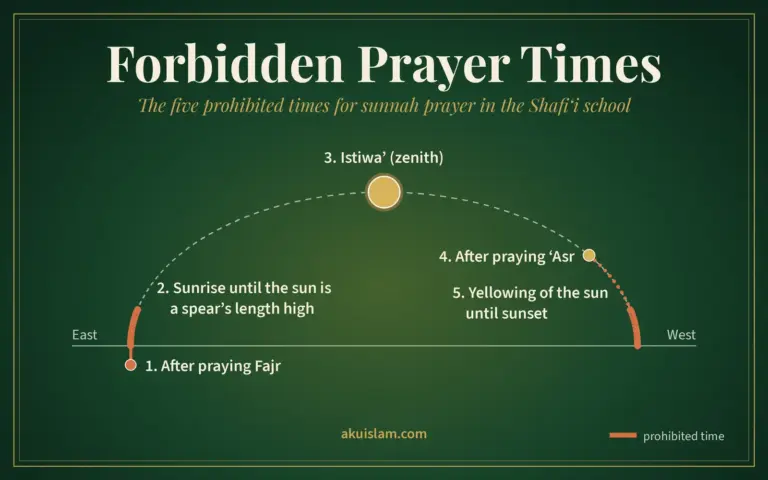
| A prohibited time for prayer, such as after Fajr or after Asr | Do not pray then. Pray outside the prohibited times before you set off.2 |
Avoid the Prohibited Times
The travel prayer is a prayer whose cause comes after it, namely the journey that has not yet happened. A prayer like this is unlawful and invalid if performed at a prohibited time.2,6 If you set off early in the morning, pray before you pray Fajr, or wait until the sun has risen.
Niyyah for the Prayer Before Travelling (Transliteration and Meaning)
The intention is made in the heart at the opening takbir.
The intention is held in the heart at the opening takbir. The wording below may be said before the takbir to help the heart.7
Wording of the Niyyah for the Prayer Before Travelling
أُصَلِّي سُنَّةَ السَّفَرِ رَكْعَتَيْنِ لِلّٰهِ تَعَالَى
Uṣallī sunnatas-safari rak‘ataini lillāhi ta‘ālā.
Meaning
“I pray two rak‘ahs of the sunnah prayer of travel for the sake of Allah, the Most High.”
Note on Intention
The term used in the books is the sunnah of travel (sunnat al-safar).3 Making the intention in your own language, “I pray two rak‘ahs of the sunnah prayer of travel”, is enough, as long as the heart holds it at the opening takbir.
This intention is different from the intention of combining or shortening prayers. The intention to shorten is made in the obligatory prayer that is shortened, at its opening takbir.8
How to Pray the Prayer Before Travelling: 2 Rak‘ahs
Follow these 20 steps, from the opening takbir to the salam.
Before You Begin
- Make wudu.9
- Pray at home, with your family, before leaving to set off.4
- Make sure it is not a prohibited time for prayer.2
- Your clothes and place of prayer are clean, your awrah is covered and you face the qibla. If you are in a hotel or an unfamiliar place, check the qibla direction with this online compass first.
Rak‘ah 1 of 2
First Rak‘ah
Begin with the Intention and the Opening Takbir
Stand upright facing the qibla. Hold the intention of the prayer before travelling in your heart as you say the opening takbir.
أُصَلِّي سُنَّةَ السَّفَرِ رَكْعَتَيْنِ لِلّٰهِ تَعَالَى
Uṣallī sunnatas-safari rak‘ataini lillāhi ta‘ālā
Meaning: “I pray two rak‘ahs of the sunnah prayer of travel for the sake of Allah, the Most High.” Making the intention in your own language is also enough.
Note on Intention
Intention is a matter of the heart, not words that must be spoken. Hold it in your heart during the opening takbir. Saying it aloud before the takbir is sunnah, to help the heart focus.7

Raise both hands with the palms facing the qibla, the fingertips level with the top of the ears, the thumbs level with the earlobes and the palms level with the shoulders. Say “Allāhu akbar” clearly while holding the intention in your heart.10
اَللَّهُ أَكْبَرُ
Allāhu akbar
Meaning
Allah is the Greatest!
After the takbir, place your right hand over your left wrist, below the chest and above the navel.11
Recite the Opening Dua (Iftitah, Sunnah)
After the opening takbir, recite the opening dua quietly. It is sunnah and is recited in the first rak‘ah only. If you leave it out, your prayer is still valid.12
اَللّٰهُ أَكْبَرُ كَبِيرًا وَالْحَمْدُ لِلّٰهِ كَثِيرًا وَسُبْحَانَ اللّٰهِ بُكْرَةً وَأَصِيلًا. وَجَّهْتُ وَجْهِيَ لِلَّذِي فَطَرَ السَّمَاوَاتِ وَالْأَرْضَ حَنِيفًا مُسْلِمًا وَمَا أَنَا مِنَ الْمُشْرِكِينَ. إِنَّ صَلَاتِي وَنُسُكِي وَمَحْيَايَ وَمَمَاتِي لِلّٰهِ رَبِّ الْعَالَمِينَ. لَا شَرِيكَ لَهُ وَبِذَٰلِكَ أُمِرْتُ وَأَنَا مِنَ الْمُسْلِمِينَ.
Allāhu akbaru kabīrā, wal-ḥamdu lillāhi kathīrā, wa subḥānallāhi bukrataw wa aṣīlā. Wajjahtu wajhiya lilladhī faṭaras-samāwāti wal-arḍa ḥanīfam muslimaw wa mā ana minal-mushrikīn. Inna ṣalātī wa nusukī wa maḥyāya wa mamātī lillāhi rabbil-‘ālamīn. Lā sharīka lahū wa bidhālika umirtu wa ana minal-muslimīn.
Meaning
Allah is the Greatest, truly great. Much praise be to Allah. Glory be to Allah, morning and evening. I have turned my face to the One who created the heavens and the earth, inclining to the truth and submitting, and I am not one of those who associate partners with Allah. Indeed, my prayer, my worship, my life and my death are for Allah, Lord of the worlds. He has no partner. This is what I have been commanded, and I am one of those who submit to Him.
Recite Surah al-Fatihah
Before al-Fatihah, recite the ta‘awwuz quietly: A‘ūdhu billāhi minash-shaiṭānir-rajīm, meaning “I seek refuge in Allah from Satan, the accursed.” It is sunnah in every rak‘ah.13
Al-Fatihah is a pillar (rukn) of the prayer and must be recited in every rak‘ah. Recite it carefully and pronounce every letter clearly. The prayer is not valid without it.14
بِسۡمِ ٱللَّهِ ٱلرَّحۡمَٰنِ ٱلرَّحِيمِ ١ ٱلۡحَمۡدُ لِلَّهِ رَبِّ ٱلۡعَٰلَمِينَ ٢ ٱلرَّحۡمَٰنِ ٱلرَّحِيمِ ٣ مَٰلِكِ يَوۡمِ ٱلدِّينِ ٤ إِيَّاكَ نَعۡبُدُ وَإِيَّاكَ نَسۡتَعِينُ ٥ ٱهۡدِنَا ٱلصِّرَٰطَ ٱلۡمُسۡتَقِيمَ ٦ صِرَٰطَ ٱلَّذِينَ أَنۡعَمۡتَ عَلَيۡهِمۡ غَيۡرِ ٱلۡمَغۡضُوبِ عَلَيۡهِمۡ وَلَا ٱلضَّآلِّينَ ٧
Bismillāhir-raḥmānir-raḥīm. Al-ḥamdu lillāhi rabbil-‘ālamīn. Ar-raḥmānir-raḥīm. Māliki yaumid-dīn. Iyyāka na‘budu wa iyyāka nasta‘īn. Ihdinaṣ-ṣirāṭal-mustaqīm. Ṣirāṭal-ladhīna an‘amta ‘alaihim ghairil-maghḍūbi ‘alaihim wa laḍ-ḍāllīn
Meaning
In the name of Allah, the Most Gracious, the Most Merciful. All praise is for Allah, Lord of the worlds, the Most Gracious, the Most Merciful, Master of the Day of Judgement. You alone we worship, and You alone we ask for help. Guide us to the straight path, the path of those You have blessed, not of those who have earned Your anger, nor of those who have gone astray.
After al-Fatihah, say “Āmīn”. It is sunnah.15
Recite Surah al-Kafirun
After al-Fatihah, it is sunnah to recite a surah or some verses of the Quran. For the travel prayer, some scholars of the Shafi‘i school recommend Surah al-Kafirun in the first rak‘ah and Surah al-Ikhlas in the second. You may also recite any surah you know by heart.16
Surah Al-Kafirun
قُلۡ يَٰٓأَيُّهَا ٱلۡكَٰفِرُونَ ١ لَآ أَعۡبُدُ مَا تَعۡبُدُونَ ٢ وَلَآ أَنتُمۡ عَٰبِدُونَ مَآ أَعۡبُدُ ٣ وَلَآ أَنَا۠ عَابِدٞ مَّا عَبَدتُّمۡ ٤ وَلَآ أَنتُمۡ عَٰبِدُونَ مَآ أَعۡبُدُ ٥ لَكُمۡ دِينُكُمۡ وَلِيَ دِينِ ٦
Qul yā ayyuhal-kāfirūn. Lā a‘budu mā ta‘budūn. Wa lā antum ‘ābidūna mā a‘bud. Wa lā ana ‘ābidum mā ‘abattum. Wa lā antum ‘ābidūna mā a‘bud. Lakum dīnukum wa liya dīn
Meaning
Say, “O disbelievers, I do not worship what you worship. Nor do you worship what I worship. Nor will I worship what you worship. Nor will you worship what I worship. For you is your religion, and for me is my religion.”
After the Surah, Bow for Ruku‘

Raise both hands as you did for the opening takbir, and say “Allāhu akbar” as you bow for ruku‘. Place your palms on your knees with the fingers spread. Keep your back and neck level, and look at the place of prostration.17
In ruku‘, recite:
سُبْحَانَ رَبِّيَ الْعَظِيمِ وَبِحَمْدِهِ
Subḥāna rabbiyal-‘aẓīmi wa biḥamdih (3x)
Meaning
“Glory be to my Lord, the Most Great, and praise be to Him.”
Tuma’ninah: Do Not Rush
In ruku‘, i‘tidal, sujud and the sitting between the two prostrations, let your body settle and stay still for a moment before moving to the next position. This is called tuma’ninah, and it is part of the pillars of the prayer.18
Rise for I‘tidal

Raise your head from ruku‘ while raising both hands as you did for the opening takbir.19 As you rise, recite:
سَمِعَ اللّٰهُ لِمَنْ حَمِدَهُ
Sami‘allāhu liman ḥamidah
Meaning
“Allah hears the one who praises Him.”
Once you are standing upright with tuma’ninah, recite:
رَبَّنَا لَكَ الْحَمْدُ
Rabbanā lakal-ḥamd
“Our Lord, to You belongs all praise.”
Go Down for Sujud (Prostration)

Go down for sujud while saying “Allāhu akbar”, without raising your hands. Place your knees down first, then your palms, then your forehead and nose.20
Seven parts of the body must rest on the place of prostration: the forehead, both palms, both knees and the tips of the toes of both feet. Part of the forehead must be uncovered and touch the place of prostration, such as the prayer mat, and must not be blocked by a cap, prayer garment or headscarf. Your hips must also be higher than your head.
In sujud, recite:
سُبْحَانَ رَبِّيَ الأَعْلَى وَبِحَمْدِهِ
Subḥāna rabbiyal-a‘lā wa biḥamdih (3x)
Meaning
“Glory be to my Lord, the Most High, and praise be to Him.”
Sit Between the Two Prostrations

Raise your head from the first sujud while saying “Allāhu akbar”. Sit in iftirash: sit on your left foot with your right foot upright, and rest your hands on your thighs near your knees. Sit with tuma’ninah.21 This sitting is a pillar of the prayer and is different from the brief resting sit before you rise for the next rak‘ah.
Then recite this dua:
رَبِّ اغْفِرْ لِي وَارْحَمْنِي وَاجْبُرْنِي وَارْفَعْنِي وَارْزُقْنِي وَاهْدِنِي وَعَافِنِي وَاعْفُ عَنِّي
Rabbighfir lī warḥamnī wajburnī warfa‘nī warzuqnī wahdinī wa ‘āfinī wa‘fu ‘annī
Meaning
“My Lord, forgive me, have mercy on me, make up for my shortcomings, raise my rank, provide for me, guide me, grant me well-being and pardon me.”
Make the Second Sujud
After the dua, go down for sujud again while saying “Allāhu akbar”. Do it as in the first sujud, with the seven parts of the body touching the place of prostration, then recite the words of sujud.20
سُبْحَانَ رَبِّيَ الأَعْلَى وَبِحَمْدِهِ
Subḥāna rabbiyal-a‘lā wa biḥamdih (3x)
Meaning
“Glory be to my Lord, the Most High, and praise be to Him.”
Raise Your Head with Takbir, Then Sit Briefly
Raise your head from the second sujud as you begin to say Allāhu akbar. This is a takbir of moving between positions, not a new opening takbir.
It is sunnah to sit briefly before rising for the second rak‘ah. Stretch the takbir across this short sit until you are standing upright. This sit is not a pillar, and it has no fixed length.
First rak‘ah complete
Rak‘ah 2 of 2
Second Rak‘ah
Stand for the Second Rak‘ah
Stand upright for the second rak‘ah. The takbir you began when raising your head from sujud ends once you are standing. There is no need to raise your hands or renew your intention.
A takbir of moving (takbir al-intiqal) is the takbir said when moving between positions, such as bowing, going down for sujud and rising for the next rak‘ah.
اَللَّهُ أَكْبَرُ
Allāhu akbar
Recite Surah al-Fatihah
As in the first rak‘ah, recite the ta‘awwuz quietly, then recite al-Fatihah.
بِسۡمِ ٱللَّهِ ٱلرَّحۡمَٰنِ ٱلرَّحِيمِ ١
ٱلۡحَمۡدُ لِلَّهِ رَبِّ ٱلۡعَٰلَمِينَ ٢ ٱلرَّحۡمَٰنِ ٱلرَّحِيمِ ٣ مَٰلِكِ يَوۡمِ ٱلدِّينِ ٤ إِيَّاكَ نَعۡبُدُ وَإِيَّاكَ نَسۡتَعِينُ ٥ ٱهۡدِنَا ٱلصِّرَٰطَ ٱلۡمُسۡتَقِيمَ ٦ صِرَٰطَ ٱلَّذِينَ أَنۡعَمۡتَ عَلَيۡهِمۡ غَيۡرِ ٱلۡمَغۡضُوبِ عَلَيۡهِمۡ وَلَا ٱلضَّآلِّينَ ٧
Bismillāhir-raḥmānir-raḥīm. Al-ḥamdu lillāhi rabbil-‘ālamīn. Ar-raḥmānir-raḥīm. Māliki yaumid-dīn. Iyyāka na‘budu wa iyyāka nasta‘īn. Ihdinaṣ-ṣirāṭal-mustaqīm. Ṣirāṭal-ladhīna an‘amta ‘alaihim ghairil-maghḍūbi ‘alaihim wa laḍ-ḍāllīn
The meaning is the same as in the first rak‘ah.
Then say “Āmīn” as in the first rak‘ah.
Recite Surah al-Ikhlas
After al-Fatihah, recite Surah al-Ikhlas, or another surah you know by heart.
Surah Al-Ikhlas
قُلۡ هُوَ ٱللَّهُ أَحَدٌ ١ ٱللَّهُ ٱلصَّمَدُ ٢ لَمۡ يَلِدۡ وَلَمۡ يُولَدۡ ٣ وَلَمۡ يَكُن لَّهُۥ كُفُوًا أَحَدُۢ ٤
Qul huwallāhu aḥad. Allāhuṣ-ṣamad. Lam yalid wa lam yūlad. Wa lam yakul lahū kufuwan aḥad
Meaning
Say, “He is Allah, the One. Allah, the Eternal Refuge. He neither begets nor is born, and there is none comparable to Him.”
After the Surah, Bow for Ruku‘
Raise both hands and say “Allāhu akbar” as you bow for ruku‘, as in the first rak‘ah. Keep your back level and place your palms on your knees.
As before, in ruku‘ recite:
سُبْحَانَ رَبِّيَ الْعَظِيمِ وَبِحَمْدِهِ
Subḥāna rabbiyal-‘aẓīmi wa biḥamdih (3x)
The meaning is the same as in the first rak‘ah.
Rise for I‘tidal
Raise your head from ruku‘ while raising your hands, as in the first rak‘ah. As you rise, recite:
سَمِعَ اللّٰهُ لِمَنْ حَمِدَهُ
Sami‘allāhu liman ḥamidah
The meaning is the same as in the first rak‘ah.
Once you are standing upright with tuma’ninah, recite:
رَبَّنَا لَكَ الْحَمْدُ
Rabbanā lakal-ḥamd
“Our Lord, to You belongs all praise.”
Go Down for Sujud
Go down for sujud while saying “Allāhu akbar”, as in the first rak‘ah. Make sure the seven parts of the body touch the place of prostration. In sujud, recite:
سُبْحَانَ رَبِّيَ الأَعْلَى وَبِحَمْدِهِ
Subḥāna rabbiyal-a‘lā wa biḥamdih (3x)
The meaning is the same as in the first rak‘ah.
Sit Between the Two Prostrations
Raise your head while saying the takbir and sit in iftirash, as in the first rak‘ah. Then recite the dua between the two prostrations:
رَبِّ اغْفِرْ لِي وَارْحَمْنِي وَاجْبُرْنِي وَارْفَعْنِي وَارْزُقْنِي وَاهْدِنِي وَعَافِنِي وَاعْفُ عَنِّي
Rabbighfir lī warḥamnī wajburnī warfa‘nī warzuqnī wahdinī wa ‘āfinī wa‘fu ‘annī
The meaning is the same as in the first rak‘ah.
Make the Second Sujud
Go down for the second sujud while saying “Allāhu akbar”. In sujud, recite:
سُبْحَانَ رَبِّيَ الأَعْلَى وَبِحَمْدِهِ
Subḥāna rabbiyal-a‘lā wa biḥamdih (3x)
The meaning is the same as in the first rak‘ah.
Sit for the Final Tashahhud

After the second sujud of the second rak‘ah, raise your head while saying the takbir, then sit with your left hip on the floor and your left foot brought out from under your upright right foot. This way of sitting is called tawarruk. Then recite the final tashahhud and the blessings on the Prophet ﷺ22:
التَّحِيَّاتُ الْمُبَارَكَاتُ الصَّلَوَاتُ الطَّيِّبَاتُ لِلّٰهِ. السَّلاَمُ عَلَيْكَ أَيُّهَا النَّبِيُّ وَرَحْمَةُ اللهِ وَبَرَكَاتُهُ. السَّلاَمُ عَلَيْنَا وَعَلَى عِبَادِ اللّٰهِ الصَّالِحِينَ. أَشْهَدُ أَنْ لَا إِلَهَ إِلَّا اللّٰهُ وَأَشْهَدُ أَنَّ مُحَمَّدًا رَسُولُ اللّٰهِ. اللَّهُمَّ صَلِّ عَلَى مُحَمَّدٍ وَعَلَى آلِ مُحَمَّدٍ. كَمَا صَلَّيْتَ عَلَى إِبْرَاهِيمَ وَعَلَى آلِ إِبْرَاهِيمَ وَبَارِكْ عَلَى مُحَمَّدٍ وَعَلَى آلِ مُحَمَّدٍ. كَمَا بَارَكْتَ عَلَى إِبْرَاهِيمَ وَعَلَى آلِ إِبْرَاهِيمَ فِي الْعَالَمِينَ إِنَّكَ حَمِيدٌ مَجِيدٌ.
At-taḥiyyātul-mubārakātuṣ-ṣalawātuṭ-ṭayyibātu lillāh. As-salāmu ‘alaika ayyuhan-nabiyyu wa raḥmatullāhi wa barakātuh. As-salāmu ‘alainā wa ‘alā ‘ibādillāhiṣ-ṣāliḥīn. Ashhadu allā ilāha illallāh, wa ashhadu anna Muḥammadar-rasūlullāh. Allāhumma ṣalli ‘alā Muḥammadiw wa ‘alā āli Muḥammad, kamā ṣallaita ‘alā Ibrāhīma wa ‘alā āli Ibrāhīm, wa bārik ‘alā Muḥammadiw wa ‘alā āli Muḥammad, kamā bārakta ‘alā Ibrāhīma wa ‘alā āli Ibrāhīma fil-‘ālamīna innaka ḥamīdum majīd
Meaning
All greetings, blessings, prayers and good things belong to Allah. Peace be upon you, O Prophet, and the mercy of Allah and His blessings. Peace be upon us and upon the righteous servants of Allah. I bear witness that there is no god but Allah, and I bear witness that Muhammad is the Messenger of Allah. O Allah, send prayers upon Muhammad and the family of Muhammad, as You sent prayers upon Ibrahim and the family of Ibrahim. And bless Muhammad and the family of Muhammad, as You blessed Ibrahim and the family of Ibrahim. In all the worlds, You are truly Praiseworthy and Glorious.
The tashahhud with its explanation is in our guide to Attahiyat (Tashahhud). Before the salam, it is sunnah to make dua.23

Note on the Final Tashahhud
Sitting for the final tashahhud, reciting the tashahhud and sending blessings on the Prophet ﷺ after it are pillars of the prayer. The complete Ibrahimi salawat is sunnah.24
During the tashahhud, close the fingers of your right hand except the index finger. Raise the index finger when you say illallāh and keep it raised until the salam.25
End the Prayer with Salam
End the prayer with the salam. The first salam, to the right, is a pillar that ends the prayer. The second salam, to the left, is sunnah.26

For the first salam, turn your face to the right and say:
السَّلَامُ عَلَيْكُمْ وَرَحْمَةُ اللّٰهِ
As-salāmu ‘alaikum wa raḥmatullāh
Meaning
“Peace be upon you, and the mercy of Allah.”
… then turn your face to the left and give the second salam:
السَّلَامُ عَلَيْكُمْ وَرَحْمَةُ اللّٰهِ
As-salāmu ‘alaikum wa raḥmatullāh
The two rak‘ahs of the prayer before travelling are complete. After that, continue with the practices and duas below.
Quick Reference: What to Recite in Each Position
| Position | Recitation |
|---|---|
| Opening takbir | Allāhu akbar, with the intention in the heart |
| Opening dua (sunnah) | Allāhu akbar kabīrā… |
| Ta‘awwuz (sunnah, every rak‘ah) | A‘ūdhu billāhi minash-shaiṭānir-rajīm |
| Standing | Al-Fatihah (obligatory), then a surah (sunnah) |
| Ruku‘ | Subḥāna rabbiyal-‘aẓīmi wa biḥamdih (3x) |
| I‘tidal | Sami‘allāhu liman ḥamidah. Rabbanā lakal-ḥamd |
| Sujud | Subḥāna rabbiyal-a‘lā wa biḥamdih (3x) |
| Between the two prostrations | Rabbighfir lī warḥamnī wajburnī… |
| Final tashahhud | At-taḥiyyātu… and blessings on the Prophet ﷺ |
| Salam | As-salāmu ‘alaikum wa raḥmatullāh, to the right and to the left |
This table summarises the 20 steps above. Perform every movement calmly and keep tuma’ninah.
Practices and Dua After the Prayer
Ayat al-Kursi, a dua asking for ease, then set off.
Optional Practice: Ayat al-Kursi and Surah Quraysh
This section is sunnah, not obligatory. Your travel prayer is still valid without it.
After the salam, some scholars of the Shafi‘i school recommend:27
- Ayat al-Kursi, that is, Surah al-Baqarah, verse 255.
- Surah Quraysh (Li-ilafi Quraysh).
Other scholars recommend Surah al-Falaq and Surah al-Nas as the surahs in the prayer, in place of al-Kafirun and al-Ikhlas. Both ways are good.
Then make dua earnestly. Begin the dua with praise of Allah and blessings on the Prophet ﷺ, and close it the same way.28 Recite it from beginning to end as one continuous dua.
Dua after the travel prayer
اللّٰهُمَّ بِكَ أَسْتَعِينُ، وَعَلَيْكَ أَتَوَكَّلُ، اللّٰهُمَّ ذَلِّلْ لِي صُعُوبَةَ أَمْرِي، وَسَهِّلْ عَلَيَّ مَشَقَّةَ سَفَرِي، وَارْزُقْنِي مِنَ الْخَيْرِ أَكْثَرَ مِمَّا أَطْلُبُ، وَاصْرِفْ عَنِّي كُلَّ شَرٍّ
Allāhumma bika asta‘īn, wa ‘alaika atawakkal. Allāhumma dhallil lī ṣu‘ūbata amrī, wa sahhil ‘alayya mashaqqata safarī, warzuqnī minal-khairi akthara mimmā aṭlub, waṣrif ‘annī kulla sharr.
O Allah, through You I seek help and in You I put my trust. O Allah, make the difficulties of my affairs easy for me, lighten the hardship of my journey, grant me more good than what I ask for, and turn every evil away from me.
رَبِّ اشْرَحْ لِي صَدْرِي، وَيَسِّرْ لِي أَمْرِي، اللّٰهُمَّ إِنِّي أَسْتَحْفِظُكَ وَأَسْتَوْدِعُكَ نَفْسِي وَدِينِي وَأَهْلِي وَأَقَارِبِي وَكُلَّ مَا أَنْعَمْتَ عَلَيَّ وَعَلَيْهِمْ بِهِ مِنْ آخِرَةٍ وَدُنْيَا، فَاحْفَظْنَا أَجْمَعِينَ مِنْ كُلِّ سُوءٍ يَا كَرِيمُ
Rabbishraḥ lī ṣadrī, wa yassir lī amrī. Allāhumma innī astaḥfiẓuka wa astaudi‘uka nafsī wa dīnī wa ahlī wa aqāribī wa kulla mā an‘amta ‘alayya wa ‘alaihim bihī min ākhiratin wa dunyā, faḥfaẓnā ajma‘īna min kulli sū’in yā Karīm.
My Lord, open my heart for me and make my affair easy for me. O Allah, I seek Your protection and entrust to You myself, my religion, my family, my relatives and every blessing of the Hereafter and this world that You have granted to me and to them. Protect us all from every evil, O Most Generous.28
About This Dua
This dua is the one recommended by Imam al-Nawawi in al-Adhkar, not the wording of a hadith of the Prophet ﷺ. You may also make dua in your own language, asking for safety on the journey and protection for the family you leave behind.28
Dua for Travelling: From Home Until You Return
The duas the Prophet ﷺ taught for the whole journey, in order.
After the travel prayer, recite the following duas in the order of your journey. The dua for boarding a vehicle is the one most often searched for as the “dua for travelling”.
1. When Rising to Set Off
اللّٰهُمَّ إِلَيْكَ تَوَجَّهْتُ، وَبِكَ اعْتَصَمْتُ، اللّٰهُمَّ اكْفِنِي مَا هَمَّنِي وَمَا لَا أَهْتَمُّ لَهُ، اللّٰهُمَّ زَوِّدْنِي التَّقْوَى، وَاغْفِرْ لِي ذَنْبِي، وَوَجِّهْنِي لِلْخَيْرِ أَيْنَمَا تَوَجَّهْتُ
Allāhumma ilaika tawajjahtu, wa bika‘taṣamtu. Allāhummakfinī mā hammanī wa mā lā ahtammu lah. Allāhumma zawwidnit-taqwā, waghfir lī dhanbī, wa wajjihnī lil-khairi ainamā tawajjahtu.
O Allah, to You I turn and in You I hold fast. O Allah, suffice me against what worries me and what I do not pay attention to. O Allah, provide me with taqwa, forgive my sins and direct me to good wherever I turn.29
2. When Parting From Your Family
Entrust yourself and your family to Allah, because Allah protects what is entrusted to Him.30 The Prophet ﷺ said these words when parting from a companion:
أَسْتَوْدِعُكَ اللّٰهَ الَّذِي لَا تَضِيعُ وَدَائِعُهُ
Astaudi‘ukallāhal-ladhī lā taḍī‘u wadā’i‘uh.
I entrust you to Allah, whose trusts are never lost.31
3. When Leaving Home
بِسْمِ اللّٰهِ، تَوَكَّلْتُ عَلَى اللّٰهِ، لَا حَوْلَ وَلَا قُوَّةَ إِلَّا بِاللّٰهِ
Bismillāh, tawakkaltu ‘alallāh, lā ḥaula wa lā quwwata illā billāh.
In the name of Allah, I put my trust in Allah. There is no might and no power except with Allah.32
اللّٰهُمَّ أَعُوذُ بِكَ أَنْ أَضِلَّ أَوْ أُضَلَّ، أَوْ أَزِلَّ أَوْ أُزَلَّ، أَوْ أَظْلِمَ أَوْ أُظْلَمَ، أَوْ أَجْهَلَ أَوْ يُجْهَلَ عَلَيَّ
Allāhumma a‘ūdhu bika an aḍilla au uḍalla, au azilla au uzalla, au aẓlima au uẓlama, au ajhala au yujhala ‘alayya.
O Allah, I seek refuge in You from going astray or being led astray, from slipping or being made to slip, from wronging or being wronged, and from acting foolishly or being treated foolishly.33
4. Dua for Boarding a Vehicle (Dua al-Safar)
Once seated in the vehicle, say the takbir three times, then recite this dua from beginning to end as one continuous dua.34
Dua al-safar
اللّٰهُ أَكْبَرُ، اللّٰهُ أَكْبَرُ، اللّٰهُ أَكْبَرُ، سُبْحَانَ الَّذِي سَخَّرَ لَنَا هٰذَا وَمَا كُنَّا لَهُ مُقْرِنِينَ، وَإِنَّا إِلَى رَبِّنَا لَمُنْقَلِبُونَ
Allāhu akbar, Allāhu akbar, Allāhu akbar. Subḥānal-ladhī sakhkhara lanā hādhā wa mā kunnā lahū muqrinīn, wa innā ilā rabbinā lamunqalibūn.
Allah is the Greatest, Allah is the Greatest, Allah is the Greatest. Glory be to the One who has placed this vehicle at our service, when we could not have done so ourselves, and indeed to our Lord we will return.
اللّٰهُمَّ إِنَّا نَسْأَلُكَ فِي سَفَرِنَا هٰذَا الْبِرَّ وَالتَّقْوَى، وَمِنَ الْعَمَلِ مَا تَرْضَى، اللّٰهُمَّ هَوِّنْ عَلَيْنَا سَفَرَنَا هٰذَا، وَاطْوِ عَنَّا بُعْدَهُ، اللّٰهُمَّ أَنْتَ الصَّاحِبُ فِي السَّفَرِ، وَالْخَلِيفَةُ فِي الْأَهْلِ، اللّٰهُمَّ إِنِّي أَعُوذُ بِكَ مِنْ وَعْثَاءِ السَّفَرِ، وَكَآبَةِ الْمَنْظَرِ، وَسُوءِ الْمُنْقَلَبِ فِي الْمَالِ وَالْأَهْلِ
Allāhumma innā nas’aluka fī safarinā hādhal-birra wat-taqwā, wa minal-‘amali mā tarḍā. Allāhumma hawwin ‘alainā safaranā hādhā, waṭwi ‘annā bu‘dah. Allāhumma antaṣ-ṣāḥibu fis-safar, wal-khalīfatu fil-ahl. Allāhumma innī a‘ūdhu bika min wa‘thā’is-safar, wa ka’ābatil-manẓar, wa sū’il-munqalabi fil-māli wal-ahl.
O Allah, we ask You on this journey of ours for righteousness and taqwa, and for deeds that please You. O Allah, make this journey easy for us and shorten its distance for us. O Allah, You are the Companion on the journey and the One who looks after the family. O Allah, I seek refuge in You from the hardships of travel, from distressing sights, and from an evil return to wealth and family.34
How ‘Ali RA Mounted His Ride
‘Ali RA said “Bismillāh” as he placed his foot, “Alḥamdulillāh” once seated, then the verse Subḥānal-ladhī sakhkhara lanā…, the tahmid three times and the takbir three times, and ended with this dua. He mentioned that the Prophet ﷺ did the same.35
سُبْحَانَكَ إِنِّي ظَلَمْتُ نَفْسِي فَاغْفِرْ لِي، فَإِنَّهُ لَا يَغْفِرُ الذُّنُوبَ إِلَّا أَنْتَ
Subḥānaka innī ẓalamtu nafsī faghfir lī, fa innahū lā yaghfirudh-dhunūba illā anta.
Glory be to You, I have wronged myself, so forgive me. Indeed, none forgives sins except You.35
5. When Stopping at a Place
When you stop at a place, such as a rest stop or a hotel, recite this dua. Whoever recites it will not be harmed by anything until he leaves that place.36
أَعُوذُ بِكَلِمَاتِ اللّٰهِ التَّامَّاتِ مِنْ شَرِّ مَا خَلَقَ
A‘ūdhu bikalimātillāhit-tāmmāti min sharri mā khalaq.
I seek refuge in the perfect words of Allah from the evil of what He has created.36
6. When Returning
On the way home, recite the dua al-safar above again and add:
آيِبُونَ تَائِبُونَ عَابِدُونَ لِرَبِّنَا حَامِدُونَ
Āyibūna tā’ibūna ‘ābidūna lirabbinā ḥāmidūn.
We return, repenting, worshipping and praising our Lord.34
Optional Practice: Two Rak‘ahs After Returning
This section is sunnah, not obligatory.
When the Prophet ﷺ returned from a journey, he went to the mosque first and prayed two rak‘ahs there, before sitting with the people.37 If there is a mosque or prayer hall near your route home, stop and pray two rak‘ahs before entering your house.
Prayer Before Travelling FAQ
Short answers to common questions.
Here are answers to the questions readers ask most often about the prayer before travelling.
It is sunnah. Imam al-Nawawi mentions that it is recommended to pray two rak‘ahs when about to set out on a journey.1
Two rak‘ahs with one salam.1
Before leaving home to set off, ideally at home with your family.4 Avoid the prohibited times for prayer.2
No. The condition of two marhalah is a condition for combining and shortening prayers.5 The prayer before travelling is sunnah for anyone about to set out on a journey.1
Uṣallī sunnatas-safari rak‘ataini lillāhi ta‘ālā, meaning “I pray two rak‘ahs of the sunnah prayer of travel for the sake of Allah, the Most High.” Making the intention in your own language is enough.3
Some scholars of the Shafi‘i school recommend al-Kafirun in the first rak‘ah and al-Ikhlas in the second.16 Others recommend al-Falaq and al-Nas.27 You may also recite any other surah you know by heart.
Yes. In fact, home is the most suitable place. The hadith mentions two rak‘ahs prayed with one’s family when about to travel.4
Yes. It is sunnah for anyone about to set out on a journey, including for umrah and Hajj.1 Pray it at home before you set off. It is different from the practices of ihram at the miqat.
The best-known dua is the dua al-safar when boarding a vehicle: say the takbir three times, then recite Subḥānal-ladhī sakhkhara lanā hādhā wa mā kunnā lahū muqrinīn, wa innā ilā rabbinā lamunqalibūn, to the end of the dua.34 The full wording is in the Dua for Travelling section above.
Imam al-Nawawi recommends a dua that begins with Allāhumma bika asta‘īn, wa ‘alaika atawakkal.28 Before the dua, some scholars recommend reciting Ayat al-Kursi and Surah Quraysh.27
There is no special wording of intention for setting out on a journey. For those who want to combine or shorten prayers, the conditions include knowing the destination of the journey and intending to shorten at the opening takbir of the obligatory prayer.8
The list of sunnah baths in Minhaj al-Talibin does not mention a bath specifically for travelling.38 For those going for umrah or Hajj, there is the sunnah bath for ihram.39
No. The travel prayer is a prayer whose cause comes after it, so it is unlawful and invalid at the prohibited times.2 Pray before you pray Fajr or Asr, or after the prohibited time has ended.
Yes. When the Prophet ﷺ returned from a journey, he went to the mosque first and prayed two rak‘ahs.37
Closing: Setting Off With a Calm Heart
The prayer before travelling is only two rak‘ahs, but it is the best provision to leave behind with your family. After that, every step of the journey is accompanied by dua, from rising to set off until you return home.
If your journey is long and qualifies for combining and shortening prayers, plan your obligatory prayers along the way too. May Allah make your journey easy and protect the family you leave behind.
May this be of benefit.
Footnotes & References
- Imam al-Nawawi mentions that it is recommended to pray two rak‘ahs when intending to set out on a journey: «يستحب له عند إرادته الخروج أن يصلي ركعتين». He sets no condition of distance. [al-Adhkar, chapter «أذكاره عند إرادته الخروج من بيته», no. 606] ↩︎
- Shaykh Nawawi al-Bantani lists the travel prayer among the prayers whose cause comes after them, together with the istikharah prayer [Nihayat al-Zain 1/105-107]. A general voluntary prayer and a prayer whose cause comes after it are unlawful and invalid at the prohibited times: «ومتى كان النفل مطلقا أو ذا سبب متأخر يكره كراهة تحريم في خمسة أوقات ولا ينعقد». [Nihayat al-Zain 1/116] ↩︎
- Shaykh Muhammad Nawawi al-Bantani: «ومنه صلاة السفر وهي ركعتان عند إرادة الخروج للسفر ينوي بهما سنة السفر». [Nihayat al-Zain 1/107] ↩︎
- Hadith of al-Mut‘im ibn al-Miqdam: «ما خلف عبد على أهله أفضل من ركعتين يركعهما عندهم حين يريد السفر». [Musannaf Ibn Abi Shaybah, chapter «الرجل يريد السفر من كان يستحب له أن يصلي قبل خروجه», no. 4879] Imam al-Nawawi mentions it as a narration of al-Tabarani. [al-Adhkar, no. 606] ↩︎
- The long journey distance that permits shortening is two marhalah: «وطويل السفر ثمانية وأربعون ميلا هاشمية. قلت: وهو مرحلتان بسير الأثقال». [Minhaj al-Talibin, Chapter on the Traveller’s Prayer] ↩︎
- Whoever performs a prayer that is ruled disliked (makruh) at these times is sinful, and the prayer is not valid. [al-Ramli, Nihayat al-Muhtaj, 1/386: «ومن فعل صلاة حكم بكراهتها في الأوقات المتقدمة أثم ولم تنعقد»] ↩︎
- The intention is in the heart and must accompany the opening takbir, while saying it aloud before the takbir is recommended so the tongue helps the heart. [Minhaj al-Talibin, Chapter on the Description of Prayer] [Al-Kafi #945] ↩︎
- The conditions of shortening include knowing the destination of the journey and intending to shorten at the opening takbir: «ويشترط قصد موضع معين أولا», «ويشترط للقصر نيته في الإحرام». [Minhaj al-Talibin, Chapter on the Traveller’s Prayer] ↩︎
- Purity from ritual impurity is one of the conditions for a valid prayer. [Minhaj al-Talibin, Chapter on the Conditions of Prayer: «وطهارة الحدث»] ↩︎
- It is sunnah to raise the hands at the takbir, with the fingertips level with the top of the ears, the thumbs level with the earlobes and the palms level with the shoulders. [Tuhfat al-Muhtaj 2/18] [Sahih al-Bukhari 735] ↩︎
- It is sunnah to place the hands below the chest, with the right hand holding the left wrist. [Minhaj al-Talibin, Chapter on the Description of Prayer] [Sahih Muslim 401] ↩︎
- The opening dua is sunnah and is recited quietly after the opening takbir. The wording common in Malaysia combines two authentic narrations. [Minhaj al-Talibin, Chapter on the Description of Prayer] [Sahih Muslim 601] [Sahih Muslim 771] ↩︎
- After the opening dua, it is sunnah to recite the ta‘awwuz quietly before al-Fatihah in every rak‘ah, and it is more emphasised in the first rak‘ah. [Minhaj al-Talibin, Chapter on the Description of Prayer: «ثم التعوذ ويسرهما ويتعوذ في كل ركعة على المذهب والأولى آكد»] ↩︎
- In the Shafi‘i school, al-Fatihah must be recited in every rak‘ah by the imam, the follower and the one praying alone. [al-Majmu‘ 3/364] ↩︎
- After al-Fatihah, it is sunnah to say “Āmīn” with the letter mim unstressed. [Minhaj al-Talibin, Chapter on the Description of Prayer: «ويسن عقب الفاتحة آمين خفيفة الميم»] ↩︎
- Imam al-Nawawi: «قال بعض أصحابنا: يستحب أن يقرأ في الأولى منهما بعد الفاتحة (قل يا أيها الكافرون) وفي الثانية: (قل هو الله أحد)». [al-Adhkar, no. 606] ↩︎
- It is sunnah to say the takbir as you begin to bow for ruku‘ and to raise the hands as at the opening takbir. The complete ruku‘ is to keep the back and neck level and hold the knees with the fingers spread. [Minhaj al-Talibin, Chapter on the Description of Prayer: «وأكمله تسوية ظهره وعنقه ونصب ساقيه وأخذ ركبتيه بيديه وتفرقة أصابعه للقبلة ويكبر في ابتداء هويه ويرفع يديه كإحرامه»] ↩︎
- The hadith of Abu Hurairah RA about the man who prayed hastily: the Prophet ﷺ told him to repeat his prayer and taught him to bow, stand, prostrate and sit calmly. [Sahih al-Bukhari 757] [Sahih Muslim 397] The measure of tuma’ninah is that the body settles for a moment so that the movement down is separate from the movement up. [Tuhfat al-Muhtaj 2/59] ↩︎
- It is sunnah to raise the hands as you begin to lift your head from ruku‘ while saying “Sami‘allāhu liman ḥamidah”. [Minhaj al-Talibin, Chapter on the Description of Prayer: «ويسن رفع يديه مع ابتداء رفع رأسه قائلا سمع الله لمن حمده»] ↩︎
- The minimum of sujud is for part of the forehead to touch the place of prostration directly. Placing both hands, both knees and both feet is also obligatory according to the view preferred by al-Nawawi, and the hips must be higher than the head. It is sunnah to say the takbir while going down without raising the hands, and to place the knees, then the hands, then the forehead and nose. The second sujud is made like the first. [Minhaj al-Talibin, Chapter on the Description of Prayer: «وأقله مباشرة بعض جبهته مصلاه… قلت: الأظهر وجوبه… وأن ترتفع أسافله على أعاليه في الأصح وأكمله يكبر لهويه بلا رفع ويضع ركبتيه ثم يديه ثم جبهته وأنفه», «ثم يسجد الثانية كالأولى»] ↩︎
- The complete sitting between the two prostrations is to say the takbir while rising, sit in iftirash and place the hands on the thighs near the knees. [Minhaj al-Talibin, Chapter on the Description of Prayer: «وأكمله يكبر ويجلس مفترشا واضعا يديه قريبا من ركبتيه»] ↩︎
- The hadith of Abu Humayd al-Sa‘idi RA: in the last rak‘ah, the Prophet ﷺ put his left foot forward, kept his right foot upright and sat on his seat. [Sahih al-Bukhari 828] [Minhaj al-Talibin, Chapter on the Description of Prayer] ↩︎
- Imam al-Nawawi states that after the final tashahhud and the salawat, it is sunnah to make dua, and a dua narrated from the Prophet ﷺ (ma’thur) is better. [Minhaj al-Talibin, Chapter on the Description of Prayer] ↩︎
- Sending blessings on the Prophet ﷺ in the final tashahhud is a pillar, and the minimum is “Allāhumma ṣalli ‘alā Muḥammad”. Adding blessings on his family and the Ibrahimi salawat is more complete. [Minhaj al-Talibin, Chapter on the Description of Prayer] [Tuhfat al-Muhtaj 2/86] ↩︎
- The right index finger is raised when saying “illallāh”, is not moved, and stays raised until the end of the tashahhud. [Tuhfat al-Muhtaj 2/80] [Sahih Muslim 580] ↩︎
- The minimum salam is “As-salāmu ‘alaikum”. The most complete is “As-salāmu ‘alaikum wa raḥmatullāh” twice, to the right and then to the left. [Minhaj al-Talibin, Chapter on the Description of Prayer] ↩︎
- Imam al-Nawawi: «وقال بعضهم: يقرأ في الأولى بعد الفاتحة (قل أعوذ برب الفلق) وفي الثانية (قل أعوذ برب الناس) فإذا سلم قرأ آية الكرسي», and «ويستحب أن يقرأ سورة (لإيلاف قريش)». [al-Adhkar, no. 606] ↩︎
- Imam al-Nawawi mentions this dua as among the best to say after the travel prayer («ومن أحسن ما يقول»), and recommends opening and closing the dua with praise of Allah and blessings on the Prophet ﷺ: «ويفتتح دعاءه ويختمه بالتحميد لله تعالى، والصلاة والسلام على رسول الله». [al-Adhkar, no. 606] ↩︎
- Hadith of Anas ibn Malik RA: the Prophet ﷺ never set out on a journey without saying this dua when he rose from his seat. [al-Adhkar, no. 607] ↩︎
- Hadith of Ibn ‘Umar RA: «إن الله تعالى إذا استودع شيئا حفظه». [al-Adhkar, no. 608, from Musnad Ahmad] ↩︎
- Hadith of Abu Hurairah RA: «ودعني رسول الله صلى الله عليه وسلم فقال: أستودعك الله الذي لا تضيع ودائعه». [Sunan Ibn Majah, no. 2825] Its chain passes through Ibn Lahi‘ah. ↩︎
- Hadith of Anas ibn Malik RA: whoever says it when leaving his house, it is said to him: «كفيت، ووقيت، وتنحى عنه الشيطان». Al-Tirmidhi graded it «حسن غريب». [Sunan al-Tirmidhi, no. 3426] [Sunan Abi Dawud, no. 5095] ↩︎
- Hadith of Umm Salamah RA: the Prophet ﷺ never left his house without raising his gaze to the sky and saying this dua. [Sunan Abi Dawud, chapter «ما يقول إذا خرج من بيته», no. 5094] ↩︎
- Hadith of Ibn ‘Umar RA: when the Prophet ﷺ sat on his camel to set out on a journey, he said the takbir three times, then recited this dua. When he returned, he recited it and added «آيبون تائبون عابدون لربنا حامدون». [Sahih Muslim, no. 1342] ↩︎
- Hadith of ‘Ali ibn Rabi‘ah: he saw ‘Ali RA say bismillah when placing his foot on his mount, alhamdulillah once seated, the verse from Surah al-Zukhruf, the tahmid three times, the takbir three times, then this dua, and then mention that the Prophet ﷺ did the same. [Sunan Abi Dawud, chapter «ما يقول الرجل إذا ركب», no. 2602] [Sunan al-Tirmidhi, no. 3446] ↩︎
- Hadith of Khawlah bint Hakim RA: «من نزل منزلا ثم قال: أعوذ بكلمات الله التامات من شر ما خلق، لم يضره شيء، حتى يرتحل من منزله ذلك». [Sahih Muslim, no. 2708] ↩︎
- Hadith of Ka‘b ibn Malik RA: «وكان إذا قدم من سفر، بدأ بالمسجد، فيركع فيه ركعتين». [Sahih al-Bukhari, no. 4418] ↩︎
- The list of sunnah baths in Minhaj al-Talibin is the bath for Friday, the two Eids, the eclipse prayer, istisqa, after washing a deceased person, for someone who recovers from insanity or unconsciousness, for a non-Muslim who embraces Islam, and the baths of Hajj: «ومن المسنون غسل العيد والكسوف والاستسقاء. ولغاسل الميت والمجنون والمغمى عليه إذا أفاقا. والكافر إذا أسلم، وأغسال الحج». [Minhaj al-Talibin, Chapter on the Friday Prayer] ↩︎
- «ويسن الغسل للإحرام». [Minhaj al-Talibin, Chapter on Ihram] ↩︎
Further Reading
- al-Nawawi, al-Adhkar.
- al-Nawawi, Minhaj al-Talibin wa ‘Umdat al-Muftin.
- al-Nawawi, al-Majmu‘ Sharh al-Muhadhdhab, volume 3.
- Ibn Hajar al-Haytami, Tuhfat al-Muhtaj bi Sharh al-Minhaj, volume 2.
- Shams al-Din al-Ramli, Nihayat al-Muhtaj ila Sharh al-Minhaj, volume 1.
- Nawawi al-Bantani, Nihayat al-Zain.
- Ibn Abi Shaybah, al-Musannaf.
- al-Bukhari, Sahih al-Bukhari. Muslim, Sahih Muslim.
- Abu Dawud, Sunan Abi Dawud. Al-Tirmidhi, Sunan al-Tirmidhi. Ibn Majah, Sunan Ibn Majah.