
This is a complete guide to Salat al-Khusuf, the lunar eclipse prayer, from the intention to the salam, the dua and the sermon, according to the Shafi‘i school.
The recitations in the prayer come with the Arabic text, transliteration, audio and meaning. The guide suits anyone still learning to pray, whether praying alone at home or in congregation at the mosque.
The Lunar Eclipse Prayer at a Glance
The lunar eclipse prayer (salat al-khusuf) is a two-rak‘ah prayer performed when a lunar eclipse occurs. Its distinctive form is two standings with al-Fatihah and two bowings in every rak‘ah.
- Ruling: sunnah mu’akkadah, a strongly emphasised sunnah.
- Intention: Uṣallī sunnata khusūfil-qamari rak‘ataini lillāhi ta‘ālā, “I pray the two-rak‘ah sunnah of the lunar eclipse for the sake of Allah, the Most High.”
- Rak‘ahs: 2 rak‘ahs with one salam. Each rak‘ah has two qiyams and two ruku‘s.
- Recitation: aloud, including for the imam and someone praying alone.
- Time: from when the eclipse is seen until the moon is fully bright again or the sun rises.
- Dua: there is no specific wording. Make plenty of dhikr, dua, istighfar and charity.
- Sermon: two sermons after the prayer are sunnah when prayed in congregation.

Looking for the solar eclipse prayer?
Salat al-Kusuf (Solar Eclipse Prayer): Niyyah and How to Pray
This guide is for the lunar eclipse. For a solar eclipse, the recitation is quiet and the time ends when the sun becomes bright or sets.
Contents
- Meaning and Ruling of the Lunar Eclipse Prayer
- How Many Rak‘ahs and How Many Ruku‘s?
- Time of the Lunar Eclipse Prayer
- Niyyah (Intention) for Salat al-Khusuf
- How to Pray Salat al-Khusuf (2 Rak‘ahs)
- The Sermon, Good Deeds and Dua During a Lunar Eclipse
- Praying the Lunar Eclipse Prayer at Night
- Special Situations During the Eclipse Prayer
- Common Mistakes in the Eclipse Prayer
- Salat al-Khusuf FAQ
- Closing: A Sign of Allah, Not an Omen
Meaning and Ruling of the Lunar Eclipse Prayer
What a lunar eclipse is, and why we are told to pray.
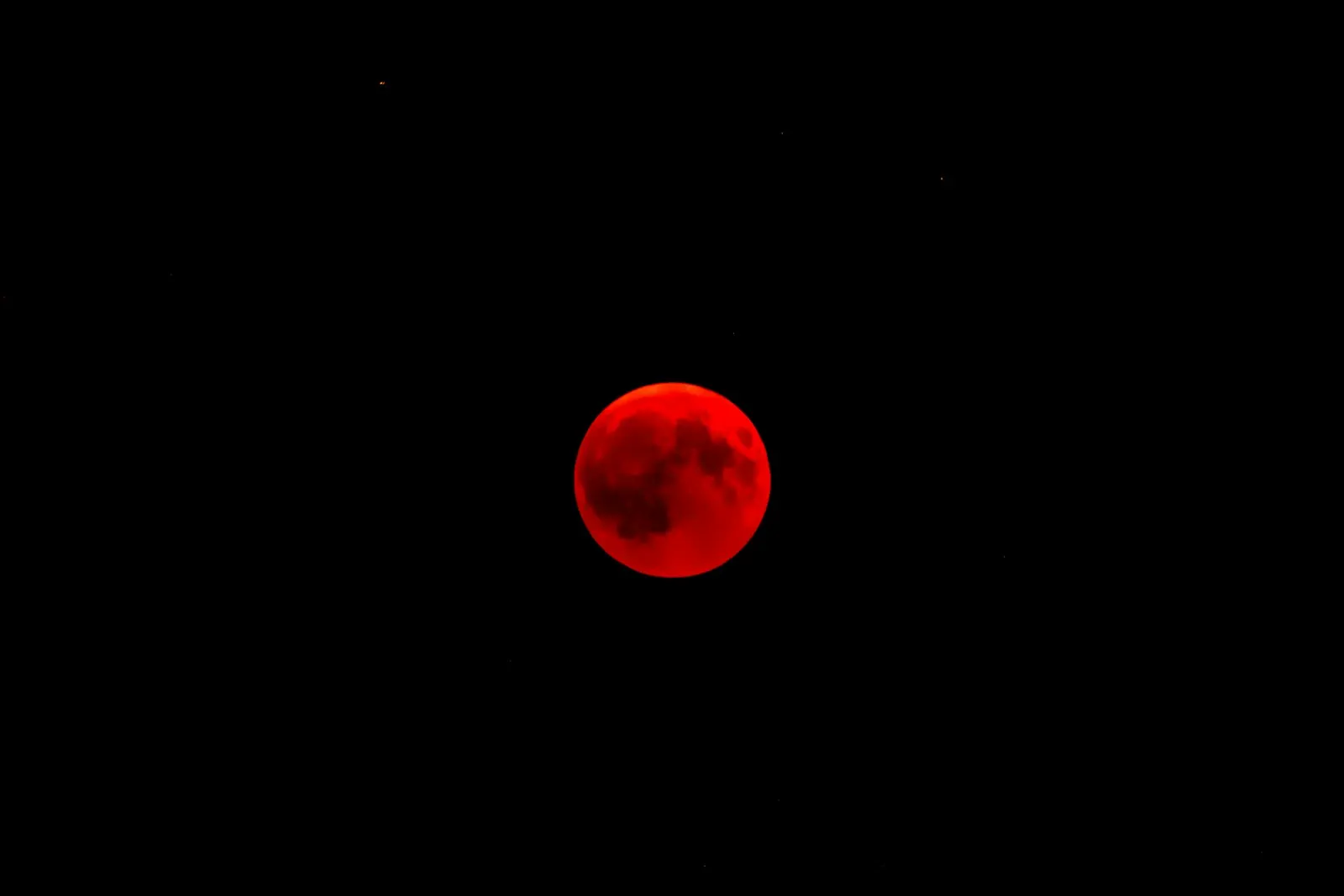
A lunar eclipse occurs when the earth’s shadow covers the moon, partly or fully, so that its light dims or the moon looks reddish. In Arabic it is better known as khusūf, while a solar eclipse is called kusūf.1
An eclipse took place in the time of the Messenger of Allah ﷺ, on the day his son Ibrahim died. When people linked it to that death, he stressed that the sun and moon do not eclipse for anyone’s death or life, and told his ummah to pray and make dua.2
Salat al-Khusuf and Salat al-Kusuf
The lunar eclipse prayer is also known as salat al-khusuf, while the solar eclipse prayer is known as salat al-kusuf. The two terms are sometimes used interchangeably.1 Both are prayed the same way, two rak‘ahs with two ruku‘s in each rak‘ah. The difference is that the lunar eclipse prayer is recited aloud, while the solar eclipse prayer is recited quietly.3
Ruling on the Lunar Eclipse Prayer
In the Shafi‘i school, the eclipse prayer is a sunnah mu’akkadah, a strongly emphasised sunnah, and it is disliked to leave it. It is not obligatory.4 When he saw an eclipse, the Messenger of Allah ﷺ told his ummah to make dua, say takbir, pray and give charity.5
Can the Eclipse Prayer Be Prayed Alone?
Yes. It is better in congregation at the mosque, but the prayer remains sunnah for someone praying alone, including women at home.6 Someone praying alone does not give a sermon.
How Many Rak‘ahs and How Many Ruku‘s?
Two rak‘ahs, with two ruku‘s in each rak‘ah.
The eclipse prayer is two rak‘ahs with one salam. Ibn Hajar al-Haytami mentions three valid ways of performing it.7
| Method | Form | Notes |
|---|---|---|
| 1. The minimum | Two rak‘ahs like an ordinary sunnah prayer, one ruku‘ in each rak‘ah | Valid, but not in the distinctive form of the eclipse prayer |
| 2. Two ruku‘s (this guide) | Each rak‘ah has two standings with al-Fatihah and two ruku‘s, with short surahs | The distinctive form of the eclipse prayer. Easy to follow alone or in congregation |
| 3. The most complete | Like the second way, but the recitation, ruku‘ and sujud are lengthened | Better for those who are able. See the Optional Practice box in step 4 |
This guide uses the second way as its main steps. It is based on the hadith of Aishah RA describing how the Messenger of Allah ﷺ prayed during an eclipse.8,9
For this reason, the eclipse prayer is sometimes described as four ruku‘s and four prostrations in two rak‘ahs, as Aishah RA described it.10
Do Not Add or Remove a Ruku‘
Once you have intended the eclipse prayer with two ruku‘s, do not add a third ruku‘ because the eclipse is still going on, and do not drop a ruku‘ because the moon has become bright.11
Time of the Lunar Eclipse Prayer
From when the eclipse is seen until the moon is bright or the sun rises.
The time of the lunar eclipse prayer begins when the eclipse is seen, that is, when part or all of the moon becomes dark.12 It ends when the moon is fully bright again, or when the sun rises.13
Unlike a solar eclipse, its time does not end when Fajr comes in, and it does not end if the moon sets while still eclipsed.13,14
| Situation | Ruling |
|---|---|
| The eclipse is under way and can be seen | You may start the prayer |
| The moon rises already eclipsed | You may pray as soon as the eclipse is seen12 |
| The moon is covered by clouds | The eclipse is treated as still going on. You may start or continue the prayer15 |
| The eclipse continues after Fajr has come in | You may still begin the prayer as long as the sun has not risen, even if you have already prayed Fajr13,16 |
| The moon sets while eclipsed | The time has not ended. You may still pray14 |
| The moon becomes bright while you are praying | Carry on and complete the prayer17 |
| The moon is fully bright, or the sun has risen, before the prayer has started | The prayer is no longer sunnah, and it is not made up18 |
| A penumbral eclipse only | The eclipse prayer is not sunnah. See the box below19 |
Eclipse timetables announced by the Malaysian Space Agency (MYSA), the National Planetarium or the state mufti departments help you prepare early. But the prayer is tied to an eclipse that can be seen, not to calculation alone.20
Penumbral Eclipse: No Eclipse Prayer
A penumbral eclipse happens when the moon only enters the earth’s partial shadow. The moon looks only slightly dimmer, and the change can hardly be seen with the naked eye. For this reason, the eclipse prayer is not sunnah for a penumbral eclipse.19
The lunar eclipse prayer is sunnah when a partial or total eclipse (the umbral phase) can be seen. This is why the prayer times announced by the mufti departments usually end with the end of the umbral phase, not the penumbral phase.
Niyyah (Intention) for Salat al-Khusuf
The intention is made in the heart at the opening takbir.
The intention is made in the heart at the opening takbir, and it must specify that this is the lunar eclipse prayer.21 The wording below helps the heart. Making the intention in English is also enough. For a solar eclipse, use the intention in the guide to salat al-kusuf.
Intention for the Lunar Eclipse Prayer When Praying Alone
Alone
أُصَلِّي سُنَّةَ خُسُوفِ الْقَمَرِ رَكْعَتَيْنِ لِلّٰهِ تَعَالَى
Uṣallī sunnata khusūfil-qamari rak‘ataini lillāhi ta‘ālā.
“I pray the two-rak‘ah sunnah of the lunar eclipse for the sake of Allah, the Most High.”
Intention for the Lunar Eclipse Prayer as Imam
Imam
أُصَلِّي سُنَّةَ خُسُوفِ الْقَمَرِ رَكْعَتَيْنِ إِمَامًا لِلّٰهِ تَعَالَى
Uṣallī sunnata khusūfil-qamari rak‘ataini imāman lillāhi ta‘ālā.
“I pray the two-rak‘ah sunnah of the lunar eclipse as imam for the sake of Allah, the Most High.”
Intention for the Lunar Eclipse Prayer as a Follower
Follower (ma’mum)
أُصَلِّي سُنَّةَ خُسُوفِ الْقَمَرِ رَكْعَتَيْنِ مَأْمُومًا لِلّٰهِ تَعَالَى
Uṣallī sunnata khusūfil-qamari rak‘ataini ma’mūman lillāhi ta‘ālā.
“I pray the two-rak‘ah sunnah of the lunar eclipse as a follower for the sake of Allah, the Most High.”
Note on Intention
At the opening takbir, keep in mind that you are praying the eclipse prayer with two ruku‘s in each rak‘ah. According to Ibn Hajar al-Haytami, if the intention does not specify this form, the prayer is performed like an ordinary sunnah prayer. Shihab al-Din al-Ramli held that the person may choose either form.22
How to Pray Salat al-Khusuf (2 Rak‘ahs)
Follow these 28 steps, from the opening takbir to the salam.
Before You Begin
- Make wudu. It is sunnah to take a ghusl before the eclipse prayer if there is time.23
- This prayer has no adhan and no iqamah. In congregation, the call is aṣ-ṣalātu jāmi‘ah.24
- Make sure your clothes and place of prayer are clean, your ‘awrah is covered and you are facing the qiblah.
- Remember two distinctive points: each rak‘ah has two ruku‘s, and al-Fatihah and the surah are recited aloud.
One Rak‘ah at a Glance
Each rak‘ah of the eclipse prayer has two standings with al-Fatihah and two ruku‘s, before the usual sujud. The order is:
- Stand and recite al-Fatihah and a short surah.
- First ruku‘.
- Rise and stand again, do not go into sujud.
- Recite al-Fatihah and a short surah once more.
- Second ruku‘.
- I‘tidal.
- Sujud, sitting between the two prostrations, second sujud.
The second rak‘ah follows the same order, then the final tashahhud and salam. Steps 1 to 28 below explain every movement.
Rak‘ah 1 of 2
First Rak‘ah
Step 1 of 28 · First Rak‘ah
Begin with the Intention and the Opening Takbir
Stand upright facing the qiblah. Hold the intention for the lunar eclipse prayer in your heart as you say the opening takbir.
أُصَلِّي سُنَّةَ خُسُوفِ الْقَمَرِ رَكْعَتَيْنِ لِلّٰهِ تَعَالَى
Uṣallī sunnata khusūfil-qamari rak‘ataini lillāhi ta‘ālā
Meaning: “I pray the two-rak‘ah sunnah of the lunar eclipse for the sake of Allah, the Most High.” Making the intention in English alone is also enough. For the imam and followers, use their own wording in the intention section.
Note on Intention
Intention is a matter of the heart, not words that must be spoken. Hold it in your heart during the opening takbir. Saying it aloud before the takbir is sunnah, to help the heart focus.25
Also keep in mind that you are praying the eclipse prayer with two ruku‘s in each rak‘ah.21,22

Raise both hands with the palms facing the qibla, the fingertips level with the top of the ears, the thumbs level with the earlobes and the palms level with the shoulders. Say “Allāhu akbar” clearly while holding the intention in your heart.26
اَللَّهُ أَكْبَرُ
Allāhu akbar
Meaning
Allah is the Greatest!
After the takbir, place your right hand over your left wrist, below the chest and above the navel.27
Step 2 of 28 · First Rak‘ah
Recite the Opening Dua (Iftitah, Sunnah)
After the opening takbir, recite the opening dua quietly. It is sunnah and is recited in the first rak‘ah only. If you leave it out, your prayer is still valid.28
اَللّٰهُ أَكْبَرُ كَبِيرًا وَالْحَمْدُ لِلّٰهِ كَثِيرًا وَسُبْحَانَ اللّٰهِ بُكْرَةً وَأَصِيلًا. وَجَّهْتُ وَجْهِيَ لِلَّذِي فَطَرَ السَّمَاوَاتِ وَالْأَرْضَ حَنِيفًا مُسْلِمًا وَمَا أَنَا مِنَ الْمُشْرِكِينَ. إِنَّ صَلَاتِي وَنُسُكِي وَمَحْيَايَ وَمَمَاتِي لِلّٰهِ رَبِّ الْعَالَمِينَ. لَا شَرِيكَ لَهُ وَبِذَٰلِكَ أُمِرْتُ وَأَنَا مِنَ الْمُسْلِمِينَ.
Allāhu akbaru kabīrā, wal-ḥamdu lillāhi kathīrā, wa subḥānallāhi bukrataw wa aṣīlā. Wajjahtu wajhiya lilladhī faṭaras-samāwāti wal-arḍa ḥanīfam muslimaw wa mā ana minal-mushrikīn. Inna ṣalātī wa nusukī wa maḥyāya wa mamātī lillāhi rabbil-‘ālamīn. Lā sharīka lahū wa bidhālika umirtu wa ana minal-muslimīn.
Meaning
Allah is the Greatest, truly great. Much praise be to Allah. Glory be to Allah, morning and evening. I have turned my face to the One who created the heavens and the earth, inclining to the truth and submitting, and I am not one of those who associate partners with Allah. Indeed, my prayer, my worship, my life and my death are for Allah, Lord of the worlds. He has no partner. This is what I have been commanded, and I am one of those who submit to Him.
Step 3 of 28 · First Rak‘ah
Recite Surah al-Fatihah
After the opening dua, say the ta‘awwuz quietly: A‘ūdhu billāhi minash-shaiṭānir-rajīm, meaning “I seek refuge in Allah from the accursed Satan.” It is sunnah in every rak‘ah.29
Al-Fatihah is a pillar (rukn) of the prayer and must be recited in every rak‘ah. Recite it carefully and pronounce every letter clearly. The prayer is not valid without it.30
In the lunar eclipse prayer, al-Fatihah and the surah are recited aloud, as in Maghrib and Isha. This includes the imam and someone praying alone.3,31 A woman recites aloud only if no non-mahram man can hear her, and in a lower voice.32
بِسۡمِ ٱللَّهِ ٱلرَّحۡمَٰنِ ٱلرَّحِيمِ ١ ٱلۡحَمۡدُ لِلَّهِ رَبِّ ٱلۡعَٰلَمِينَ ٢ ٱلرَّحۡمَٰنِ ٱلرَّحِيمِ ٣ مَٰلِكِ يَوۡمِ ٱلدِّينِ ٤ إِيَّاكَ نَعۡبُدُ وَإِيَّاكَ نَسۡتَعِينُ ٥ ٱهۡدِنَا ٱلصِّرَٰطَ ٱلۡمُسۡتَقِيمَ ٦ صِرَٰطَ ٱلَّذِينَ أَنۡعَمۡتَ عَلَيۡهِمۡ غَيۡرِ ٱلۡمَغۡضُوبِ عَلَيۡهِمۡ وَلَا ٱلضَّآلِّينَ ٧
Bismillāhir-raḥmānir-raḥīm. Al-ḥamdu lillāhi rabbil-‘ālamīn. Ar-raḥmānir-raḥīm. Māliki yaumid-dīn. Iyyāka na‘budu wa iyyāka nasta‘īn. Ihdinaṣ-ṣirāṭal-mustaqīm. Ṣirāṭal-ladhīna an‘amta ‘alaihim ghairil-maghḍūbi ‘alaihim wa laḍ-ḍāllīn
Meaning
In the name of Allah, the Most Gracious, the Most Merciful. All praise is for Allah, Lord of the worlds, the Most Gracious, the Most Merciful, Master of the Day of Judgement. You alone we worship, and You alone we ask for help. Guide us to the straight path, the path of those You have blessed, not of those who have earned Your anger, nor of those who have gone astray.
After al-Fatihah, say “Āmīn”. It is sunnah.33
If You Are Following an Imam
- Follow the imam in every movement, including the two ruku‘s in each rak‘ah. Do not go into sujud before the imam.
- Recite the opening dua, ta‘awwuz and al-Fatihah yourself, quietly. Al-Fatihah is still obligatory for the follower.30
- Say “Āmīn” together with the imam.34 After that, do not recite a surah, but listen to the imam’s recitation of the surah. If you are far away and cannot hear it, recite a surah yourself quietly.35
- If you join late, see the special situations section to know whether that rak‘ah counts.
Step 4 of 28 · First Rak‘ah
Recite a Short Surah: al-Kafirun
After al-Fatihah, recite a short surah aloud. In this guide, the first qiyam uses Surah al-Kafirun. You may recite another surah you know by heart.36
Surah al-Kafirun
قُلۡ يَٰٓأَيُّهَا ٱلۡكَٰفِرُونَ ١ لَآ أَعۡبُدُ مَا تَعۡبُدُونَ ٢ وَلَآ أَنتُمۡ عَٰبِدُونَ مَآ أَعۡبُدُ ٣ وَلَآ أَنَا۠ عَابِدٞ مَّا عَبَدتُّمۡ ٤ وَلَآ أَنتُمۡ عَٰبِدُونَ مَآ أَعۡبُدُ ٥ لَكُمۡ دِينُكُمۡ وَلِيَ دِينِ ٦
Qul yā ayyuhal-kāfirūn. Lā a‘budu mā ta‘budūn. Wa lā antum ‘ābidūna mā a‘bud. Wa lā ana ‘ābidum mā ‘abattum. Wa lā antum ‘ābidūna mā a‘bud. Lakum dīnukum wa liya dīn
Say, “O disbelievers, I do not worship what you worship. Nor do you worship what I worship. Nor will I worship what you worship. Nor will you worship what I worship. For you is your religion, and for me is my religion.”
Optional Practice: Lengthening the Recitation, Ruku‘ and Sujud
This section is sunnah, not obligatory. Your eclipse prayer is valid without it.
For those who are able, the most complete way is to lengthen every qiyam, ruku‘ and sujud. The measure is the length of recitation, not a fixed number of tasbih.37 The Messenger of Allah ﷺ stood for about the length of Surah al-Baqarah in the first qiyam.38
- First qiyam: Surah al-Baqarah or its length.
- Second, third and fourth qiyam: about 200, 150 and 100 verses. Another text mentions Surah Al ‘Imran, al-Nisa’ and al-Ma’idah, or their length.
- First to fourth ruku‘: glorify Allah for the length of reciting 100, 80, 70 and 50 verses of al-Baqarah.
- Sujud: about as long as the ruku‘ before it.39
The second i‘tidal, the sitting between the two prostrations and the tashahhud are not lengthened.40 If you are not yet able, the main steps in this guide are enough.
Step 5 of 28 · First Rak‘ah
First Ruku‘

Raise both hands as you did for the opening takbir, and say “Allāhu akbar” as you bow for ruku‘. Place your palms on your knees with the fingers spread. Keep your back and neck level, and look at the place of prostration.41
In ruku‘, recite:
سُبْحَانَ رَبِّيَ الْعَظِيمِ وَبِحَمْدِهِ
Subḥāna rabbiyal-‘aẓīmi wa biḥamdih (3x)
Meaning
“Glory be to my Lord, the Most Great, and praise be to Him.”
Tuma’ninah: Do Not Rush
In ruku‘, i‘tidal, sujud and the sitting between the two prostrations, let your body settle and stay still for a moment before moving to the next position. This is called tuma’ninah, and it is part of the pillars of the prayer.42
Step 6 of 28 · First Rak‘ah
Rise from the First Ruku‘, Then Stand Again

Raise your head from ruku‘ while raising both hands as you did for the opening takbir.43 As you rise, recite:
سَمِعَ اللّٰهُ لِمَنْ حَمِدَهُ
Sami‘allāhu liman ḥamidah
Meaning
“Allah hears the one who praises Him.”
Once you are standing upright with tuma’ninah, recite:
رَبَّنَا لَكَ الْحَمْدُ
Rabbanā lakal-ḥamd
“Our Lord, to You belongs all praise.”
Do not go into sujud. In the eclipse prayer you remain standing for the second qiyam and recite al-Fatihah again.44
Step 7 of 28 · First Rak‘ah
Recite al-Fatihah a Second Time
After standing again, say the ta‘awwuz quietly, then recite al-Fatihah once more, aloud. Al-Fatihah in this second qiyam is also obligatory.45,46
بِسۡمِ ٱللَّهِ ٱلرَّحۡمَٰنِ ٱلرَّحِيمِ ١
ٱلۡحَمۡدُ لِلَّهِ رَبِّ ٱلۡعَٰلَمِينَ ٢ ٱلرَّحۡمَٰنِ ٱلرَّحِيمِ ٣ مَٰلِكِ يَوۡمِ ٱلدِّينِ ٤ إِيَّاكَ نَعۡبُدُ وَإِيَّاكَ نَسۡتَعِينُ ٥ ٱهۡدِنَا ٱلصِّرَٰطَ ٱلۡمُسۡتَقِيمَ ٦ صِرَٰطَ ٱلَّذِينَ أَنۡعَمۡتَ عَلَيۡهِمۡ غَيۡرِ ٱلۡمَغۡضُوبِ عَلَيۡهِمۡ وَلَا ٱلضَّآلِّينَ ٧
Bismillāhir-raḥmānir-raḥīm. Al-ḥamdu lillāhi rabbil-‘ālamīn. Ar-raḥmānir-raḥīm. Māliki yaumid-dīn. Iyyāka na‘budu wa iyyāka nasta‘īn. Ihdinaṣ-ṣirāṭal-mustaqīm. Ṣirāṭal-ladhīna an‘amta ‘alaihim ghairil-maghḍūbi ‘alaihim wa laḍ-ḍāllīn
The meaning of this recitation is the same as in step 3.
Then say “Āmīn”.
Step 8 of 28 · First Rak‘ah
Recite a Short Surah: al-Ikhlas
After al-Fatihah, recite a short surah aloud, for example Surah al-Ikhlas.
Surah al-Ikhlas
قُلۡ هُوَ ٱللَّهُ أَحَدٌ ١ ٱللَّهُ ٱلصَّمَدُ ٢ لَمۡ يَلِدۡ وَلَمۡ يُولَدۡ ٣ وَلَمۡ يَكُن لَّهُۥ كُفُوًا أَحَدُۢ ٤
Qul huwallāhu aḥad. Allāhuṣ-ṣamad. Lam yalid wa lam yūlad. Wa lam yakul lahū kufuwan aḥad
Say, “He is Allah, the One. Allah, the Eternal Refuge. He neither begets nor is born, and there is none comparable to Him.”
Step 9 of 28 · First Rak‘ah
Second Ruku‘
Raise both hands and say “Allāhu akbar” as you bow for the second ruku‘, as in step 5. Keep your back level and place your palms on your knees.
As before, in ruku‘ recite:
سُبْحَانَ رَبِّيَ الْعَظِيمِ وَبِحَمْدِهِ
Subḥāna rabbiyal-‘aẓīmi wa biḥamdih (3x)
The meaning of this recitation is the same as in step 5.
Step 10 of 28 · First Rak‘ah
Rise for I‘tidal
Raise your head from the second ruku‘ while raising your hands, as in step 6. As you rise, say:
سَمِعَ اللّٰهُ لِمَنْ حَمِدَهُ
Sami‘allāhu liman ḥamidah
The meaning of this recitation is the same as in step 6.
Once you are standing upright with tuma’ninah, recite:
رَبَّنَا لَكَ الْحَمْدُ
Rabbanā lakal-ḥamd
“Our Lord, to You belongs all praise.”
This i‘tidal is not lengthened. After tuma’ninah, go straight down into sujud.40
Step 11 of 28 · First Rak‘ah
Go Down for Sujud (Prostration)

Go down for sujud while saying “Allāhu akbar”, without raising your hands. Place your knees down first, then your palms, then your forehead and nose.47
Seven parts of the body must rest on the place of prostration: the forehead, both palms, both knees and the tips of the toes of both feet. Part of the forehead must be uncovered and touch the place of prostration, such as the prayer mat, and must not be blocked by a cap, prayer garment or headscarf. Your hips must also be higher than your head.
In sujud, recite:
سُبْحَانَ رَبِّيَ الأَعْلَى وَبِحَمْدِهِ
Subḥāna rabbiyal-a‘lā wa biḥamdih (3x)
Meaning
“Glory be to my Lord, the Most High, and praise be to Him.”
Step 12 of 28 · First Rak‘ah
Sit Between the Two Prostrations

Raise your head from the first sujud while saying “Allāhu akbar”. Sit in iftirash: sit on your left foot with your right foot upright, and rest your hands on your thighs near your knees. Sit with tuma’ninah.48 This sitting is a pillar of the prayer and is different from the brief resting sit before you rise for the next rak‘ah.
Then recite this dua:
رَبِّ اغْفِرْ لِي وَارْحَمْنِي وَاجْبُرْنِي وَارْفَعْنِي وَارْزُقْنِي وَاهْدِنِي وَعَافِنِي وَاعْفُ عَنِّي
Rabbighfir lī warḥamnī wajburnī warfa‘nī warzuqnī wahdinī wa ‘āfinī wa‘fu ‘annī
Meaning
“My Lord, forgive me, have mercy on me, make up for my shortcomings, raise my rank, provide for me, guide me, grant me well-being and pardon me.”
Step 13 of 28 · First Rak‘ah
Make the Second Sujud
After the dua, go down for sujud again while saying “Allāhu akbar”. Do it as in the first sujud, with the seven parts of the body touching the place of prostration, then recite the words of sujud.47
سُبْحَانَ رَبِّيَ الأَعْلَى وَبِحَمْدِهِ
Subḥāna rabbiyal-a‘lā wa biḥamdih (3x)
Meaning
“Glory be to my Lord, the Most High, and praise be to Him.”
Step 14 of 28 · First Rak‘ah
Raise Your Head with Takbir, Then Sit Briefly
Raise your head from the second sujud as you begin to say Allāhu akbar. This is a takbir of moving between positions, not a new opening takbir.
It is sunnah to sit briefly before rising for the second rak‘ah. Stretch the takbir across this short sit until you are standing upright. This sit is not a pillar, and it has no fixed length.
First rak‘ah complete
Rak‘ah 2 of 2
Second Rak‘ah
Step 15 of 28 · Second Rak‘ah
Stand for the Second Rak‘ah
Stand upright for the second rak‘ah. The takbir you began when raising your head from sujud ends once you are standing. There is no need to raise your hands or renew your intention.
A takbir of moving (takbir al-intiqal) is the takbir said when moving between positions, such as bowing, going down for sujud and rising for the next rak‘ah.
اَللَّهُ أَكْبَرُ
Allāhu akbar
Step 16 of 28 · Second Rak‘ah
Recite Surah al-Fatihah
Once standing upright, say the ta‘awwuz quietly, then recite al-Fatihah aloud as in the first rak‘ah.
بِسۡمِ ٱللَّهِ ٱلرَّحۡمَٰنِ ٱلرَّحِيمِ ١
ٱلۡحَمۡدُ لِلَّهِ رَبِّ ٱلۡعَٰلَمِينَ ٢ ٱلرَّحۡمَٰنِ ٱلرَّحِيمِ ٣ مَٰلِكِ يَوۡمِ ٱلدِّينِ ٤ إِيَّاكَ نَعۡبُدُ وَإِيَّاكَ نَسۡتَعِينُ ٥ ٱهۡدِنَا ٱلصِّرَٰطَ ٱلۡمُسۡتَقِيمَ ٦ صِرَٰطَ ٱلَّذِينَ أَنۡعَمۡتَ عَلَيۡهِمۡ غَيۡرِ ٱلۡمَغۡضُوبِ عَلَيۡهِمۡ وَلَا ٱلضَّآلِّينَ ٧
Bismillāhir-raḥmānir-raḥīm. Al-ḥamdu lillāhi rabbil-‘ālamīn. Ar-raḥmānir-raḥīm. Māliki yaumid-dīn. Iyyāka na‘budu wa iyyāka nasta‘īn. Ihdinaṣ-ṣirāṭal-mustaqīm. Ṣirāṭal-ladhīna an‘amta ‘alaihim ghairil-maghḍūbi ‘alaihim wa laḍ-ḍāllīn
The meaning of this recitation is the same as in step 3.
Then say “Āmīn” as in the first rak‘ah.
Step 17 of 28 · Second Rak‘ah
Recite a Short Surah: al-Kafirun
As in the first rak‘ah, recite a short surah aloud, for example Surah al-Kafirun.
Surah al-Kafirun
قُلۡ يَٰٓأَيُّهَا ٱلۡكَٰفِرُونَ ١ لَآ أَعۡبُدُ مَا تَعۡبُدُونَ ٢ وَلَآ أَنتُمۡ عَٰبِدُونَ مَآ أَعۡبُدُ ٣ وَلَآ أَنَا۠ عَابِدٞ مَّا عَبَدتُّمۡ ٤ وَلَآ أَنتُمۡ عَٰبِدُونَ مَآ أَعۡبُدُ ٥ لَكُمۡ دِينُكُمۡ وَلِيَ دِينِ ٦
Qul yā ayyuhal-kāfirūn. Lā a‘budu mā ta‘budūn. Wa lā antum ‘ābidūna mā a‘bud. Wa lā ana ‘ābidum mā ‘abattum. Wa lā antum ‘ābidūna mā a‘bud. Lakum dīnukum wa liya dīn
Say, “O disbelievers, I do not worship what you worship. Nor do you worship what I worship. Nor will I worship what you worship. Nor will you worship what I worship. For you is your religion, and for me is my religion.”
Step 18 of 28 · Second Rak‘ah
First Ruku‘ of the Second Rak‘ah
Raise both hands and say “Allāhu akbar” as you bow for ruku‘, as in the first rak‘ah. Keep your back level and place your palms on your knees.
As before, in ruku‘ recite:
سُبْحَانَ رَبِّيَ الْعَظِيمِ وَبِحَمْدِهِ
Subḥāna rabbiyal-‘aẓīmi wa biḥamdih (3x)
The meaning of this recitation is the same as in step 5.
Step 19 of 28 · Second Rak‘ah
Rise from Ruku‘, Then Stand Again
Raise your head from ruku‘ while raising your hands, as in step 6. As you rise, say:
سَمِعَ اللّٰهُ لِمَنْ حَمِدَهُ
Sami‘allāhu liman ḥamidah
The meaning of this recitation is the same as in step 6.
Once you are standing upright with tuma’ninah, recite:
رَبَّنَا لَكَ الْحَمْدُ
Rabbanā lakal-ḥamd
“Our Lord, to You belongs all praise.”
Do not go into sujud. Remain standing for the second qiyam of this rak‘ah.
Step 20 of 28 · Second Rak‘ah
Recite al-Fatihah a Second Time
After standing again, say the ta‘awwuz quietly, then recite al-Fatihah once more, aloud.
بِسۡمِ ٱللَّهِ ٱلرَّحۡمَٰنِ ٱلرَّحِيمِ ١
ٱلۡحَمۡدُ لِلَّهِ رَبِّ ٱلۡعَٰلَمِينَ ٢ ٱلرَّحۡمَٰنِ ٱلرَّحِيمِ ٣ مَٰلِكِ يَوۡمِ ٱلدِّينِ ٤ إِيَّاكَ نَعۡبُدُ وَإِيَّاكَ نَسۡتَعِينُ ٥ ٱهۡدِنَا ٱلصِّرَٰطَ ٱلۡمُسۡتَقِيمَ ٦ صِرَٰطَ ٱلَّذِينَ أَنۡعَمۡتَ عَلَيۡهِمۡ غَيۡرِ ٱلۡمَغۡضُوبِ عَلَيۡهِمۡ وَلَا ٱلضَّآلِّينَ ٧
Bismillāhir-raḥmānir-raḥīm. Al-ḥamdu lillāhi rabbil-‘ālamīn. Ar-raḥmānir-raḥīm. Māliki yaumid-dīn. Iyyāka na‘budu wa iyyāka nasta‘īn. Ihdinaṣ-ṣirāṭal-mustaqīm. Ṣirāṭal-ladhīna an‘amta ‘alaihim ghairil-maghḍūbi ‘alaihim wa laḍ-ḍāllīn
The meaning of this recitation is the same as in step 3.
Then say “Āmīn”.
Step 21 of 28 · Second Rak‘ah
Recite a Short Surah: al-Ikhlas
As in the second qiyam of the first rak‘ah, recite a short surah aloud, for example Surah al-Ikhlas.
Surah al-Ikhlas
قُلۡ هُوَ ٱللَّهُ أَحَدٌ ١ ٱللَّهُ ٱلصَّمَدُ ٢ لَمۡ يَلِدۡ وَلَمۡ يُولَدۡ ٣ وَلَمۡ يَكُن لَّهُۥ كُفُوًا أَحَدُۢ ٤
Qul huwallāhu aḥad. Allāhuṣ-ṣamad. Lam yalid wa lam yūlad. Wa lam yakul lahū kufuwan aḥad
Say, “He is Allah, the One. Allah, the Eternal Refuge. He neither begets nor is born, and there is none comparable to Him.”
Step 22 of 28 · Second Rak‘ah
Second Ruku‘ of the Second Rak‘ah
Raise both hands and say “Allāhu akbar” as you bow for the second ruku‘, as in step 5. Keep your back level and place your palms on your knees.
As before, in ruku‘ recite:
سُبْحَانَ رَبِّيَ الْعَظِيمِ وَبِحَمْدِهِ
Subḥāna rabbiyal-‘aẓīmi wa biḥamdih (3x)
The meaning of this recitation is the same as in step 5.
Step 23 of 28 · Second Rak‘ah
Rise for I‘tidal
Raise your head from the second ruku‘ while raising your hands, as in step 6. As you rise, say:
سَمِعَ اللّٰهُ لِمَنْ حَمِدَهُ
Sami‘allāhu liman ḥamidah
The meaning of this recitation is the same as in step 6.
Once you are standing upright with tuma’ninah, recite:
رَبَّنَا لَكَ الْحَمْدُ
Rabbanā lakal-ḥamd
“Our Lord, to You belongs all praise.”
This i‘tidal is not lengthened. After tuma’ninah, go straight down into sujud.40
Step 24 of 28 · Second Rak‘ah
Go Down for Sujud
Go down for sujud while saying “Allāhu akbar”, as in the first rak‘ah. Make sure the seven parts of the body touch the place of prostration. In sujud, recite:
سُبْحَانَ رَبِّيَ الأَعْلَى وَبِحَمْدِهِ
Subḥāna rabbiyal-a‘lā wa biḥamdih (3x)
The meaning of this recitation is the same as in step 11.
Step 25 of 28 · Second Rak‘ah
Sit Between the Two Prostrations
Raise your head while saying the takbir and sit in iftirash, as in the first rak‘ah. Then recite the dua between the two prostrations:
رَبِّ اغْفِرْ لِي وَارْحَمْنِي وَاجْبُرْنِي وَارْفَعْنِي وَارْزُقْنِي وَاهْدِنِي وَعَافِنِي وَاعْفُ عَنِّي
Rabbighfir lī warḥamnī wajburnī warfa‘nī warzuqnī wahdinī wa ‘āfinī wa‘fu ‘annī
The meaning of this recitation is the same as in step 12.
Step 26 of 28 · Second Rak‘ah
Make the Second Sujud
Go down for the second sujud while saying “Allāhu akbar”. In sujud, recite:
سُبْحَانَ رَبِّيَ الأَعْلَى وَبِحَمْدِهِ
Subḥāna rabbiyal-a‘lā wa biḥamdih (3x)
The meaning of this recitation is the same as in step 11.
Step 27 of 28 · Second Rak‘ah
Sit for the Final Tashahhud

After the second sujud of the second rak‘ah, raise your head while saying the takbir, then sit with your left hip on the floor and your left foot brought out from under your upright right foot. This way of sitting is called tawarruk. Then recite the final tashahhud and the blessings on the Prophet ﷺ49:
التَّحِيَّاتُ الْمُبَارَكَاتُ الصَّلَوَاتُ الطَّيِّبَاتُ لِلّٰهِ. السَّلاَمُ عَلَيْكَ أَيُّهَا النَّبِيُّ وَرَحْمَةُ اللهِ وَبَرَكَاتُهُ. السَّلاَمُ عَلَيْنَا وَعَلَى عِبَادِ اللّٰهِ الصَّالِحِينَ. أَشْهَدُ أَنْ لَا إِلَهَ إِلَّا اللّٰهُ وَأَشْهَدُ أَنَّ مُحَمَّدًا رَسُولُ اللّٰهِ. اللَّهُمَّ صَلِّ عَلَى مُحَمَّدٍ وَعَلَى آلِ مُحَمَّدٍ. كَمَا صَلَّيْتَ عَلَى إِبْرَاهِيمَ وَعَلَى آلِ إِبْرَاهِيمَ وَبَارِكْ عَلَى مُحَمَّدٍ وَعَلَى آلِ مُحَمَّدٍ. كَمَا بَارَكْتَ عَلَى إِبْرَاهِيمَ وَعَلَى آلِ إِبْرَاهِيمَ فِي الْعَالَمِينَ إِنَّكَ حَمِيدٌ مَجِيدٌ.
At-taḥiyyātul-mubārakātuṣ-ṣalawātuṭ-ṭayyibātu lillāh. As-salāmu ‘alaika ayyuhan-nabiyyu wa raḥmatullāhi wa barakātuh. As-salāmu ‘alainā wa ‘alā ‘ibādillāhiṣ-ṣāliḥīn. Ashhadu allā ilāha illallāh, wa ashhadu anna Muḥammadar-rasūlullāh. Allāhumma ṣalli ‘alā Muḥammadiw wa ‘alā āli Muḥammad, kamā ṣallaita ‘alā Ibrāhīma wa ‘alā āli Ibrāhīm, wa bārik ‘alā Muḥammadiw wa ‘alā āli Muḥammad, kamā bārakta ‘alā Ibrāhīma wa ‘alā āli Ibrāhīma fil-‘ālamīna innaka ḥamīdum majīd
Meaning
All greetings, blessings, prayers and good things belong to Allah. Peace be upon you, O Prophet, and the mercy of Allah and His blessings. Peace be upon us and upon the righteous servants of Allah. I bear witness that there is no god but Allah, and I bear witness that Muhammad is the Messenger of Allah. O Allah, send prayers upon Muhammad and the family of Muhammad, as You sent prayers upon Ibrahim and the family of Ibrahim. And bless Muhammad and the family of Muhammad, as You blessed Ibrahim and the family of Ibrahim. In all the worlds, You are truly Praiseworthy and Glorious.
The tashahhud with its explanation is in our guide to Attahiyat (Tashahhud). Before the salam, it is sunnah to make dua.50

Note on the Final Tashahhud
Sitting for the final tashahhud, reciting the tashahhud and sending blessings on the Prophet ﷺ after it are pillars of the prayer. The complete Ibrahimi salawat is sunnah.51
During the tashahhud, close the fingers of your right hand except the index finger. Raise the index finger when you say illallāh and keep it raised until the salam.52
Step 28 of 28 · Second Rak‘ah
End the Prayer with Salam
End the prayer with the salam. The first salam, to the right, is a pillar that ends the prayer. The second salam, to the left, is sunnah.53

For the first salam, turn your face to the right and say:
السَّلَامُ عَلَيْكُمْ وَرَحْمَةُ اللّٰهِ
As-salāmu ‘alaikum wa raḥmatullāh
Meaning
“Peace be upon you, and the mercy of Allah.”
… then turn your face to the left and give the second salam:
السَّلَامُ عَلَيْكُمْ وَرَحْمَةُ اللّٰهِ
As-salāmu ‘alaikum wa raḥmatullāh
The two rak‘ahs of the lunar eclipse prayer are complete. If praying in congregation, sit and listen to the sermon after the prayer. Then make plenty of dua, istighfar and charity while the eclipse lasts.
Quick Reference: What to Recite in Each Position
| Position | Recitation |
|---|---|
| Opening takbir | Allāhu akbar, with the intention for the lunar eclipse prayer in the heart |
| Opening dua (sunnah) | Allāhu akbaru kabīrā… (first rak‘ah only) |
| Ta‘awwuz | A‘ūdhu billāhi minash-shaiṭānir-rajīm, before every al-Fatihah |
| First qiyam | Al-Fatihah, “Āmīn” and a short surah, aloud |
| First ruku‘ | Subḥāna rabbiyal-‘aẓīmi wa biḥamdih |
| Rising from the first ruku‘ | Sami‘allāhu liman ḥamidah, then Rabbanā lakal-ḥamd |
| Second qiyam | Ta‘awwuz (quietly), then al-Fatihah, “Āmīn” and a short surah, aloud |
| Second ruku‘ | Subḥāna rabbiyal-‘aẓīmi wa biḥamdih |
| I‘tidal | Sami‘allāhu liman ḥamidah, then Rabbanā lakal-ḥamd |
| Sujud | Subḥāna rabbiyal-a‘lā wa biḥamdih |
| Between the two prostrations | Rabbighfir lī warḥamnī… |
| Final tashahhud | At-taḥiyyātu… and blessings on the Prophet ﷺ |
| Salam | As-salāmu ‘alaikum wa raḥmatullāh, to the right and to the left |
This table summarises the 28 steps above. The second rak‘ah is the same as the first, without the opening dua.
The Sermon, Good Deeds and Dua During a Lunar Eclipse
What to do after the salam.
The Eclipse Sermon
If the prayer is performed in congregation, the imam gives two sermons after the prayer. Their pillars are the same as the Friday sermon, but they do not begin with takbir.54 A single sermon is not enough according to the relied-upon view.55
The sermon urges people to repent, do good and give charity, and to make plenty of dua and istighfar.56 The sermon is still given even if the eclipse has ended, because the Messenger of Allah ﷺ gave his sermon after the eclipse had ended.57
Someone praying alone does not give a sermon. A woman leading women in prayer does not give a sermon either, but there is no harm if one woman stands to remind them.58
What to Do After the Prayer
The Messenger of Allah ﷺ told his ummah to make dua, say takbir, pray and give charity when they saw an eclipse.5 If the prayer is finished but the eclipse is still going on, fill that time with dhikr, dua, istighfar and charity.
The eclipse prayer is not repeated, unless you join another congregation that is performing it.59
Dua During a Lunar Eclipse
The Messenger of Allah ﷺ told his ummah to hurry to dhikr, dua and istighfar when they saw an eclipse,60 and to keep making dua and praying until the eclipse ended.61
These hadiths do not prescribe a specific wording of dua for an eclipse. But after the eclipse prayer, the Messenger of Allah ﷺ told the Companions to seek refuge with Allah from the punishment of the grave.62 Among the duas he taught for this protection is the following63:
Ma’thur Dua
اللَّهُمَّ إِنِّي أَعُوذُ بِكَ مِنْ عَذَابِ الْقَبْرِ، وَمِنْ عَذَابِ النَّارِ، وَمِنْ فِتْنَةِ الْمَحْيَا وَالْمَمَاتِ، وَمِنْ فِتْنَةِ الْمَسِيحِ الدَّجَّالِ
Allāhumma innī a‘ūdhu bika min ‘adhābil-qabri, wa min ‘adhābin-nāri, wa min fitnatil-maḥyā wal-mamāti, wa min fitnatil-masīḥid-dajjāl.
“O Allah, I seek refuge in You from the punishment of the grave, from the punishment of the Fire, from the trials of life and death, and from the trial of the False Messiah (al-Dajjal).”
This dua is not specific to an eclipse, but it is suitable to recite during one. Beyond this, make dua with the duas you know, in a language you understand outside the prayer, say plenty of istighfar and takbir, and ask Allah for forgiveness and protection. Examples of duas and dhikr are in the guide to dhikr and dua after salah.
Praying the Lunar Eclipse Prayer at Night
Isha, tarawih, witr, Fajr and praying at home.
A lunar eclipse happens at night, so it often coincides with Isha, tarawih, witr or Fajr. The rule: the obligatory prayer comes first only if its time is about to run out. Otherwise, the eclipse prayer comes first because its time is limited.64
| Situation | What to do |
|---|---|
| The eclipse happens after Maghrib or Isha, and there is still plenty of time for the obligatory prayer | Pray the eclipse prayer first, then the obligatory prayer64 |
| The time of the obligatory prayer is about to run out | Pray the obligatory prayer first64 |
| It coincides with tarawih in Ramadan | Pray the eclipse prayer first, then continue with tarawih and witr. The lunar eclipse prayer is more virtuous, and the time of tarawih and witr lasts until dawn65,66 |
| It coincides with witr | Pray the eclipse prayer first, even if you fear missing witr. Witr can be made up66 |
| The eclipse continues into the time of Fajr | The eclipse prayer may still be started as long as the sun has not risen. If the time of Fajr is about to run out, pray Fajr first13,64 |
| Praying at home at night | You may pray alone or in congregation with your family. The imam and someone praying alone recite aloud, but not so loudly as to disturb people who are asleep31,32 |
Special Situations During the Eclipse Prayer
Joining late, funerals, women and more.
Here are situations that often arise, and what to do. Overlaps with Isha, tarawih, witr and Fajr are explained in the section on praying the lunar eclipse prayer at night.
| Situation | What to do |
|---|---|
| You catch the first ruku‘ with the imam, in either the first or second rak‘ah | You have caught that rak‘ah67 |
| You only catch the second ruku‘ or the second qiyam with the imam | Nothing of that rak‘ah counts. After the imam gives the salam, stand and pray one full rak‘ah with two qiyams and two ruku‘s68,11 |
| There is a funeral prayer to be performed | Pray the funeral prayer first69 |
| You have already prayed, then come across another congregation praying the eclipse prayer | It is sunnah to join them59 |
| Women at home | It is sunnah for them too. They may pray alone or in congregation with other women, without a sermon. They recite aloud if no non-mahram man can hear6,58,32 |
| Earthquakes, thunderstorms and other disasters | There is no eclipse prayer. Pray two ordinary rak‘ahs alone, make dua and humble yourself70 |
Common Mistakes in the Eclipse Prayer
Things that often confuse people.
| Mistake | What is correct |
|---|---|
| Fixing the tasbih in ruku‘ at 100, 90 or another set number | There is no fixed number. In the most complete way, ruku‘ is lengthened for the length of reciting 100, 80, 70 and 50 verses37 |
| Lengthening the sitting between the two prostrations | The sitting between the two prostrations, the second i‘tidal and the tashahhud are not lengthened40 |
| Reciting al-Fatihah and the surah quietly, as in the solar eclipse prayer | The lunar eclipse prayer is recited aloud, including by the imam and someone praying alone3 |
| Going straight into sujud after the first ruku‘ | Rise from ruku‘, recite al-Fatihah again, then make the second ruku‘ |
| Adding a third ruku‘ because the eclipse has not ended | Not allowed. Keep two ruku‘s in each rak‘ah11 |
| Repeating the prayer because the eclipse is still going on | It is not repeated. Continue with dua, dhikr, istighfar and charity59 |
| Linking the eclipse to someone’s death or bad luck | An eclipse is a sign of Allah’s greatness, not because of anyone’s death or life2 |
| Thinking the time of the prayer ends when Fajr comes in | The time of the lunar eclipse prayer lasts until sunrise, as long as the eclipse is still going on13 |
| The follower recites his own surah while the imam is reciting aloud | The follower listens to the imam’s recitation of the surah, unless he cannot hear it because he is far away35 |
| Praying the eclipse prayer during a penumbral eclipse | It is not sunnah, because a penumbral eclipse can hardly be seen19 |
| Waiting for an official announcement before praying, even though the eclipse can already be seen | The prayer may begin as soon as the eclipse is seen. Calculations and announcements only help you prepare12,20 |
Salat al-Khusuf FAQ
Short answers to common questions.
Here are answers to the questions most often asked about the lunar eclipse prayer.
Two rak‘ahs with one salam. Each rak‘ah has two qiyams (standing with al-Fatihah) and two ruku‘s, then two prostrations as usual.9
Uṣallī sunnata khusūfil-qamari rak‘ataini lillāhi ta‘ālā, meaning “I pray the two-rak‘ah sunnah of the lunar eclipse for the sake of Allah, the Most High.” The intention in the heart is enough, and it must specify the lunar eclipse prayer.21
Aloud, including for the imam and someone praying alone. The follower listens to the imam’s recitation of the surah. A woman recites aloud only if no non-mahram man can hear her.3,31,32
It begins when the eclipse is seen and ends when the moon is fully bright or the sun rises. Its time does not end when Fajr comes in, and it does not end if the moon sets while still eclipsed.13,14
Yes, as long as the eclipse is still going on and the sun has not risen. But if the time of Fajr is about to run out, pray Fajr first.13,64
No. A penumbral eclipse can hardly be seen with the naked eye, so the eclipse prayer is not sunnah. The prayer is sunnah when a partial or total eclipse can be seen.19
According to the Malaysian Space Agency (MYSA), the next lunar eclipse in Malaysia is a penumbral eclipse on 20 February 2027, and the next total lunar eclipse is on 31 December 2028. Check announcements from MYSA or your state mufti department as the date approaches.71
There is no specific dua for an eclipse. The Messenger of Allah ﷺ told us to hurry to dhikr, dua and istighfar during an eclipse,60 and after the eclipse prayer he told us to seek refuge from the punishment of the grave.62 One suitable dua is Allāhumma innī a‘ūdhu bika min ‘adhābil-qabri, wa min ‘adhābin-nāri, wa min fitnatil-maḥyā wal-mamāti, wa min fitnatil-masīḥid-dajjāl.63
Yes. Praying in congregation at the mosque is better, but the prayer remains sunnah for someone praying alone. The recitation is aloud, but not so loud as to disturb people who are asleep.6,32
Yes, and it is sunnah for them. A woman may pray alone at home or in congregation with other women. A woman leading women does not give a sermon, but one woman may give a reminder.6,58
The eclipse prayer comes first. The lunar eclipse prayer is more virtuous than witr and tarawih, and even when it coincides with witr, the eclipse prayer comes first. Tarawih and witr can be continued afterwards because their time lasts until dawn.65,66
Yes, it is valid. That is the minimum. But the two-ruku‘ form is better, because that is how the Messenger of Allah ﷺ prayed during the eclipse.7
There is no fixed number. The tasbih is said as in an ordinary prayer. For the most complete way, ruku‘ is lengthened for about the length of reciting 100, 80, 70 and 50 verses of al-Baqarah.37
Carry on and complete your prayer.17
No. Once the moon is fully bright or the sun has risen, the eclipse prayer is no longer sunnah and it is not made up.18
Yes, if the prayer is performed in congregation. The imam gives two sermons after the prayer, with the same integrals as the Friday sermon, without takbir.54
An eclipse is a sign of Allah’s greatness that reminds His servants. The Messenger of Allah ﷺ said that Allah makes His servants fear through it, and told us to hurry to dhikr, dua and istighfar. An eclipse also does not happen because of anyone’s death or birth.72
Closing: A Sign of Allah, Not an Omen
A lunar eclipse lasts a few hours at night, but it reminds us that the light of the moon that brightens the night is entirely under the power of Allah.
When an eclipse happens, meet it with prayer, dua, istighfar and charity as the Messenger of Allah ﷺ taught. Learn these two-ruku‘ steps early, so you are ready when the next eclipse is announced.
May this be of benefit.
Footnotes & References
- Solar and lunar eclipses are both called kusūf and khusūf. The better-known usage is kusūf for the sun and khusūf for the moon: «ويقال خسوفان وللأول كسوف وللثاني خسوف وهو الأشهر الأفصح». (Ibn Hajar al-Haytami, Tuhfat al-Muhtaj, 3/56) ↩︎
- Al-Mughirah ibn Shu‘bah RA narrated: «كسفت الشمس على عهد رسول الله صلى الله عليه وسلم يوم مات إبراهيم، فقال الناس: كسفت الشمس لموت إبراهيم، فقال رسول الله صلى الله عليه وسلم: «إن الشمس والقمر لا ينكسفان لموت أحد ولا لحياته، فإذا رأيتم فصلوا، وادعوا الله». (Narrated by al-Bukhari, no. 1043) [Link] ↩︎
- The solar eclipse prayer is recited quietly, while the lunar eclipse prayer is recited aloud: «ويجهر بقراءة كسوف القمر لا الشمس». (al-Nawawi, Minhaj al-Talibin, Chapter on the Prayer of the Two Eclipses) Ibn Hajar adds: «(لا الشمس) بل يسر للاتباع صححه الترمذي وغيره». (Ibn Hajar al-Haytami, Tuhfat al-Muhtaj, 3/60) ↩︎
- In the Shafi‘i school, the eclipse prayer is an emphasised sunnah and it is disliked to leave it, but it is not obligatory. al-Nawawi, Minhaj al-Talibin, Chapter on the Prayer of the Two Eclipses: «هي سنة». Ibn Hajar al-Haytami, Tuhfat al-Muhtaj, 3/57: «(هي سنة) مؤكدة لكل من مر في العيد للأمر بها فيهما رواه الشيخان ويكره تركها» … «وإنما لم تجب لخبر هل علي غيرها». ↩︎
- Aishah RA narrated that after the prayer, the Messenger of Allah ﷺ gave a sermon: «إن الشمس والقمر آيتان من آيات الله، لا يخسفان لموت أحد ولا لحياته، فإذا رأيتم ذلك، فادعوا الله، وكبروا وصلوا وتصدقوا». (Narrated by al-Bukhari, no. 1044) [Link] ↩︎
- The eclipse prayer is sunnah in congregation, preferably in the mosque: «(وتسن جماعة) وبالمسجد إلا لعذر». It remains sunnah for someone praying alone: «الظاهر في سنها للمنفرد أيضا». (Ibn Hajar al-Haytami, Tuhfat al-Muhtaj, 3/60) ↩︎
- Ibn Hajar mentions three valid ways. The minimum is two rak‘ahs like the sunnah of Fajr: «ويجوز لمريد هذه الصلاة ثلاث كيفيات إحداها وهي أقلها ومحلها إن نواها كالعادة أو أطلق أن يصليها ركعتين كسنة الصبح وثبت فيها حديثان صحيحان». The second adds one ruku‘ in each rak‘ah without the long recitation: «ثانيتها وهي أكمل من الأولى ومحلها كالتي بعدها إن نواها بصفة الكمال أن يزيد ركوعين من غير قراءة ما يأتي». The third is the most complete: «ثالثتها (و) هي (الأكمل) على الإطلاق». (Ibn Hajar al-Haytami, Tuhfat al-Muhtaj, 3/57-59) ↩︎
- Aishah RA described the prayer of the Messenger of Allah ﷺ during the eclipse: «فقام، فأطال القيام، ثم ركع، فأطال الركوع، ثم قام فأطال القيام وهو دون القيام الأول، ثم ركع فأطال الركوع وهو دون الركوع الأول، ثم سجد فأطال السجود، ثم فعل في الركعة الثانية مثل ما فعل في الأولى». (Narrated by al-Bukhari, no. 1044) [Link] ↩︎
- The basic form of the eclipse prayer: «فيحرم بنية صلاة الكسوف ويقرأ الفاتحة ويركع ثم يرفع ثم يقرأ الفاتحة ثم يركع ثم يرفع ثم يعتدل ثم يسجد فهذه ركعة ثم يصلي ثانية كذلك». (al-Nawawi, Minhaj al-Talibin, Chapter on the Prayer of the Two Eclipses) ↩︎
- Aishah RA described the prayer of the Messenger of Allah ﷺ during the eclipse: «فاستكمل أربع ركعات في أربع سجدات». (Narrated by al-Bukhari, no. 1046) [Link] ↩︎
- «ولا يجوز زيادة ركوع ثالث لتمادي الكسوف ولانقصه للإنجلاء في الأصح». (al-Nawawi, Minhaj al-Talibin, Chapter on the Prayer of the Two Eclipses. See also Ibn Hajar al-Haytami, Tuhfat al-Muhtaj, 3/58) ↩︎
- Abu Mas‘ud RA narrated that the Messenger of Allah ﷺ said: «إن الشمس والقمر لا ينكسفان لموت أحد من الناس، ولكنهما آيتان من آيات الله، فإذا رأيتموهما، فقوموا، فصلوا». (Narrated by al-Bukhari, no. 1041) [Link] ↩︎
- The time of the lunar eclipse prayer ends when the moon is fully bright or when the sun rises, but not at dawn, and not if the moon sets while eclipsed: «والقمر بالإنجلاء وطلوع الشمس لا الفجر في الجديد ولا بغروبه خاسفا». (al-Nawawi, Minhaj al-Talibin, Chapter on the Prayer of the Two Eclipses) Ibn Hajar explains the reason: «لبقاء ظلمة الليل، والانتفاع بضوئه وله الشروع فيها إذا خسف بعد الفجر». (Ibn Hajar al-Haytami, Tuhfat al-Muhtaj, 3/62) ↩︎
- The lunar eclipse prayer is not missed if the moon sets while eclipsed, even after dawn: «(ولا تفوت بغروبه خاسفا) ولو بعد الفجر». (Ibn Hajar al-Haytami, Tuhfat al-Muhtaj, 3/63) ↩︎
- «ولا إذا شككنا فيه لحيلولة سحاب؛ لأن الأصل بقاؤه». (Ibn Hajar al-Haytami, Tuhfat al-Muhtaj, 3/61) ↩︎
- A prayer with a cause, including the eclipse prayer, is not disliked during the prohibited times: «وتكره الصلاة عند الاستواء إلا يوم الجمعة وبعد الصبح حتى ترتفع الشمس كرمح والعصر حتى تغرب إلا لسبب كفائته وكسوف وتحية وسجدة شكر». (al-Nawawi, Minhaj al-Talibin, Book of Prayer) ↩︎
- «أما إذا زال أثناءها، فإنه يتمها». (Ibn Hajar al-Haytami, Tuhfat al-Muhtaj, 3/62) ↩︎
- The eclipse prayer is not made up: «وهذه لا قضاء فيها». (Ibn Hajar al-Haytami, Tuhfat al-Muhtaj, 3/62) ↩︎
- The eclipse prayer is tied to seeing the eclipse (Narrated by al-Bukhari, no. 1041). The Office of the Mufti of the Federal Territories explained that salat al-khusuf is not sunnah for a penumbral lunar eclipse because its shadow is not dark and can hardly be seen with the naked eye (reported by Kosmo, 5 May 2023). [Kosmo] For example, the Perak State Mufti Department set the time of the lunar eclipse prayer on 3 March 2026 to end with the umbral phase, not the penumbral phase. [Perak State Mufti Department notice] ↩︎
- «ولا نظر في هذا الباب لقول المنجمين مطلقا، وإن كثروا». (Ibn Hajar al-Haytami, Tuhfat al-Muhtaj, 3/62) ↩︎
- The intention must specify that it is the solar or lunar eclipse prayer: «(فيحرم بنية صلاة الكسوف) مع تعيين أنه صلاة كسوف شمس أو قمر». (Ibn Hajar al-Haytami, Tuhfat al-Muhtaj, 3/57) ↩︎
- According to Ibn Hajar, if the intention for the eclipse prayer does not specify its form, it is performed like an ordinary sunnah prayer, and ruku‘s are added only if it was intended in its complete form: «وجزم بعضهم: أي وهو حج بأنه إذا أطلق فعلها كسنة الظهر وإنما يزيد إن نواها بصفة الكمال». Shihab al-Din al-Ramli gave a fatwa that an unspecified intention allows the person to choose: «أفتى شيخنا الشهاب الرملي بأنه إذا أطلق انعقدت على الإطلاق ويخير بين أن» … «يصليها كسنة الظهر وأن يصليها بالكيفية المعروفة». (al-Shabramallisi, Hashiyah ‘ala Nihayat al-Muhtaj, 2/403-404) ↩︎
- Ghusl is sunnah for the eclipse prayer: «ومن المسنون غسل العيد والكسوف والاستسقاء». (al-Nawawi, Minhaj al-Talibin, Chapter on Ghusl) But dressing up as for Friday is not recommended, for fear of missing the prayer: «ويسن هنا الغسل لا التزين السابق في الجمعة كما بحثه بعضهم لخوف فواتها». (Ibn Hajar al-Haytami, Tuhfat al-Muhtaj, 3/61) ↩︎
- ‘Abdullah ibn ‘Amr RA narrated: «لما كسفت الشمس على عهد رسول الله صلى الله عليه وسلم نودي إن الصلاة جامعة». (Narrated by al-Bukhari, no. 1045) [Link] ↩︎
- The intention is in the heart and must accompany the opening takbir, while saying it aloud before the takbir is recommended so the tongue helps the heart. [Minhaj al-Talibin, Chapter on the Description of Prayer] [Al-Kafi #945] ↩︎
- It is sunnah to raise the hands at the takbir, with the fingertips level with the top of the ears, the thumbs level with the earlobes and the palms level with the shoulders. [Tuhfat al-Muhtaj 2/18] [Sahih al-Bukhari 735] ↩︎
- It is sunnah to place the hands below the chest, with the right hand holding the left wrist. [Minhaj al-Talibin, Chapter on the Description of Prayer] [Sahih Muslim 401] ↩︎
- The opening dua is sunnah and is recited quietly after the opening takbir. The wording common in Malaysia combines two authentic narrations. [Minhaj al-Talibin, Chapter on the Description of Prayer] [Sahih Muslim 601] [Sahih Muslim 771] ↩︎
- After the opening dua, it is sunnah to recite the ta‘awwuz quietly before al-Fatihah in every rak‘ah, and it is more emphasised in the first rak‘ah. [Minhaj al-Talibin, Chapter on the Description of Prayer: «ثم التعوذ ويسرهما ويتعوذ في كل ركعة على المذهب والأولى آكد»] ↩︎
- In the Shafi‘i school, al-Fatihah must be recited in every rak‘ah by the imam, the follower and the one praying alone. [al-Majmu‘ 3/364] ↩︎
- Reciting aloud is sunnah for everyone other than a follower in the prayers that are recited aloud, including someone praying alone: «ويسن الجهر بالقراءة لغير المأموم في الصلوات الجهرية». (Ibn Hajar al-Haytami, Tuhfat al-Muhtaj, 2/56) ↩︎
- A woman does not recite aloud unless no non-mahram man can hear her, and her voice is lower than a man’s: «نعم المرأة لا تجهر إلا إن لم يسمعها أجنبي ومثلها الخنثى وليكن جهرهما دون جهر الرجل». Recitation is also not made so loud that it disturbs someone sleeping or praying: «ولا يجهر مصل ولا غيره إن شوش على نحو نائم أو مصل فيكره». (Ibn Hajar al-Haytami, Tuhfat al-Muhtaj, 2/57) ↩︎
- After al-Fatihah, it is sunnah to say “Āmīn” with the letter mim unstressed. [Minhaj al-Talibin, Chapter on the Description of Prayer: «ويسن عقب الفاتحة آمين خفيفة الميم»] ↩︎
- The follower says “Āmīn” together with the imam and says it aloud: «ويؤمن مع تأمين إمامه ويجهر به في الأظهر». (al-Nawawi, Minhaj al-Talibin, Chapter on the Description of Prayer) ↩︎
- The follower does not recite a surah but listens to the imam’s recitation, unless he is far away or the prayer is recited quietly: «ولا سورة للمأموم بل يستمع فإن بعد أو كانت سرية قرأ في الأصح». (al-Nawawi, Minhaj al-Talibin, Chapter on the Description of Prayer) ↩︎
- In the two-ruku‘ form, each qiyam is sufficient with al-Fatihah, or al-Fatihah and a short surah: «(يقرأ الفاتحة) أو وسورة قصيرة». (Ibn Hajar al-Haytami, Tuhfat al-Muhtaj, 3/57-58) An example of a short surah mentioned is al-Ikhlas: «فيقرأ بعد الفاتحة بنحو سورة الإخلاص». (Ibn Hajar al-Haytami, Tuhfat al-Muhtaj, 3/63) ↩︎
- «والأكمل أن يقرأ في القيام الأول بعد الفاتحة البقرة وفي الثاني كمائتي آية منها وفي الثالث: مائة وخمسين والرابع: مائة تقريبا» … «ويسبح في الركوع الأول قدر مائة من البقرة وفي الثاني ثمانين والثالث: سبعين والرابع: خمسين تقريبا». (al-Nawawi, Minhaj al-Talibin, Chapter on the Prayer of the Two Eclipses) There is another text on the recitation in the qiyams: «وله نص آخر أنه يقرأ في الثاني آل عمران أو قدرها وفي الثالث النساء أو قدرها، والرابع المائدة أو قدرها». (Ibn Hajar al-Haytami, Tuhfat al-Muhtaj, 3/59) ↩︎
- Ibn ‘Abbas RA described the first qiyam of the Messenger of Allah ﷺ during the eclipse: «فقام قياما طويلا نحوا من قراءة سورة البقرة». (Narrated by al-Bukhari, no. 1052) [Link] ↩︎
- The sound view according to al-Nawawi is that sujud is also lengthened: «قلت: الصحيح تطويلها ثبت في الصحيحين ونص في البويطي أنه يطولها نحو الركوع الذي قبلها». (al-Nawawi, Minhaj al-Talibin, Chapter on the Prayer of the Two Eclipses) Ibn Hajar explains: «فيكون السجود الأول نحو الركوع الأول، والثاني نحو الثاني». (Ibn Hajar al-Haytami, Tuhfat al-Muhtaj, 3/60) ↩︎
- The tashahhud, the sitting between the two prostrations and the second i‘tidal are not lengthened: «كما لا يزيد في التشهد، والجلوس بين السجدتين، والاعتدال الثاني». (Ibn Hajar al-Haytami, Tuhfat al-Muhtaj, 3/59) ↩︎
- It is sunnah to say the takbir as you begin to bow for ruku‘ and to raise the hands as at the opening takbir. The complete ruku‘ is to keep the back and neck level and hold the knees with the fingers spread. [Minhaj al-Talibin, Chapter on the Description of Prayer: «وأكمله تسوية ظهره وعنقه ونصب ساقيه وأخذ ركبتيه بيديه وتفرقة أصابعه للقبلة ويكبر في ابتداء هويه ويرفع يديه كإحرامه»] ↩︎
- The hadith of Abu Hurairah RA about the man who prayed hastily: the Prophet ﷺ told him to repeat his prayer and taught him to bow, stand, prostrate and sit calmly. [Sahih al-Bukhari 757] [Sahih Muslim 397] The measure of tuma’ninah is that the body settles for a moment so that the movement down is separate from the movement up. [Tuhfat al-Muhtaj 2/59] ↩︎
- It is sunnah to raise the hands as you begin to lift your head from ruku‘ while saying “Sami‘allāhu liman ḥamidah”. [Minhaj al-Talibin, Chapter on the Description of Prayer: «ويسن رفع يديه مع ابتداء رفع رأسه قائلا سمع الله لمن حمده»] ↩︎
- Each time one rises from ruku‘, the dhikr of i‘tidal is said: «ويقول في كل رفع سمع الله لمن حمده ربنا لك الحمد إلى آخر ذكر الاعتدال». (Ibn Hajar al-Haytami, Tuhfat al-Muhtaj, 3/59) Aishah RA narrated: «ثم قال: سمع الله لمن حمده، فقام ولم يسجد، وقرأ قراءة طويلة هي أدنى من القراءة الأولى». (Narrated by al-Bukhari, no. 1046) [Link] ↩︎
- The ta‘awwuz is also said before al-Fatihah in the second qiyam: «(وفي) القيام (الثاني) بعد التعوذ، والفاتحة». (Ibn Hajar al-Haytami, Tuhfat al-Muhtaj, 3/59) ↩︎
- Al-Fatihah is obligatory in the second qiyam, while the surah is sunnah: «وإنما وجبت الفاتحة وسنت السورة فيه للاتباع». (Ibn Hajar al-Haytami, Tuhfat al-Muhtaj, 3/61) ↩︎
- The minimum of sujud is for part of the forehead to touch the place of prostration directly. Placing both hands, both knees and both feet is also obligatory according to the view preferred by al-Nawawi, and the hips must be higher than the head. It is sunnah to say the takbir while going down without raising the hands, and to place the knees, then the hands, then the forehead and nose. The second sujud is made like the first. [Minhaj al-Talibin, Chapter on the Description of Prayer: «وأقله مباشرة بعض جبهته مصلاه… قلت: الأظهر وجوبه… وأن ترتفع أسافله على أعاليه في الأصح وأكمله يكبر لهويه بلا رفع ويضع ركبتيه ثم يديه ثم جبهته وأنفه», «ثم يسجد الثانية كالأولى»] ↩︎
- The complete sitting between the two prostrations is to say the takbir while rising, sit in iftirash and place the hands on the thighs near the knees. [Minhaj al-Talibin, Chapter on the Description of Prayer: «وأكمله يكبر ويجلس مفترشا واضعا يديه قريبا من ركبتيه»] ↩︎
- The hadith of Abu Humayd al-Sa‘idi RA: in the last rak‘ah, the Prophet ﷺ put his left foot forward, kept his right foot upright and sat on his seat. [Sahih al-Bukhari 828] [Minhaj al-Talibin, Chapter on the Description of Prayer] ↩︎
- Imam al-Nawawi states that after the final tashahhud and the salawat, it is sunnah to make dua, and a dua narrated from the Prophet ﷺ (ma’thur) is better. [Minhaj al-Talibin, Chapter on the Description of Prayer] ↩︎
- Sending blessings on the Prophet ﷺ in the final tashahhud is a pillar, and the minimum is “Allāhumma ṣalli ‘alā Muḥammad”. Adding blessings on his family and the Ibrahimi salawat is more complete. [Minhaj al-Talibin, Chapter on the Description of Prayer] [Tuhfat al-Muhtaj 2/86] ↩︎
- The right index finger is raised when saying “illallāh”, is not moved, and stays raised until the end of the tashahhud. [Tuhfat al-Muhtaj 2/80] [Sahih Muslim 580] ↩︎
- The minimum salam is “As-salāmu ‘alaikum”. The most complete is “As-salāmu ‘alaikum wa raḥmatullāh” twice, to the right and then to the left. [Minhaj al-Talibin, Chapter on the Description of Prayer] ↩︎
- «ثم يخطب الإمام خطبتين بأركانهما في الجمعة». (al-Nawawi, Minhaj al-Talibin, Chapter on the Prayer of the Two Eclipses) This sermon is without takbir: «(ثم يخطب) من غير تكبير». (Ibn Hajar al-Haytami, Tuhfat al-Muhtaj, 3/60) ↩︎
- «نعم تحصل السنة هنا بخطبة واحدة على ما في الكفاية عن النص وتبعه جمع لكن رده آخرون وهو المعتمد». (Ibn Hajar al-Haytami, Tuhfat al-Muhtaj, 3/61) ↩︎
- «(ويحث) الخطيب ندبا الناس (على التوبة، والخير)» … «ويحرضهم على العتق، والصدقة» … «ويكثر الدعاء، والاستغفار». (Ibn Hajar al-Haytami, Tuhfat al-Muhtaj, 3/61) ↩︎
- «ولا يفوت ابتداء الخطبة بالانجلاء؛ لأن خطبته – صلى الله عليه وسلم – إنما كانت بعده». (Ibn Hajar al-Haytami, Tuhfat al-Muhtaj, 3/63) ↩︎
- A woman leading women does not give a sermon, but one woman may give a reminder: «لا إمامة النساء نعم إن قامت واحدة فوعظتهن فلا بأس». (Ibn Hajar al-Haytami, Tuhfat al-Muhtaj, 3/60) ↩︎
- The eclipse prayer is not repeated: «(ولا تجوز) إعادتها إلا فيما يأتي». The exception: «ولو صلاها منفردا أو جماعة ثم رأى جماعة يصلونها سن له إعادتها معهم». (Ibn Hajar al-Haytami, Tuhfat al-Muhtaj, 3/58) ↩︎
- Abu Musa RA narrated the words of the Messenger of Allah ﷺ during the eclipse: «فإذا رأيتم شيئا من ذلك، فافزعوا إلى ذكره ودعائه واستغفاره». (Narrated by al-Bukhari, no. 1059) [Link] ↩︎
- Al-Mughirah ibn Shu‘bah RA narrated: «فإذا رأيتموهما، فادعوا الله وصلوا حتى ينجلي». (Narrated by al-Bukhari, no. 1060) [Link] ↩︎
- After the eclipse prayer, the Messenger of Allah ﷺ told the Companions to seek refuge from the punishment of the grave: «ثم أمرهم أن يتعوذوا من عذاب القبر». Imam al-Bukhari placed this hadith in the chapter on seeking refuge from the punishment of the grave during an eclipse. (Narrated by al-Bukhari, no. 1050) [Link] ↩︎
- Abu Hurairah RA narrated that the Messenger of Allah ﷺ made this dua: «اللهم إني أعوذ بك من عذاب القبر، ومن عذاب النار، ومن فتنة المحيا والممات، ومن فتنة المسيح الدجال». (Narrated by al-Bukhari, no. 1377) [Link] ↩︎
- «ولو اجتمع كسوف وجمعة أو فرض آخر قدم الفرض إن خيف فوته وإلا فالأظهر تقديم الكسوف ثم يخطب للجمعة متعرضا للكسوف ثم يصلي الجمعة». (al-Nawawi, Minhaj al-Talibin, Chapter on the Prayer of the Two Eclipses) ↩︎
- The order of virtue among the sunnah prayers recommended in congregation: the solar eclipse, then the lunar eclipse, then istisqa’, then witr: «فالكسوفان الكسوف فالخسوف فالاستسقاء فالوتر». The rawatib prayers are more virtuous than tarawih: «(لكن الأصح تفضيل الراتبة) للفرائض (على التراويح)». (Ibn Hajar al-Haytami, Tuhfat al-Muhtaj, 2/239) ↩︎
- If a lunar eclipse coincides with witr, the eclipse prayer comes first even if one fears missing witr: «(ولو اجتمع) خسوف ووتر قدم الخسوف، وإن خيف فوت الوتر؛ لأنه أفضل ويمكن تداركه بالقضاء». (Ibn Hajar al-Haytami, Tuhfat al-Muhtaj, 3/64) ↩︎
- «ومن أدرك الإمام في ركوع أول أدرك الركعة أو في ثان او قيام ثان فلا في الأظهر». (al-Nawawi, Minhaj al-Talibin, Chapter on the Prayer of the Two Eclipses) ↩︎
- «(أو) أدركه (في) ركوع (ثان، أو) في (قيام ثان) من أي ركعة (فلا يدركها) (في الأظهر)» … «ومعلوم أنه لا خلاف في أنه لا يدرك الركعة بجملتها». (Shams al-Din al-Ramli, Nihayat al-Muhtaj, 2/409) Al-Shabramallisi explains that nothing of that rak‘ah counts, not merely that the ruku‘ is completed after the salam: «(قوله: فلا يدركها) زاد المحلي: أي شيئا منها اه أي فليس المراد أنه يدرك ذلك الركوع فقط ويتمم عليه بعد السلام». (al-Shabramallisi, Hashiyah, 2/409) ↩︎
- «ولو اجتمع عيد أو كسوف وجنازة قدمت الجنازة». (al-Nawawi, Minhaj al-Talibin, Chapter on the Prayer of the Two Eclipses) The reason: «خوفا من تغير الميت». (Ibn Hajar al-Haytami, Tuhfat al-Muhtaj, 3/64) ↩︎
- «لا يصلي لغير الكسوفين من نحو زلزال وصواعق جماعة بل فرادى ركعتين لا كصلاة الكسوف على الأوجه مع التضرع، والدعاء». (Ibn Hajar al-Haytami, Tuhfat al-Muhtaj, 3/65) ↩︎
- The Malaysian Space Agency (MYSA) and the National Planetarium, as reported by RTM on 3 March 2026. [RTM] [RTM] ↩︎
- Abu Musa RA narrated the words of the Messenger of Allah ﷺ: «هذه الآيات التي يرسل الله، لا تكون لموت أحد ولا لحياته، ولكن يخوف الله به عباده». (Narrated by al-Bukhari, no. 1059) [Link] ↩︎
Further Reading
- al-Nawawi, Minhaj al-Talibin wa ‘Umdat al-Muftin.
- Ibn Hajar al-Haytami, Tuhfat al-Muhtaj bi Sharh al-Minhaj, volume 3.
- Shams al-Din al-Ramli, Nihayat al-Muhtaj ila Sharh al-Minhaj, volume 2, with Hashiyat al-Shabramallisi.
- al-Bukhari, Sahih al-Bukhari.
- Ibn Kathir, Tafsir al-Qur’an al-‘Azim.